


New Energy Shock in Europe: Massive Yamal Gas Flow Diverted to Asia!
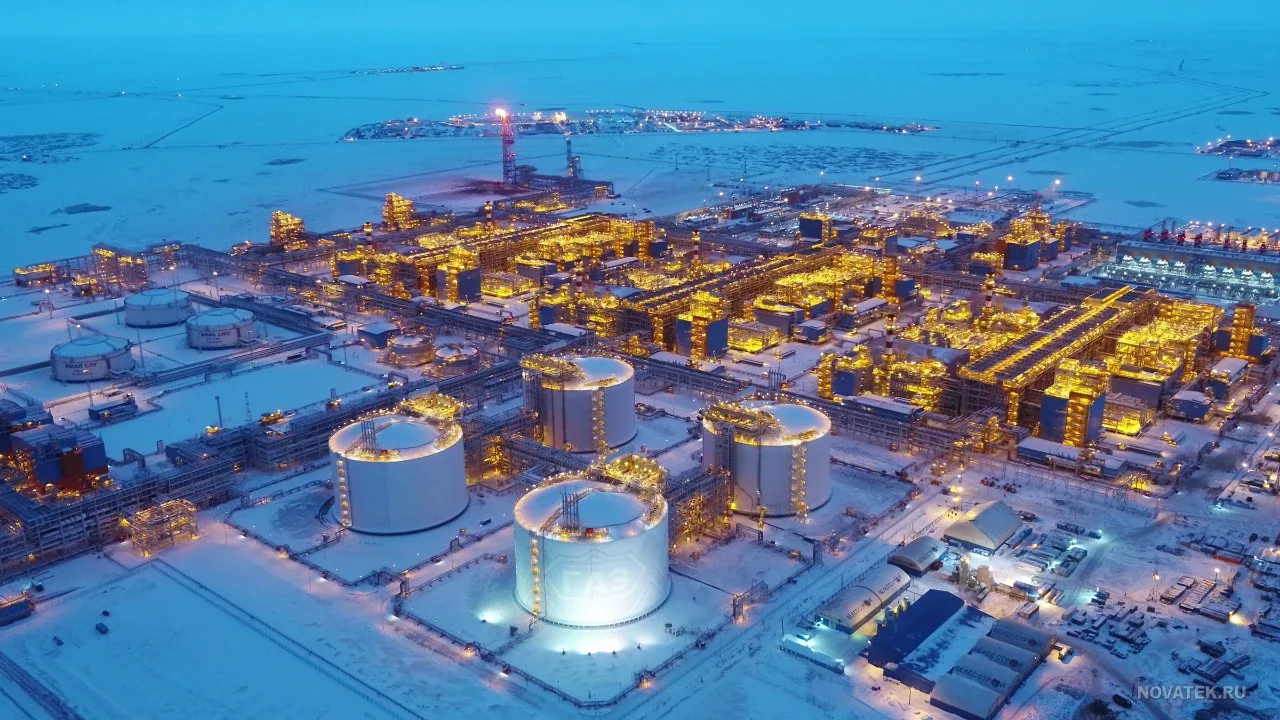
The volume of liquefied natural gas (LNG) exported from Russia to European Union countries has dropped to its lowest level this year. The primary volume from the 'Yamal LNG' project is being redirected via the Northern Sea Route directly to the Asian market — China and South Korea. Currently, Chinese companies have stopped reselling Russian gas to Europe, causing gas prices on the 'Old Continent' to soar, approaching the psychological threshold of $1,000 per 1,000 cubic meters.
Sharp drop in August: Supply reduced by 3 times
According to the AIS system, which tracks international vessel movements, only 8 'Yamal LNG' tankers arrived at European terminals in August. The volume of gas they delivered was less than 800 million cubic meters, marking an absolute anti-record for 2026:
Status until July: Until mid-summer, almost 100 percent of the gas produced in Yamal was flowing to Europe. The delivery rate amounted to 24 shipments per month, or more than 2.2 billion cubic meters;
Distribution in August: Half of the total volume delivered from Russia to Europe went to France, while two tankers each went to terminals in the Netherlands and Spain.
Northern Sea Route and the Chinese market: Why did the tankers change course?
The melting of Arctic ice in summer allows navigation along the Northern Sea Route to reach its peak. This route is the shortest and fastest way to reach Asian markets from Russia:
15 tankers on the Asian route: 15 large gas carriers belonging to the 'Yamal LNG' fleet (including 11 ice-class tankers) have been fully mobilized for the Asian route. As of September 2, at least 4 gas carriers are moving along the Northern Sea Route, and another 5 have reached the Chinese coast;
Increased demand in China: Due to rising gas prices in the Chinese domestic market, local traders have completely stopped the practice of re-exporting Yamal LNG to Europe, keeping the fuel for their own needs.
Price explosion in Europe: The $1,000 risk and uncertainty in the straits
The sharp decrease in supply has disrupted the situation on European exchanges. In recent days, gas prices at European hubs have exceeded those of the Asian market, rising above $870 per 1,000 cubic meters. Analysts predict that the price will soon rise to $1,000.
Key factors complicating the situation:
Crisis in the Strait of Hormuz: Hopes for the restoration of LNG supplies from the Middle East via the Strait of Hormuz are fading. This puts plans to fill European underground storage facilities ahead of the winter season at risk;
Control of long-term contracts: The bulk of Yamal gas is sold under long-term contracts signed with companies in China, France, Germany, and Spain. These companies themselves decide which region to direct the gas flow to, based on market conditions;
European Commission's concession: The EU plans to introduce a full embargo on Russian liquefied gas starting January 1, 2027. However, the union's leadership was forced to grant its companies an additional six-month grace period after the embargo takes effect to close contracts and resell fuel to third countries.
As the winter season approaches, the shift in logistics chains in favor of Asia and the limited global alternative supply signal the beginning of another acute crisis in the European energy market.
In your opinion, what measures can the European Union take against gas prices exceeding $1,000 in the coming winter: will there be even stricter austerity, or will they be forced to ease sanctions? Leave your thoughts in the comments!



Comments 0
…