


Armenia Announces Readiness to Abandon Cheap Russian Gas — Yerevan's Sharp Demarche
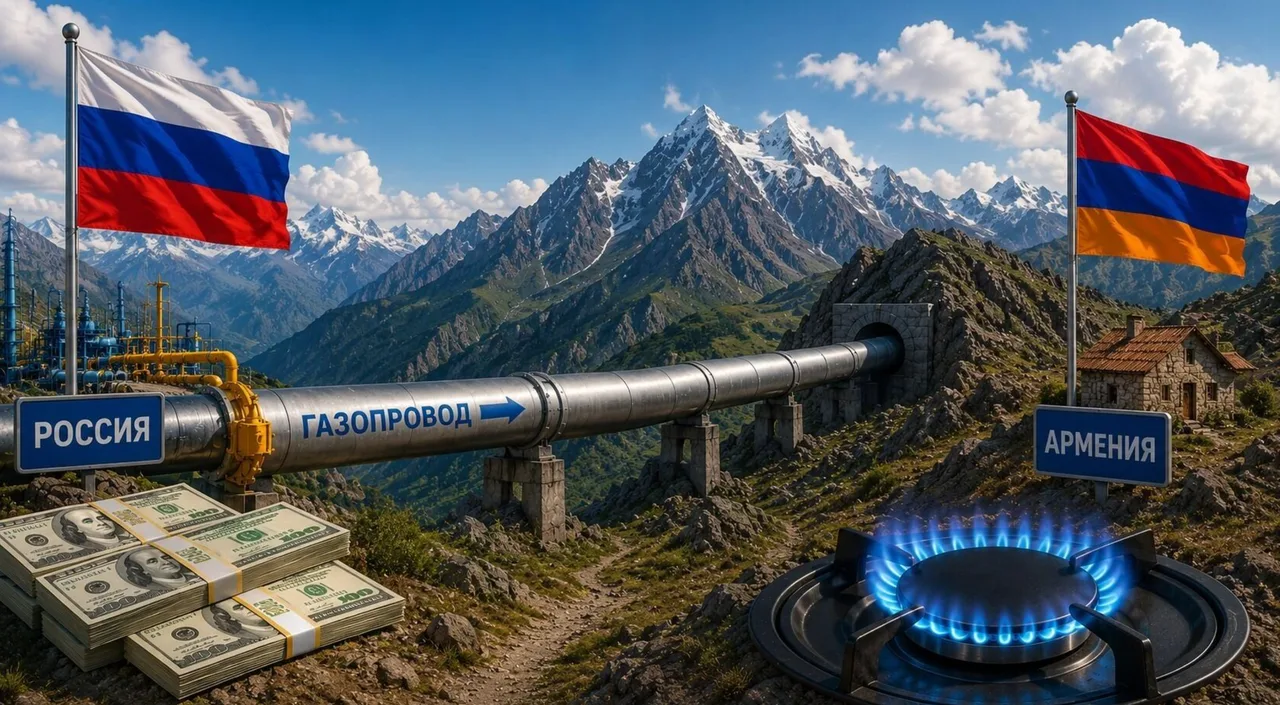
The geopolitical and energy split in the South Caucasus region has reached its sharpest and most irreversible point in history. Armenia has officially announced that it is fully prepared to abandon cheap Russian gas to safeguard its national interests and state sovereignty. Alen Simonyan, Secretary of the Security Council of Armenia (and Speaker of Parliament), announced Yerevan's firm position on this matter in a statement to the Verelq publication.
He noted that although the government has not yet received direct signals from Moscow regarding potential restrictions, it is prepared for any turn of events, including searching for alternative gas supply routes. Earlier, Russian officials openly reminded that if Armenia leaves the Eurasian Economic Union (EAEU) and turns toward the European Union (EU), the preferential price of $177.5 per 1,000 cubic meters would be canceled, and the gas price would rise 2–3 times to market rates.
In response to such pressure, Simonyan delivered a sharp reply: «The price of gas is measured not only in currency, but also with a political toll. As our Prime Minister emphasized, we will no longer depend on, nor allow ourselves to depend on, a single pipeline, a single „needle“, a single whim, and a single „button“ used for pressure!». At the same time, analysts recall that even after the peace agreement signed under Donald Trump's pressure, there have been no positive developments for Yerevan — Baku continues to demand constitutional amendments, border delimitation remains unfinished, and the issue of refugees and captives stays open.
So, how will Armenia withstand market prices 2–3 times higher, what alternative transit options for Russian gas exist, and will this demarche completely sever relations between Yerevan and Moscow?
"The end of a single pipeline, the $177.5 threat, and the market price": 5 key points of Alen Simonyan's statement
The most important facts and conclusions from the sensational position of the Security Council of Armenia:
"Sovereignty is higher than cheap gas": Yerevan firmly refused to make concessions to Moscow on its foreign policy and independence in exchange for energy discounts;
"Dependence on a single button is over": The Armenian leadership intends to completely break away from unilateral gas monopolies and political blackmail levers;
Risk of a 2–3 fold price increase: Due to leaving the EAEU and integrating with the EU, Russian gas could rise from $177.5 per 1,000 cubic meters to market prices;
Alternative transit routes: Yerevan has expressed readiness to import fuel from other countries and negotiate new transit corridors;
Pressure after the Trump agreement: Despite the US-brokered peace agreement signing, pressure from Baku and territorial problems remain unresolved.
Energy clash: Comparison of Russia's pressure levers and Armenia's new strategy
Analysis of the new geopolitical and economic balance of power in the South Caucasus:
Indicators and criteria | Moscow's traditional position (EAEU lever) | Yerevan's new strategic position (Alen Simonyan) |
Gas price and terms | $177.5 per 1,000 cu. meters (EAEU preference) | "We won't pay a political price": Readiness for market prices |
Integration requirements | Full membership in the EAEU and CSTO (ODKB) | Path toward the European Union (EU) and independent foreign policy |
Energy dependence | A single monopoly pipeline ("Gazprom Armenia") | Complete exit from the vortex of "a single pipeline and a single button" |
Alternative sources | Considered to have no alternatives | Iranian direction, liquefied gas, and new transits |
Peace and security | Russian guarantees and the role of military bases | Multi-vector defense amid problems with the Trump agreement |
Geopolitical and energy expertise: Can Armenia survive without Russian gas?
Conclusions of South Caucasus experts, international energy analysts, and economists:
Risk of "economic shock": Armenia's domestic market, industry, and heating system have adapted for years to cheap gas from Russia at $177.5; a 2–3 fold price increase (up to $400–500) could sharply accelerate inflation and burden citizens' utility bills; however, the government accepts this as a "tribute" that must be paid for national security;
The Iran and Azerbaijan factor: The only close alternative for Yerevan is Iranian gas (the "electricity for gas" scheme); additionally, if relations with Azerbaijan normalize, Caspian gas transit could theoretically be discussed, but today's political tension makes this impossible in the near future;
EU financial aid package: Armenia's aspiration toward the EU is not accidental; Brussels and Western funds could provide financial subsidies to Yerevan to exit energy dependence, develop green energy, and mitigate the consequences of rising gas prices;
Disappointment after the "Trump agreement": The agreement signed under Trump's pressure did not bring Armenia the expected security; Baku continues to pressure by demanding constitutional changes; this forces Pashinyan's government to seek entirely different military and economic allies.
This firm position expressed by the Armenian leadership against gas blackmail is a historical turning point proving that the South Caucasus is rapidly moving out of Moscow's sphere of influence.
Do you think Armenia is ready to abandon cheap Russian gas and choose an independent energy path at 2-3 times higher prices, or is this Yerevan's political bargaining tactic? How do you personally assess Baku's unabated pressure and the fruitless results of the Trump-brokered peace agreement? Leave your personal thoughts in the comments and share this analysis of the acute geopolitical conflict in the South Caucasus with all your colleagues!



Comments 0
…