


Drone Captures Complete Birth Process of a Whale for the First Time
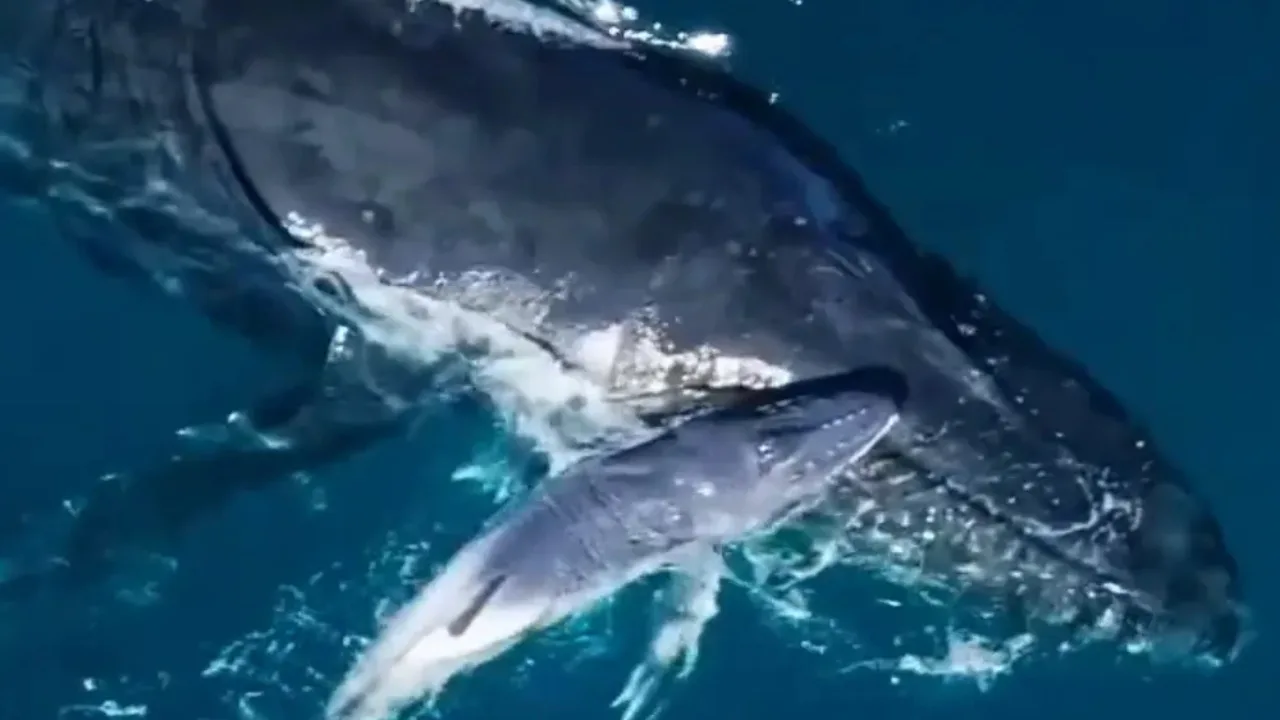
A rare event near the Australian coast has amazed marine biologists and nature enthusiasts. For the first time, a whale birth in the ocean has been fully captured from the air using a drone. Experts evaluate these footage as a significant breakthrough in the study of marine mammals.
It is reported that drone operator Alexander Forrest, collaborating with the Organization for Rescue and Research of Cetaceans in Australia (ORRCA), noticed a migrating female whale moving slower than others during a routine observation flight.
At first, he thought the animal was simply resting. However, shortly after, the female whale surfaced, and the birth process began immediately. Moments later, the newborn calf broke the surface for its first breath.
“I immediately realized I was witnessing an extraordinarily rare event. From that moment on, I stopped being just a cameraman and became a spectator watching a miracle of nature,” said Alexander Forrest.
After the birth, the mother whale remained motionless for a few seconds, then instinctively returned to her calf to protect and care for it. Experts describe the first encounter between mother and calf as a deeply touching scene.
ORRCA research director Annie Postle noted that only three cases of whale births have been officially documented worldwide to date. However, this event is of special significance as it was fully recorded from the air by a drone for the first time.
Researchers continued to monitor the mother and baby whale for several hours after the birth, recording their movements, care process, and interactions with other whales.
This rare footage of Australia's was captured during the annual whale migration along the eastern coast. During this period, approximately 50,000 whales swim north from Antarctica towards warm subtropical waters to mate and give birth.
Scientists believe this video footage can serve as a valuable scientific resource for deeper research into whale reproduction, mother-calf bonding, and behavior.


Comments 0
…