


Abdukodir Khusanov played 90 minutes: Did Maresca give him a new role?
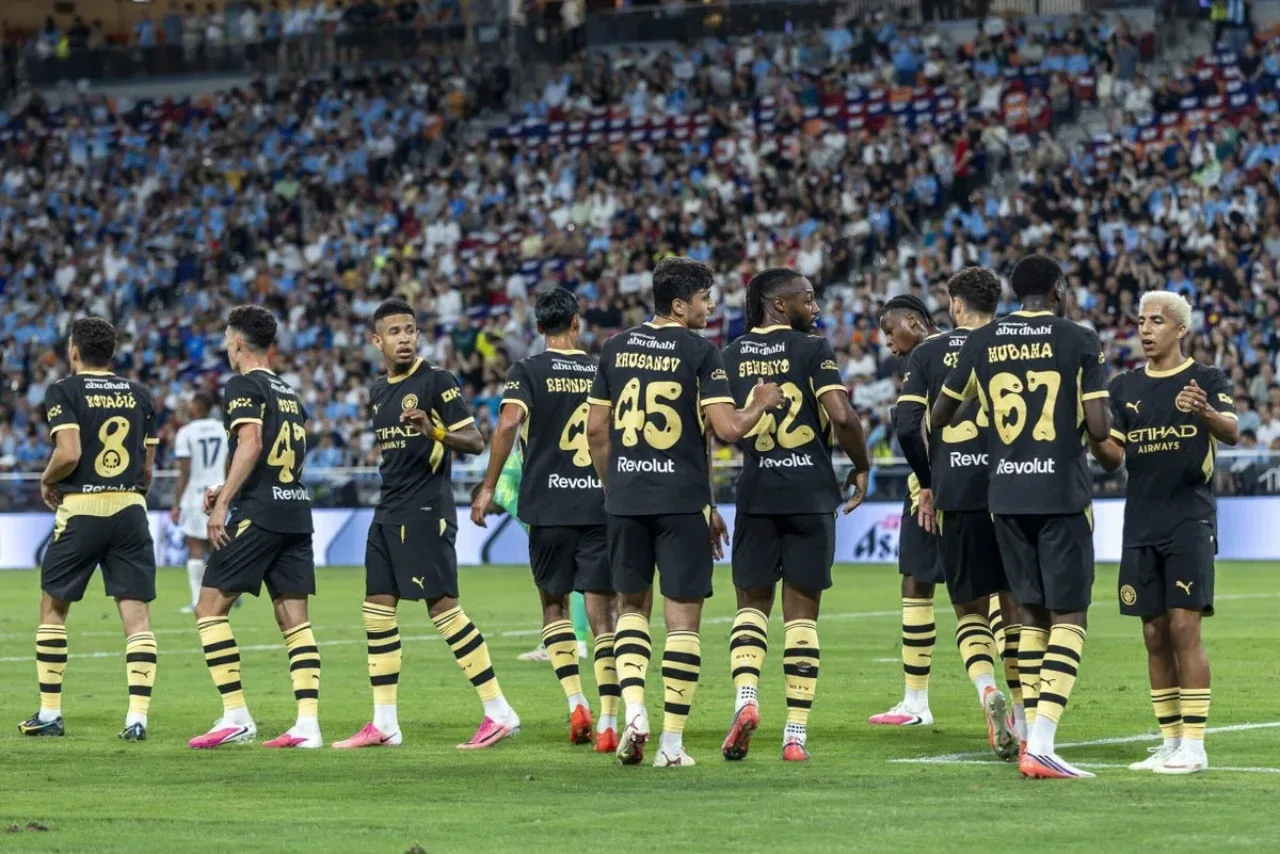
Manchester Citybegan a new era under Enzo Maresca with a friendly match against Inter in Hong Kong. After a 1:1 draw in regular time, the Italian champions won the penalty shootout 3:1.
For Uzbek fans, however, there was an even more important moment: Abdukodir Khusanov started the match and played the full 90 minutes. He featured as a central defender in the first half and shifted to the right-back position after the break.
Is this change just a routine pre-season experiment, or is Maresca preparing a new role for Khusanov?
How did Maresca's debut go?
TheManchester Cityofficial website described this match as Enzo Maresca's first game in charge of the team. The match in Hong Kong also marked the start of the Citizens' Asian tour in preparation for the 2026/27 season.
The deadlock was broken in the 14th minute. Antoine Semenyo made a strong run down the left flank and delivered the ball into the box, allowing Divine Mubama to tap it in from close range.
Inter's response was not long in coming. In the 20th minute, Benjamin Pavard equalized following a cross from Federico Dimarco. Manchester City dominated more in the second half, with Vitor Reis and Ryan McAidoo hitting the crossbar, but the winning goal proved elusive.
In the penalty shootout, only Claudio Echeverri converted his spot-kick for City. The attempts by Rayan Aït-Nuri, Abdukodir Khusanov, and Nico González were missed, resulting in a 3:1 victory for Inter.
Khusanov was given two different roles
In the first half, Abdukodir Khusanov and Josko Gvardiol partnered in the center of Manchester City's defense, with Rico Lewis on the right and Stephen Mfuni on the left.
After the break, Maresca changed the defensive setup. Gvardiol and Mfuni were substituted, while Khusanov was moved from the center to the right-back position. Rico Lewis pushed further up into midfield to help control the tempo.
This tactical shift required Khusanov to perform multiple tasks simultaneously:
controlling the fast winger on the flank;
initiating attacks from the backline when the team had possession;
covering the vacant space whenever Lewis advanced;
dropping back into central defense as situations demanded.
Khusanov also contributed offensively. In the 52nd minute, the ball fell to him after the Inter goalkeeper parried a shot, but the Uzbek defender's aerial effort lacked sufficient power.
How did the media evaluate Khusanov?
An important note: the Esteemed Kompany article did not award player ratings. The author openly stated that in a pre-season friendly, highlighting players' on-field traits was preferred over focusing on the final result.
The publication's conclusion regarding Khusanov was brief yet positive:
Khusanov had a solid match and fulfilled the requirements asked of him.
This description lacks grandiose praise. However, in the opening pre-season friendly, a defender is primarily expected to show reliability, avoid injuries, and execute the manager's new instructions.
Playing Khusanov in two different positions over 90 minutes indicates that Maresca was testing his physical conditioning and tactical adaptability — an analytical conclusion drawn from the match.
What did Maresca's new style reveal?
In the first half, Manchester City attempted to apply a high press with four players against the opponent's build-up. While this method worked in certain situations, whenever Inter managed to break through the press, huge gaps opened up in front of the City defense.
Although Mateo Kovacic and Tijjani Reijnders performed decently with the ball, they struggled to find their defensive positions when the opposition gained possession. Inter repeatedly troubled City's defense by switching play with long diagonals.
The landscape changed in the second half. The introduction of Nico González in the holding midfield role improved ball control. Aït-Nuri roamed freely across the pitch, Lewis moved into midfield, and Khusanov locked down the right flank.
Consequently, City's positioning relied less on rigid lines and more on fluid player rotation. The Esteemed Kompany analysis also noted that second-half quick transitions and players' versatility could become crucial weapons for Maresca's team.
Could Khusanov end up staying at right-back?
Abdukodir Khusanov's natural position is central defense. His speed, tenacity in one-on-one duels, and ability to track opposing forwards are vital assets in that area.
However, he also filled in as a right-back when needed last season. The official Manchester City website noted that Khusanov made 47 appearances during the 2025/26 campaign, playing a key role in the team's defense.
Currently, there are reports linking City with Chelsea defender Malo Gusto. However, the clubs have not officially announced the transfer, and the deal is not yet finalized.
Therefore, a cautious conclusion can be drawn: if the club does not sign a specialized right-back, Maresca may rotate Matheus Nunes, Rico Lewis, and Abdukodir Khusanov in that position.
Khusanov's performance in Hong Kong might have been an initial test run for precisely such a contingency plan.
Who left the strongest impression?
In the match analysis, Antoine Semenyo was highlighted as Manchester City's most active player in the first half. He tormented Inter's defenders on the left wing, provided the assist for Mubama's goal, and played as a center-forward after the break.
Ryan McAidoo emerged as the star of the second half. The youngster kept opposing defenders under constant pressure on the right wing, hit the crossbar, and sent another dangerous shot just wide of the post.
Additionally:
Nico González's entry improved the team's central play;
Vitor Reis showed courage by stepping out from defense into midfield;
Rayan Aït-Nuri caught the eye with his roaming runs across different zones;
Rico Lewis played further forward in the second half and contributed significantly to possession control.
Who raised questions?
Kovacic and Reijnders struggled to find their optimal balance in the first-half roles. While both had no trouble on the ball, maintaining central equilibrium during defensive transitions proved difficult.
Savinho looked much more dangerous on the left than on the right, but made mistakes in decision-making. Mahamadou Sangaré failed to make a significant impact after coming on.
Phil Foden produced some flashy moments but lacked consistent influence on the match. Divine Mubama stood out not only for his goal but also for dropping deep to bypass the opponent's press and help initiate long balls.
What is the main takeaway for Khusanov?
A missed penalty in the shootout will naturally be one of the most discussed topics after the match. However, a defender's overall performance in a pre-season friendly cannot be judged by a single spot-kick.
Khusanov:
played the full match;
operated in two different positions;
adapted to the team's new tactical setup;
made no serious defensive errors;
actively tried to join the attack.
Most importantly, Maresca tested him not just as a center-back, but as a versatile player capable of filling in on the right flank when necessary.
During their Asian tour, Manchester City will face K-League All-Stars on August 5 and Atlético Madrid on August 9. These fixtures may provide a clearer indication of where Maresca plans to utilize Khusanov most.
In your opinion, which position suits Abdukodir Khusanov better — central defense or right-back? Share your thoughts in the comments!



Comments 0
…