


Perceptions of Mars Geology Change: Huge Magma System Found on the Red Planet
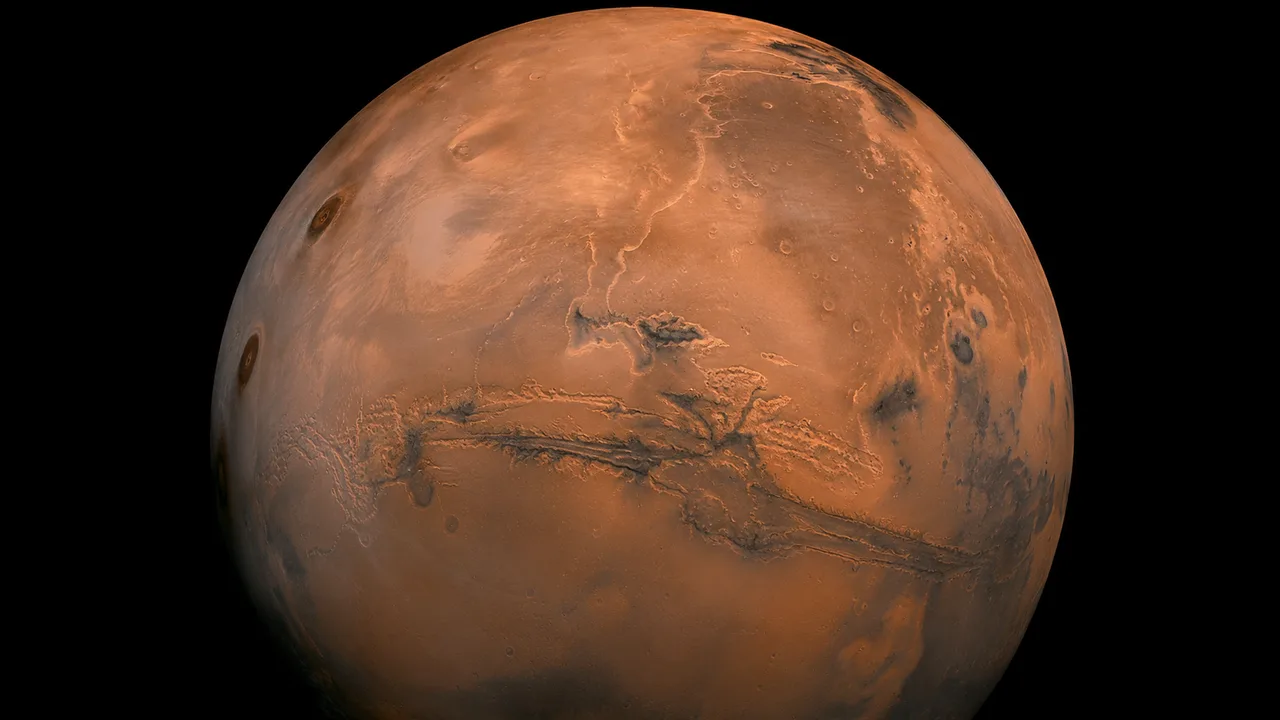
Oxford University scientists have made a new discovery that challenges long-standing scientific views on the history of Mars. According to research published in the journal Nature Astronomy, huge magmatic systems, similar to those on Earth, were identified in the depths of the Red Planet. This discovery came as a surprise to specialists who had considered Mars to be a geologically simpler and "dead" planet. This is reported by Ixbt.com news provides.
For a long time, Mars was categorized as a "stagnant lid" planet. Unlike Earth, the Martian lithosphere is not divided into moving tectonic plates. On Earth, it is precisely tectonic processes that ensure the cycling of rocks, volcanic activity, and the formation of continents. Therefore, scientists assumed that the internal structure of Mars was much simpler, but new analyses refute this theory.
Researchers based their conclusions on data collected by NASA's InSight mission. The device used an ultra-sensitive seismometer that recorded quakes and meteorite impacts on Mars. Scientists' attention was drawn to a mysterious layer located approximately 24 kilometers underground, the origin of which had remained unknown until now.
Unexpected Geological Complexity
Using thermodynamic modeling and statistical analysis, scientists compared the composition of Martian rocks with the transmission speed of seismic waves. It was found that iron- and magnesium-rich rocks are located beneath this boundary, while lighter rocks with a high silicon content are located above. Such stratification can only occur as a result of prolonged and complex magmatic processes.
According to the authors, such a structure was formed as a result of the cooling of huge underground magma reservoirs. As the magma cooled, heavy minerals sank, and lighter melts rose. Similar processes occur in large magmatic systems on Earth and play an important role in the formation of the continental crust. This indicates that the geological evolution of Mars was closer to Earth's than we thought.
Researchers speculate that this layer may extend for hundreds or even thousands of kilometers under the northern hemisphere of Mars. If this information is confirmed, it is not about individual volcanic centers, but about an entire large-scale magmatic system. This discovery proves that complex geological processes can develop even on planets without tectonic plate movement.
New Possibilities for Life
This news is of great importance not only for geology but also for astrobiology. Earth-type tectonics may not be the only condition for creating an environment necessary for the emergence of life. If complex internal processes occurred on planets like Mars, the number of planets with favorable conditions for life in the universe may be much higher than we estimated.
According to ixbt.com, this research prompts a reconsideration of not only the past of Mars but also its current state. Although the surface of Mars appears cold and lifeless today, such structures in its depths help understand how heat and chemical element exchange occurred throughout the planet's history.


Comments 0
…