


Katalyst slows down spacecraft and continues Swift mission
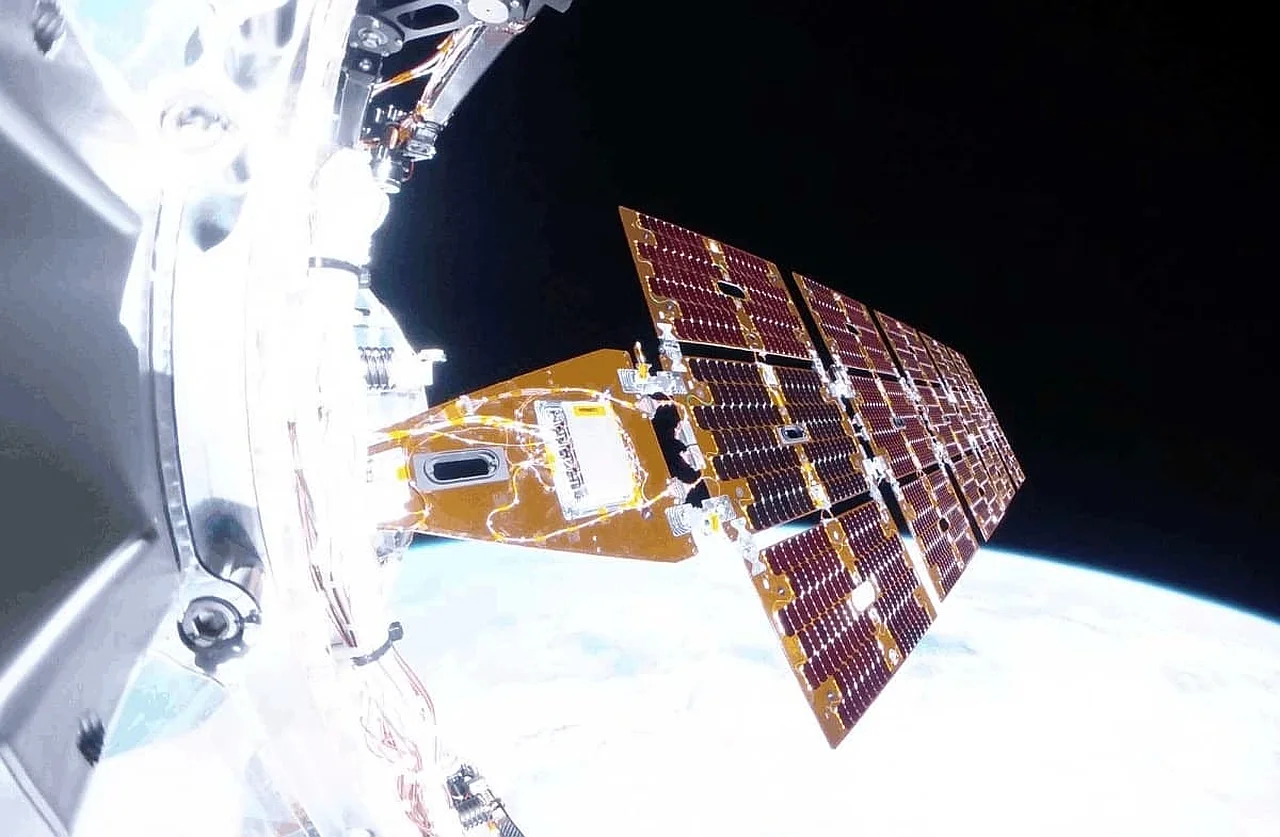
Katalyst Space Technologies has achieved a major breakthrough in stopping and stabilizing the Link spacecraft, which lost control and went into an uncontrolled spin. According to ixbt.com, engineers managed to reduce the rotation speed of the satellite, which had entered emergency mode, by nearly six times and are continuing the mission to save NASA’s famous space telescope. This is what Ixbt.com reports .
The Link spacecraft was launched into space on July 3 this year aboard a Pegasus rocket. However, on July 28, technical failures caused it to enter a multi-axis rotation mode and completely lose its orientation. At the time of the incident, its body was rotating at approximately 9 degrees per second.
Experts reduced this dangerous rotation speed to 1.47 degrees per second by activating one of the electric motors. It turned out that the process consumed very little fuel—less than 100 grams—allowing the company to preserve valuable resources for future operations.
Software update and next steps
Link is currently preparing for the next stage in its current configuration. In the coming days, Katalyst engineers plan to upload a "significant software update" to the spacecraft. The update is expected to provide direct control over the vehicle’s orientation in space and allow specialists to regain full control.After that, the company aims to return to its plan to approach NASA’s Neil Gehrels Swift Observatory, an X-ray space observatory. It should be noted that the reasons for Link’s loss of orientation have still not been fully disclosed. After the incident, two of its three reaction wheels failed, while the reaction-control system thrusters were found to be only partially operational.
Critical situation for the Swift Observatory
The space operation costs $30 million and is Katalyst’s first-ever attempt to capture another spacecraft and change its orbit. For the 22-year-old Swift Observatory, this mission is a matter of life and death because it cannot correct its orbit independently.If Link does not save it, the telescope would inevitably leave its orbit at the end of 2026 or the beginning of 2027. As of August 9, Swift was slightly below the 350-kilometer mark, and efforts to raise its orbit must begin before its altitude falls below 300 kilometers. This dangerous threshold is not expected to be crossed before October.


Comments 0
…