


2,000-Year-Old Secret Revealed: Ancient Scrolls Buried Under Vesuvius Ash Read for the First Time
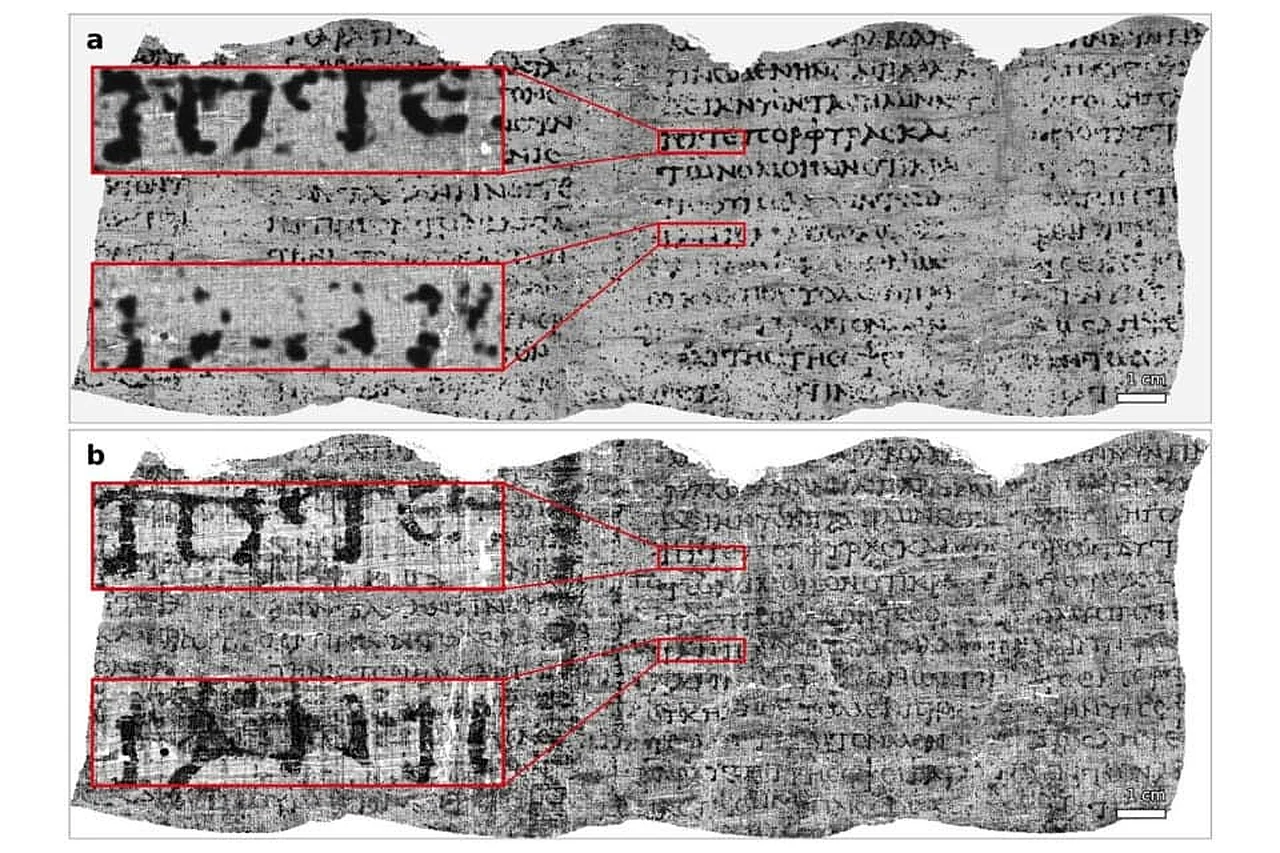
While the eruption of Mount Vesuvius in 79 AD completely destroyed the cities of Pompeii and Herculaneum, it preserved the unique libraries of that era under volcanic ash. Hundreds of scrolls found in the "Villa of the Papyri" in Herculaneum were carbonized due to high temperatures, and any attempt to physically open them would lead to the total destruction of the texts. However, using modern technology, scientists have succeeded in fully reading one scroll for the first time without damaging it. This is reported by Ixbt.com reports .
As part of the international Vesuvius Challenge project, a papyrus scroll numbered PHerc. 1667, measuring 1.4 meters in length, was digitally "unrolled." This process utilized high-energy X-ray microtomography from the ESRF (European Synchrotron Radiation Facility) and AI algorithms. This achievement opens a new era in the study of ancient history, as opening such exhibits was previously considered impossible.
Artificial Intelligence and Virtual Reconstruction
Researchers used phase-contrast microtomography to separate the papyrus layers. This method records not only the density of the material but also slight changes in the passage of X-rays. The resulting 3D data was processed as a special geometric mesh and then projected onto a 2D plane. This process fully simulates the physical manual unrolling of the papyrus.Neural network architectures such as nnU-Net played a decisive role in restoring the text. AI identified ink traces on the papyrus surface at a microscopic level, even when they were the same color as the carbonized paper. Crucially, the machine learning models do not "hallucinate" the text but only enhance visual markers. The final text was then analyzed and reconstructed by expert papyrologists.
Stoicism and Ancient Philosophy
The restored text is a philosophical treatise in Greek, believed to be linked to Stoic traditions. The work discusses ethics, the nature of human behavior, inner drives, and spiritual perfection. Fragments of the text mention the ancient scholar Aristocreon, who is considered a relative of Chrysippus, one of the primary representatives of Stoic philosophy.The Vesuvius Challenge project began in 2023, uniting physicists, engineers, and AI specialists from around the world. According to the researchers, the developed method can be applied not only to a single artifact but to the entire collection at the "Villa of the Papyri." This means that in the coming years, dozens or even hundreds of new works from the ancient world could be rediscovered.
This technological breakthrough is a revolutionary step in preserving historical heritage. Where archaeologists previously faced the risk of destroying an exhibit to obtain valuable data, now the most fragile papers can be "revived" using digital scanning and neural networks. According to ixbt.com, this project has become the only reliable method for reading the lost works of ancient thinkers.


Comments 0
…