


Space exploration at risk: Millions of satellites could blind the sky
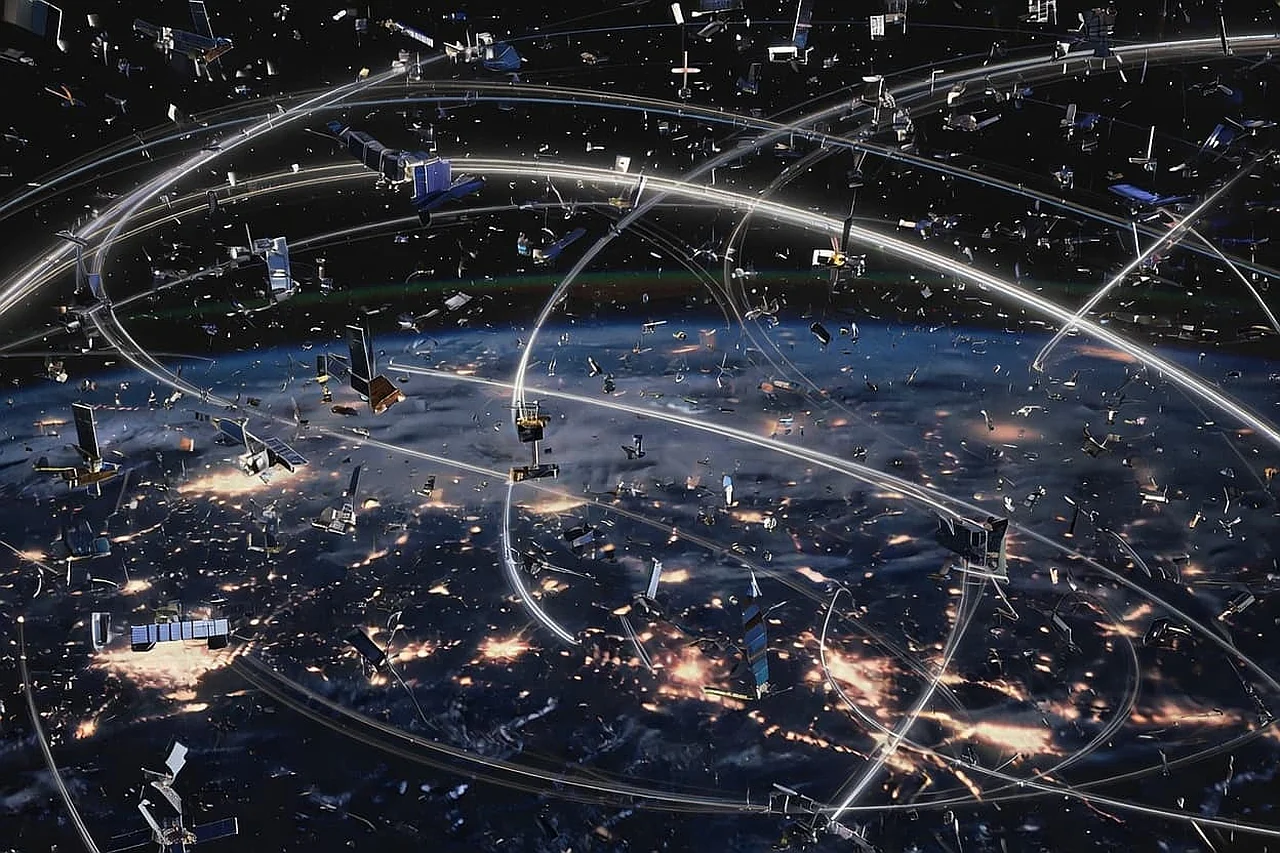
The millions of satellites scheduled to be launched into Earth's orbit over the next decade could deal a severe blow to fundamental astronomy. Experts from the European Southern Observatory (ESO) and the International Astronomical Union's CPS center are calling for a global limit on the number of low Earth orbit devices. Scientists believe that for space exploration to continue, the number of objects in orbit should not exceed 100,000. This is reported by Ixbt.com reports .
Currently, about 1.7 million satellites are planned for launch as part of Starlink, Leo, GuoWang, and other major projects. According to Ixbt.com, this figure is 17 times higher than the safe limit. ESO scientist Olivier Hainaut notes that the presence of 100,000 devices will begin to cause serious obstacles, such as technical malfunctions in telescope operations.
Light pollution and the telescope problem
The increase in the number of satellites not only causes bright streaks to appear in telescope images but also raises the overall light background of the night sky. The devices scatter light from the Sun, Moon, and stars, artificially illuminating the sky. As a result, it becomes impossible for ground-based observatories to observe distant galaxies and faint celestial bodies.A computer model developed by scientists showed that having up to 60,000 devices in orbit does not significantly affect observation quality. However, once this number is exceeded, light pollution increases sharply. This particularly reduces the efficiency of major projects like the recently launched Vera Rubin Observatory.
The plans of the American company Reflect Orbital are of particular concern. This company intends to launch satellites with special reflective surfaces that direct sunlight to Earth. Researchers estimate that even launching 10 percent of such devices would increase night sky brightness by 20–30 percent. These devices could appear as bright as the planet Venus in the sky, potentially completely disrupting the operation of astronomical instruments.
This problem is bound to be felt in regions with clear skies favorable for astronomical observations, such as Uzbekistan. Without global restrictions, humanity could easily lose the ability to study the deep layers of the universe in the future. Experts are urging space companies to maintain a balance between technological progress and scientific research.


Comments 0
…