


India's private sector enters space: Vikram-1 rocket completes its maiden flight
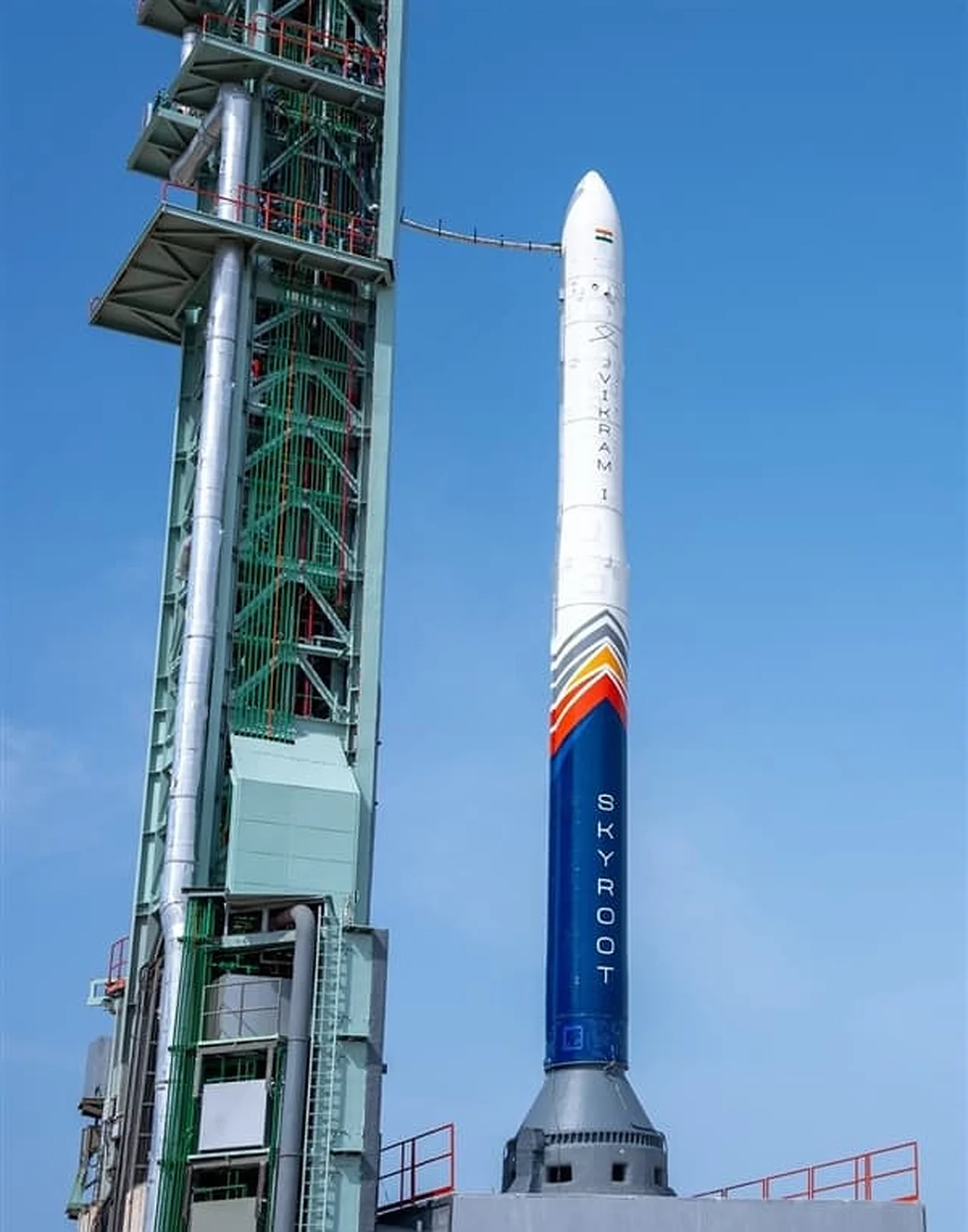
India's aerospace startup Skyroot Aerospace has successfully tested the Vikram-1 launch vehicle, the first orbital rocket in the country's history developed entirely by a private company. This flight, part of the Aagaman mission, was conducted from the Satish Dhawan Space Centre on Sriharikota island. This event is seen as a significant step in strengthening India's position in the global space market. This is reported by news from.
The rocket is named after Vikram Sarabhai, the founder of the Indian space program. Measuring nearly 22 meters in length, the vehicle consists of a four-stage system. The first three stages are equipped with solid-fuel engines developed in India, while the final stage features a liquid-propellant engine. Notably, this engine was 3D-printed, allowing for high-precision payload placement into orbit.
Technological innovation and local manufacturing
The body of the Vikram-1 rocket is made of carbon fiber composite materials, and over 90 percent of its components were manufactured directly within India. This not only reduces costs but also demonstrates the country's technological independence. The rocket is capable of carrying a payload of up to 350 kg into a low Earth orbit at an altitude of 450 km.According to Ixbt.com, this test flight was aimed at verifying the stability of engine performance, navigation systems, telemetry, communications, and payload separation mechanisms. For demonstration purposes, the rocket carried several technological modules and a small gold figurine dedicated to the memory of Indian scientists.
Commercial potential and competitive pricing
Skyroot Aerospace has already generated significant interest in the international market. The company has already received preliminary orders to launch more than 400 satellites into space. As competition in the small satellite market intensifies, the Indian startup aims to stand out with its affordable pricing.Current estimates suggest that the cost of launching one kilogram of payload into orbit using Vikram-1 is approximately $15,000. This price point is considered quite attractive by international standards and will help the company find its place in a market dominated by giants like SpaceX. In the future, such affordable and reliable flights are expected to open the doors to space wider for small research institutes and private companies.


Comments 0
…