


Chinese engineers successfully run NVIDIA RTX graphics cards on ARM processors
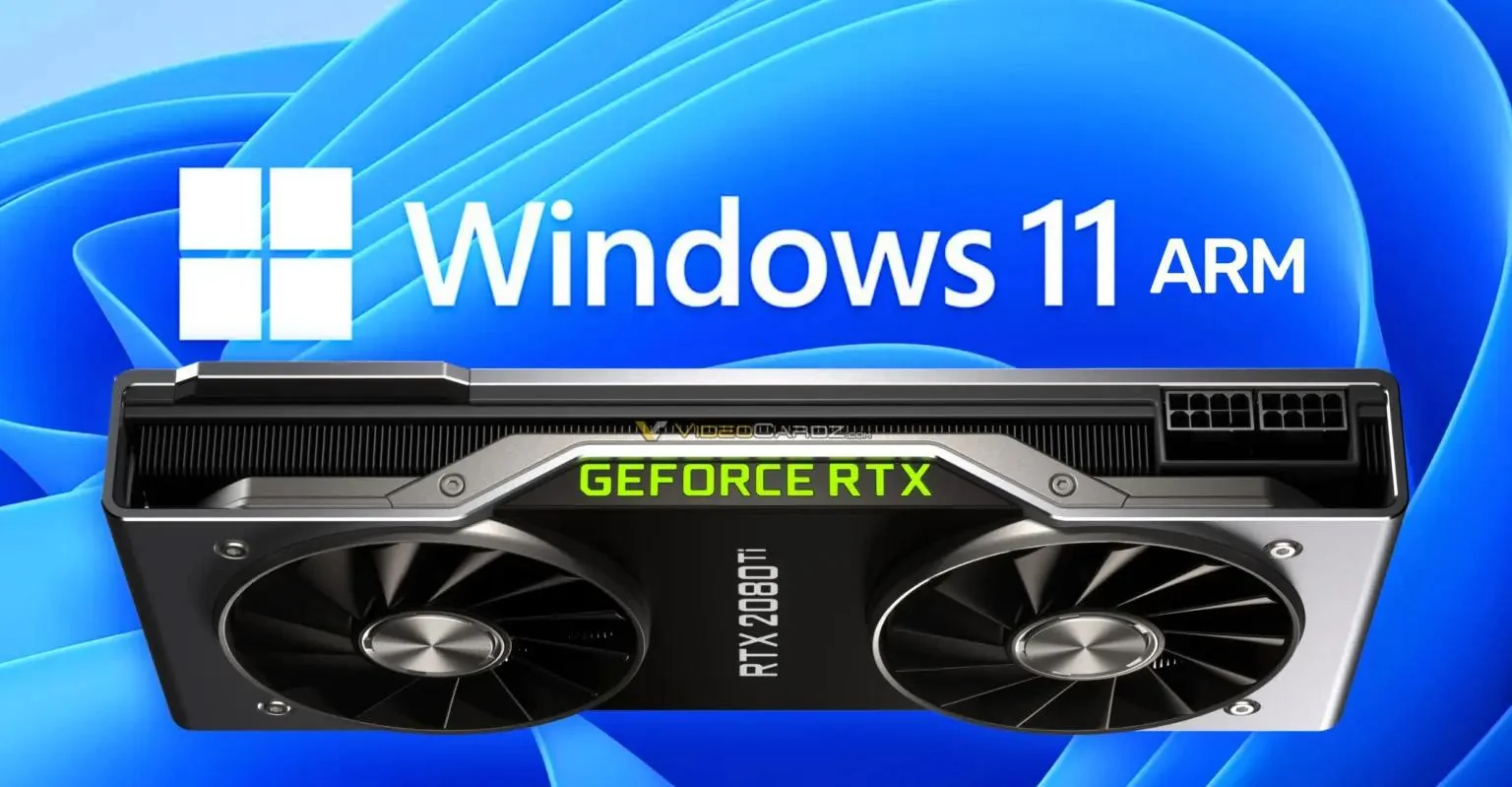
A significant breakthrough has occurred in the world of computer technology: Chinese enthusiasts have successfully managed to run NVIDIA GeForce RTX graphics cards on systems based on the ARM architecture. Although NVIDIA does not yet officially support such configurations, the first drivers released for Windows on ARM have paved the way for this experiment. This event expands the possibilities for moving away from traditional x86 processors toward energy-efficient ARM platforms in the future. This is reported by Ixbt.com reports .
The main experiment was conducted on a Huawei Qingyun W510 workstation. This device is equipped with a 24-core Huawei Kunpeng 920 processor and 32 GB of DDR4 RAM. A GeForce RTX 4060 graphics card with 8 GB of memory was connected via a PCIe 4.0 x8 interface. Since Huawei does not officially support Windows on this platform, the researchers had to install Windows 11 using an open-source ACPI-patch.
Games and test results
According to ixbt.com, the system's gaming performance is not yet at the expected level. The main reason for this is the relative weakness of ARM processors and the necessity of running modern games via x64 emulation. For example, the popular game Genshin Impact ran at only 20 frames per second (FPS) in Full HD resolution. In Black Myth: Wukong, the average was 21 FPS, although in some scenes, it dropped to as low as 3 FPS.Nevertheless, the results in technological demos are slightly better. Star Wars Reflections demonstrated a speed of 23–25 FPS with ray tracing technology. In synthetic tests, the GeForce RTX 4060 was able to show its true power: it scored 43,530 points in the 3DMark Night Raid test and 32,370 points in the Solar Bay test. For comparison, the system scored 6,369 points in the Time Spy test, whereas on standard x86 computers, this figure is around 10,400 points.
Working with professional software, the experiment was even more successful than expected. For example, the Blender graphics editor recognized the graphics card via CUDA cores without any issues. During the rendering process, the GPU load reached 89%, which proves that complex visual tasks can also be performed on ARM systems. Additionally, a GeForce RTX 2080 Ti graphics card was successfully tested on the compact Radxa Orion O6 board.
NVIDIA's universal driver could potentially allow the use of almost all generations of discrete graphics cards—from the RTX 20 series to the latest RTX 50 models—on Windows on ARM devices in the future. This opens new horizons for ARM-based laptops and mini-PCs, which are also becoming popular in the market. While this is currently an enthusiast-level experiment, it shows how the computer market might change in the coming years.


Comments 0
…