


Step Toward Artificial Sun: US Approves Testing of Texatron Fusion Reactor
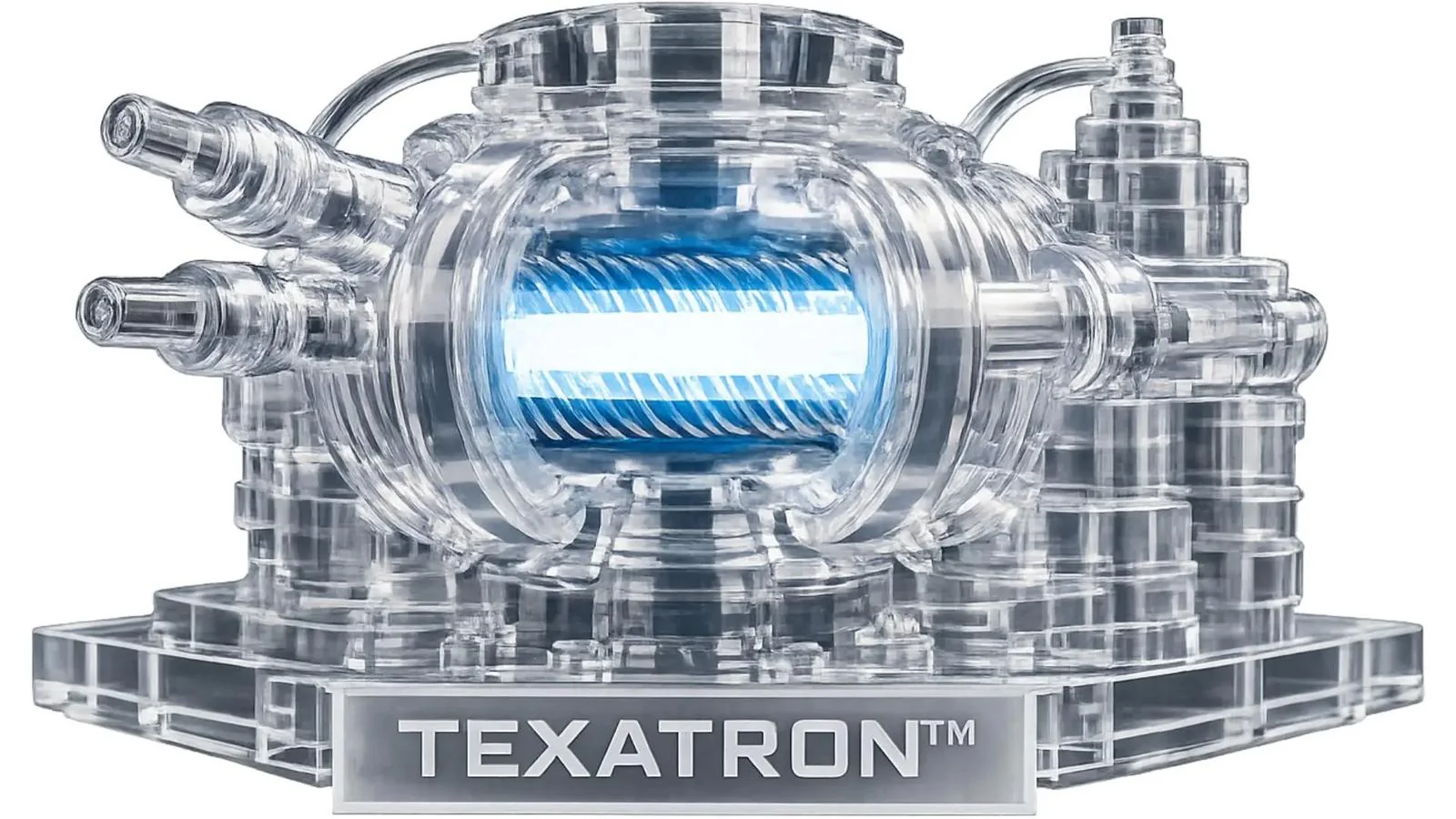
Nuclear fusion technologies, expected to revolutionize the energy world, are entering a new phase. American Fusion has received official authorization from the Texas Department of State Health Services (DSHS) to research and test its experimental device, the Texatron Fusion Engine. This step brings humanity even closer to the goal of creating an inexhaustible and safe energy source — the "artificial sun." This was reported by Ixbt.com reported by.
The obtained certificate covers 12 different configurations of the reactor ranging from 500 kW to 1 GW. Currently, engineers are actively preparing for the next phase of testing at Texas Tech University. According to ixbt.com, the main goal of these studies is to practically prove for the first time the feasibility of maintaining a controlled fusion reaction inside the Texatron.
Technological Process and Safety Benefits
Unlike traditional nuclear power plants, Texatron relies not on heavy nuclei fission, but on a fusion process achieved by confining ultra-hot plasma using a magnetic field. Experts note that such a scheme significantly reduces the amount of long-lived radioactive waste. This makes the technology much safer and more promising from an environmental perspective.During the tests, engineers will meticulously measure plasma temperature, particle density, and magnetic confinement efficiency. If this phase is successful, the company will proceed to electricity generation. Initially, energy will be obtained in pulsed mode, which will serve as an intermediate bridge toward creating a full-power reactor that can continuously supply consumers with current in the future.
Future Application Areas
A unique aspect of the American Fusion project is that it plans to abandon traditional steam turbines and convert plasma energy directly into electricity. The company is already working on compact devices with capacities of 5, 10, and 20 MW, as well as a large reactor project with a capacity of 100 MW. Such compact modifications can be extremely useful in the following areas:- Providing energy to industrial enterprises and mines in remote regions;
- Creating mobile power sources for military facilities;
- Providing a stable electricity supply for data centers;
- Transitioning remote settlements to autonomous energy systems.


Comments 0
…