


Falcon 9 Stage to Crash into the Moon: NASA and SpaceX Develop New Plans
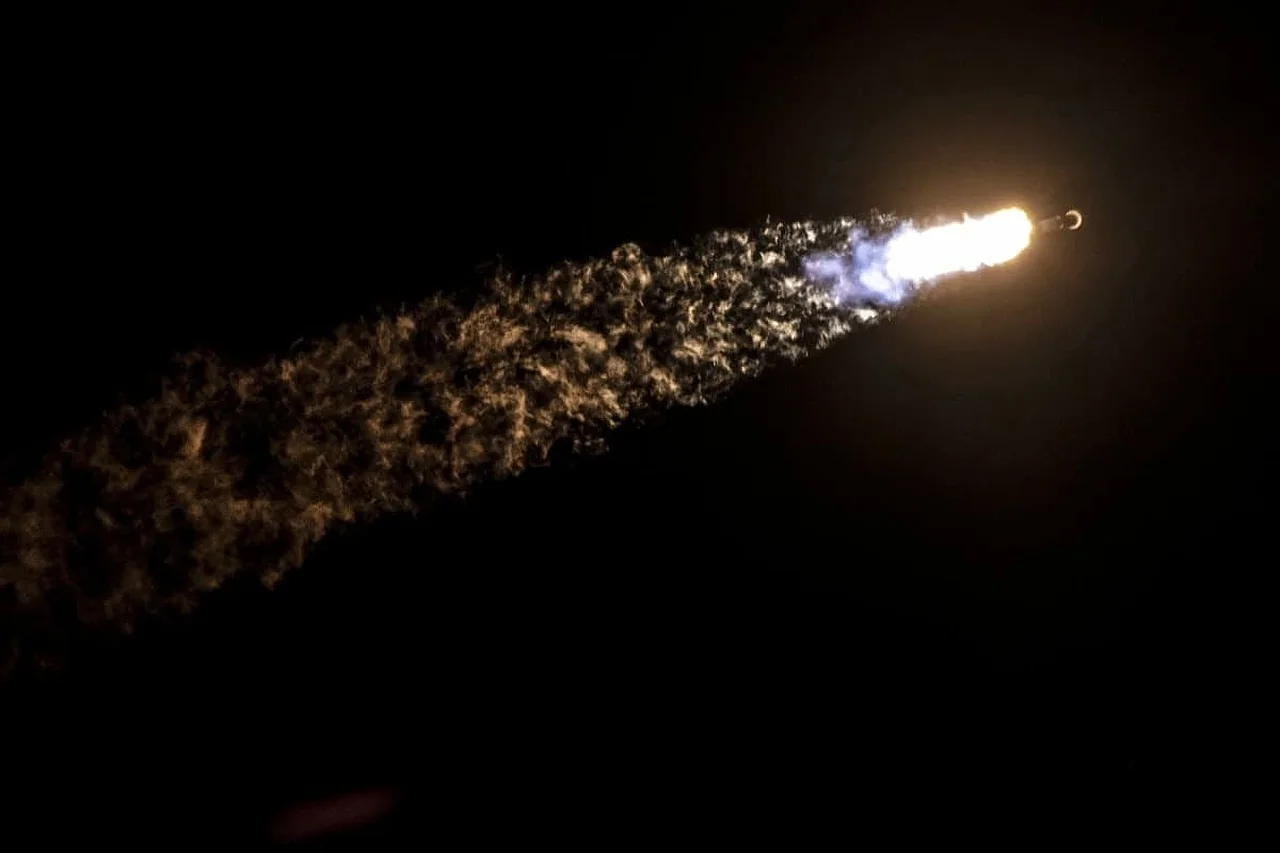
In January this year, the upper stage of the Falcon 9 rocket that carried Firefly Aerospace and ispace lunar missions into space is expected to crash into the Moon’s surface on August 5. According to ixbt.com, the unplanned collision will offer scientists a unique opportunity to study natural processes and collect new scientific data. The outlet reports this.
According to calculations, the rocket’s upper section weighs approximately 4000 kilograms and is about the size of a five-story building. It is approaching the Moon at a speed of 2.43 km/s. Based on data from the Center for Near-Earth Object Studies (CNEOS), the impact zone is expected to be near the Einstein crater on the Moon’s visible side. Astronomer Bill Gray, who first identified the potential collision, believes the event could create a new crater more than 17 meters in diameter.
According to Julianna Scheiman, director of NASA’s Science Mission Programs, the rocket’s trajectory changed because of the interaction between solar activity and gravitational forces. The company completed all standard passivation procedures, including venting residual propellant and shutting down active systems. However, controlled return scenarios used in low Earth orbit cannot be applied to high-energy trajectories in the Earth–Moon–Sun system.
Scientific Observations and Consequences
Because there is no atmosphere, the rocket stage will not slow down before impact, and much of its kinetic energy will be transferred directly to the surface. Experts estimate that impact-ejected regolith could reach heights of tens of kilometers, while some particles could temporarily escape into open space. Although the flash will not be visible to the naked eye from Earth’s inhabited areas, sensitive telescopes may be able to detect it.After the event, NASA will study the impact site using the Lunar Reconnaissance Orbiter (LRO), which has been mapping the Moon’s surface for a decade. South Korea’s KASA space agency also plans to observe the process using its Danuri spacecraft. The data collected will help scientists understand the structure of the dust plume and previously hidden surface layers.
Future Space Safety
This is not the first case of an artificial object colliding with the Moon. In 2009, NASA directed the Centaur stage of an Atlas 5 rocket into the Cabeus crater to search for traces of frozen water using the LCROSS spacecraft. In 2022, a Chinese Long March 3B rocket also crashed into the far side of the Moon.As plans to develop lunar infrastructure advance and the number of missions increases, such incidents are becoming more relevant. In the future, SpaceX and NASA are seriously studying new ways to dispose of upper stages in the Earth–Moon–Sun system in order to reduce the risk of damaging spacecraft.


Comments 0
…