


Chinese Scientists Create the Most Detailed Global Geological Map of the Moon
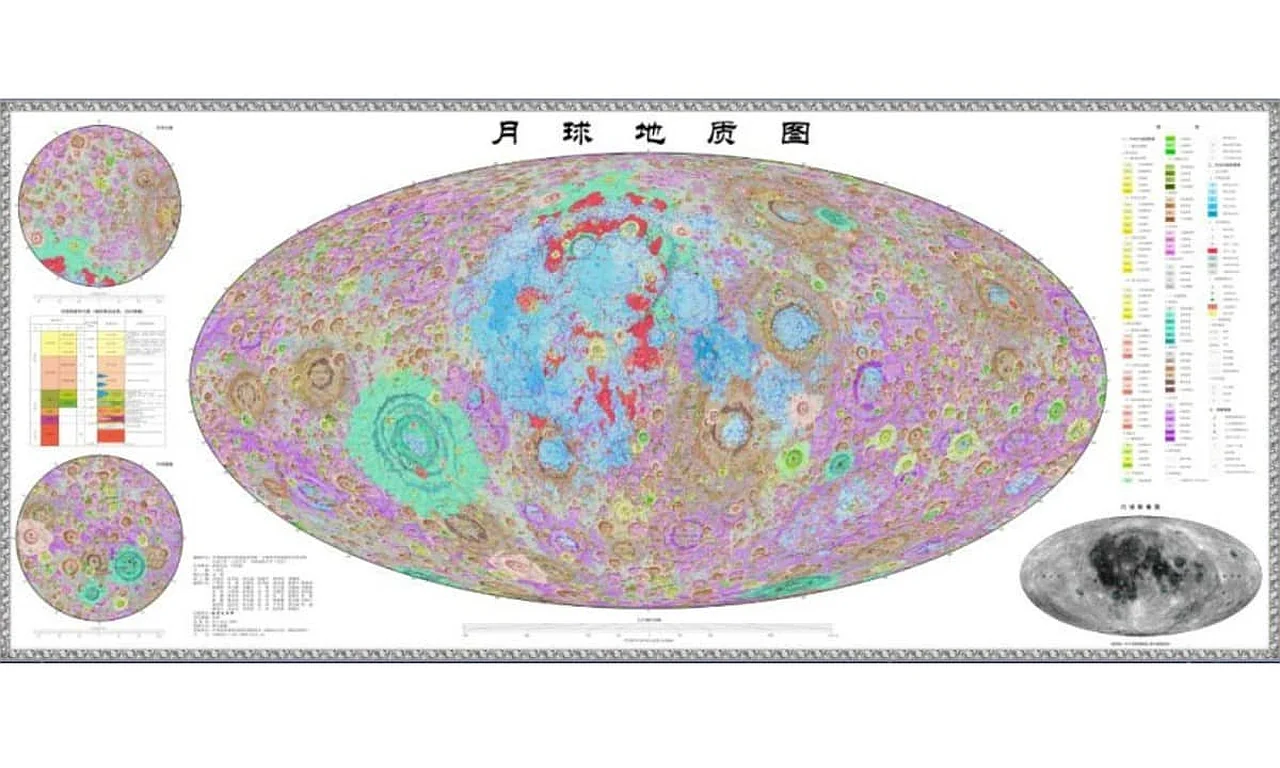
Chinese scientists have presented the most comprehensive and detailed global geological map of the Moon’s surface, with a scale of 1:5 000 000. This vast project was completed using the latest data collected during the country’s Chang'e program and other international lunar missions. According to the Xinhua news agency, the new map will serve as a key resource for building a research station on the Moon, precisely selecting landing sites, and developing strategic plans to study Earth’s natural satellite. Ixbt.com reports this.
Measuring approximately 280 × 120 centimeters, this unique map includes more than 13,000 impact craters and 81 vast basins. It also precisely classifies 14 types of geological structures and 17 types of rocks. Experts emphasize that such comprehensive classification is an important step toward understanding the Moon’s internal structure and evolution.
A New Chronology of the Moon’s Geological History
One of the project’s most important scientific results was the update of the Moon’s geological time scale. This system makes it possible to link layers and structures on Earth’s natural satellite to specific periods in its history. In particular, drawing on modern data, scientists refined the starting dates of geological periods:- The beginning of the Aitkenian period is estimated to date back 4.33 billion years;
- The Nectarian period began 4.17 billion years ago;
- The beginning of the Imbrian period was adjusted to 3.92 billion years ago.
Analysis of Mineral Composition and Deep Layers
The authors made extensive use of high-resolution mineral-composition maps and the results of the latest space missions to create the new map. In particular, observations by the Chang'e-4 and Chang'e-6 spacecraft made it possible to identify gabbro-norite rocks in the South Pole–Aitken Basin, the largest impact structure on the Moon. These findings open the way to valuable scientific conclusions about the deep structure and material composition of the lunar interior.For a map of such a large scale, specialists developed an entirely new system for depicting geological objects. They established minimum sizes for different structures, preserving the map’s readability while also allowing scientifically significant large objects to be shown. Chinese researchers say the map will provide a solid foundation for all future international and national space programs focused on studying the Moon’s surface and interior.


Comments 0
…