


Intel strikes back at AMD with 256-core Xeon processors
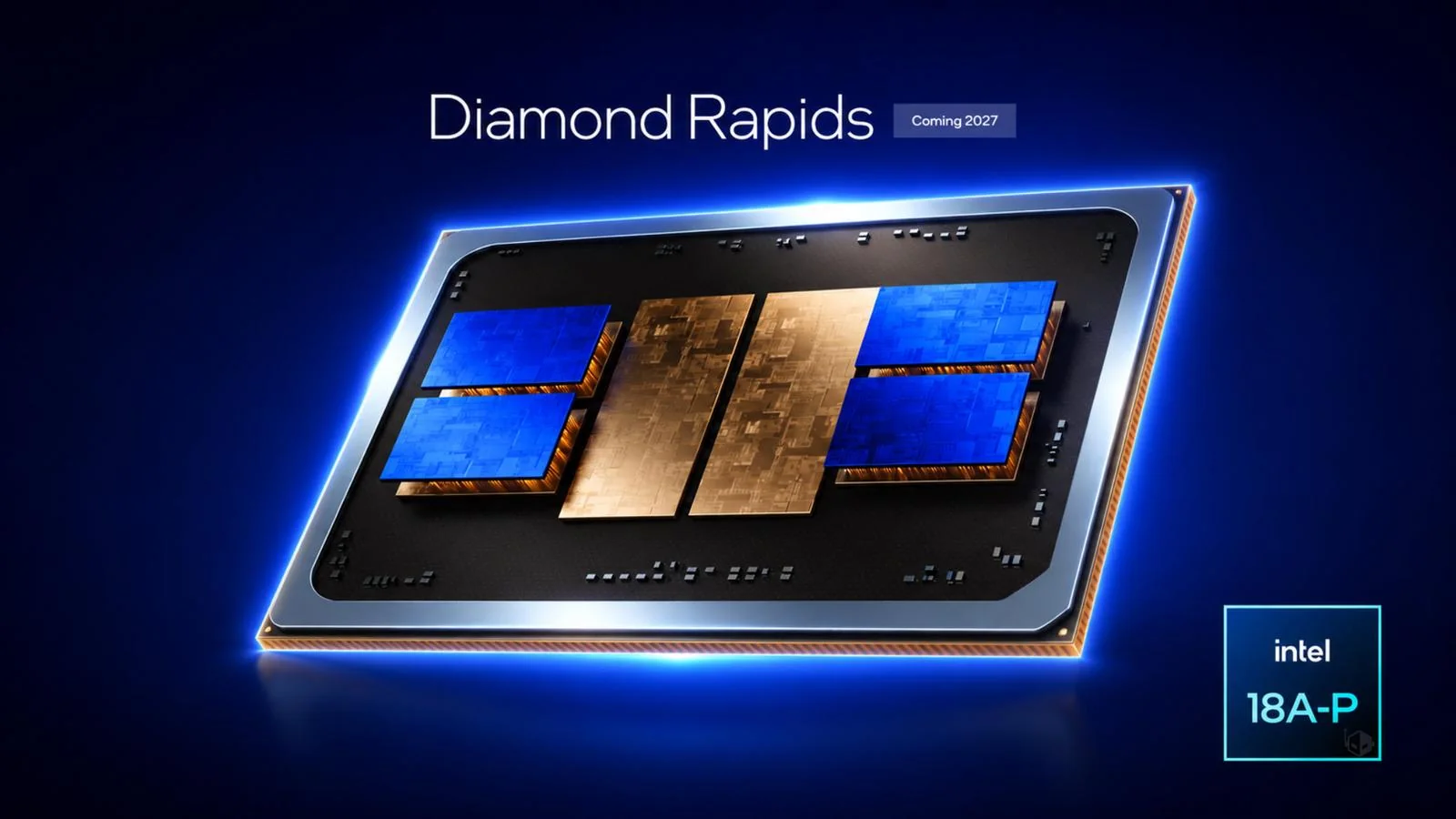
Intel, one of the world’s leading processor manufacturers, is preparing a distinctive “core-based response” to AMD to intensify competition in the server segment. According to ixbt.com, the flagship of the Diamond Rapids server family, planned for release under the Xeon 7 brand, will feature up to 256 high-performance P-cores. This is reported by Ixbt.com .
The new move is intended to bring Intel directly level with future AMD EPYC Venice processors in terms of core count. Earlier, the company’s plans were even more ambitious: processors with 384 and even 512 cores were expected for Diamond Rapids-HD. However, it has become clear that the strategy has changed.
Strategic changes and focus on P-cores
According to preliminary information, Intel has decided to abandon energy-efficient E-core variants. The 512-core processor project was canceled while technical specifications were still being developed, and the Diamond Rapids-HD program was fundamentally revised late last year. The current version focuses primarily on high-performance P-cores.Compared with the current Granite Rapids generation, the new Diamond Rapids is expected to increase core density by approximately 50%. While current Xeon 6900P processors offer up to 128 cores, the new 256-core solutions will compete directly with AMD’s 256-core EPYC 9996 and 192-core EPYC 9966, both based on the Zen 6 architecture.
Competition and artificial intelligence demands
However, in today’s server market, Intel has to compete not only with AMD but also with other major players. NVIDIA and other technology giants are actively developing their own processors for AI servers and cloud platforms, tightly integrating CPUs and GPUs.Increasing the number of cores alone is not enough to win the server market. That is why Intel’s new server platform will also introduce other important changes. Diamond Rapids will offer a new scalable architecture, support for the PCI Express 6.0 standard, and a faster memory subsystem.
The company plans to use the new generation of Xeon processors not only for traditional server workloads but also in rapidly expanding AI infrastructures. Diamond Rapids will be an important test for Intel as it seeks to regain competitiveness in the high-end segment. The series is expected to be followed by the Coral Rapids generation.


Comments 0
…