


A New Type of Safe Lithium-Free Battery Has Been Developed
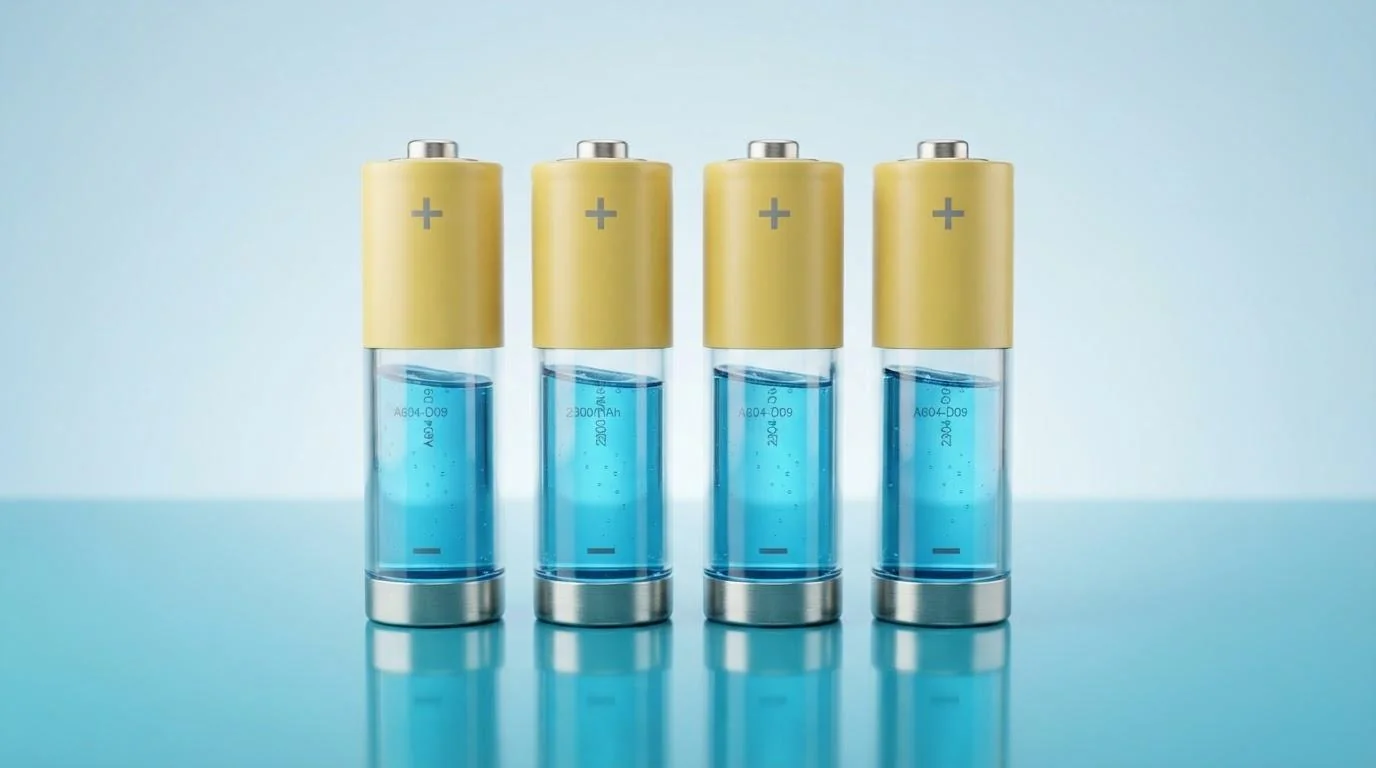
Specialists at the Korea Advanced Institute of Science and Technology (KAIST) have developed an innovative electrode that provides high capacity and fast charging for water-based zirconium and zirconium-ion batteries. According to ixbt.com, the breakthrough is expected to mark an important step toward creating a safer and more affordable alternative to conventional lithium-based devices in the energy storage market. Ixbt.com reports .
Water-based zirconium-ion batteries are currently viewed as a promising option for stationary energy storage systems. Because they use a water-based fire-resistant electrolyte and inexpensive raw materials, they are considered safer and more cost-effective than conventional lithium systems. However, their widespread adoption has been hindered by insufficient energy capacity and difficulties with fast charging.
An Innovative Approach and Special Structure
In particular, the high mobility of protons in the aqueous electrolyte caused unwanted side reactions on the electrode surface, reducing battery performance. Instead of trying to avoid this obstacle, the KAIST team decided to turn protons into an additional energy storage mechanism. To achieve this, the researchers used a two-dimensional porous material known as a metal-organic framework.The researchers installed special voltage-responsive amino acid groups in the material’s microscopic pores. As a result, at high voltage, the electrode initially accepts relatively large zirconium ions. When the voltage decreases, the amino groups become active, and the remaining gaps are filled by small, fast-moving protons.
High Efficiency and Practical Results
The scientists compare this process to first placing large stones in a container and then filling the gaps between them with sand. This arrangement enables more efficient use of the electrode’s volume and significantly reduces the likelihood of side reactions. The electrode created during the experiment demonstrated a specific capacity of 368,7 mA·soat/g.The device reportedly retained 46,9 percent of its initial capacity even when the charging and power delivery rate was increased 16-fold, and it endured more than 500 fast cycles. X-ray studies practically confirmed that the process actually occurs in sequence, with zirconium ions arriving first, followed by protons.
According to experts, the key lies not only in a particular material but also in the principle of controlling the order in which different ions accumulate. In the future, this approach could be applied to other types of electrodes, enabling the development of next-generation batteries that combine high capacity with fast charging.


Comments 0
…