


Rare 300,000-year-old discoveries identified in Tashkent region
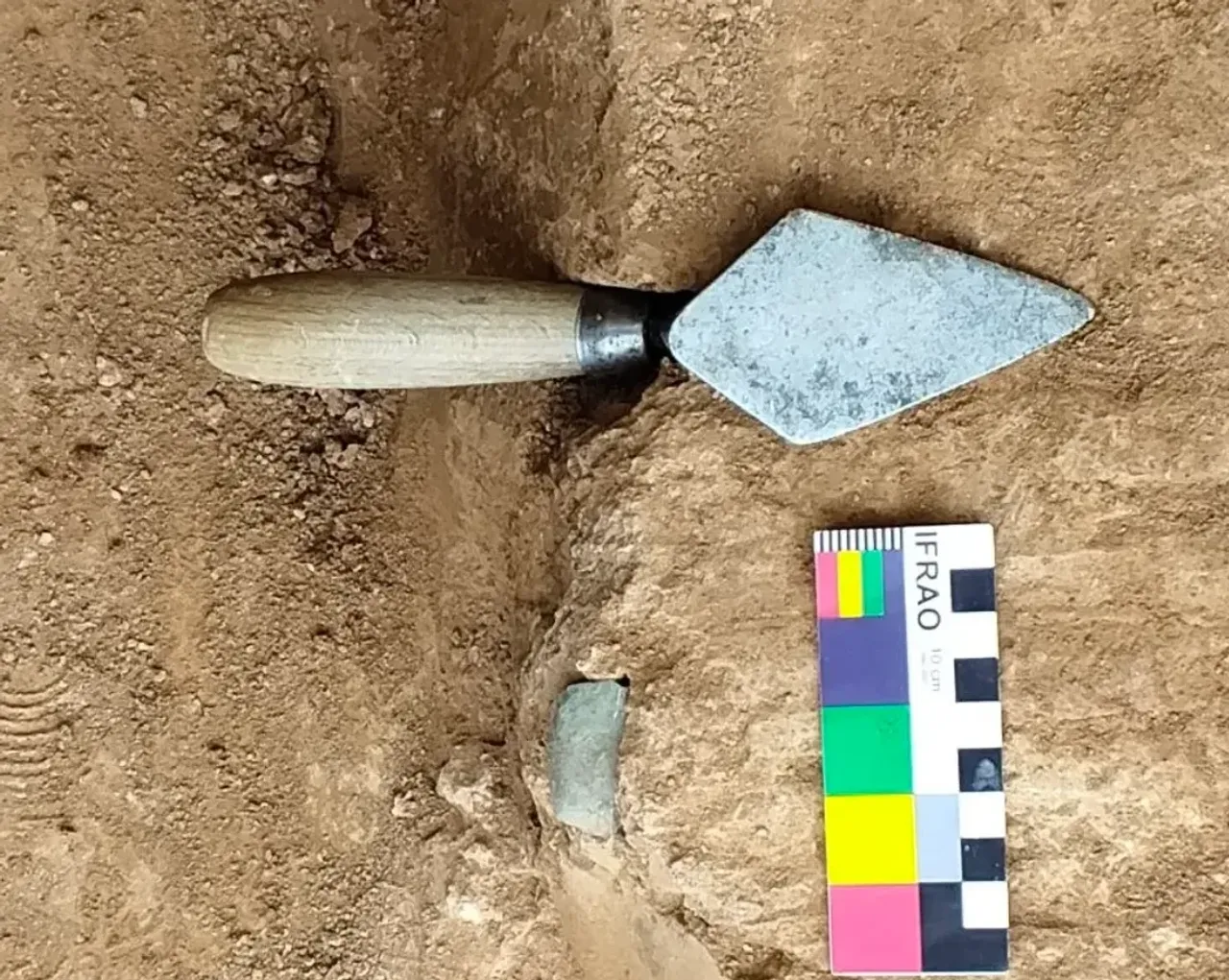
Large-scale archaeological excavations at the Arkutsoy Paleolithic site in the Bostliq district of Tashkent region are making it possible to rewrite the earliest pages of Uzbekistan's history. A joint expedition consisting of specialists from the Institute of Anthropology of the National Center of Archaeology of the Academy of Sciences of Uzbekistan and the Institute of Archaeology and Ethnography of the Siberian Branch of the Russian Academy of Sciences has been continuing its research in the area for the third consecutive year.
Currently, scientific excavations being conducted in three separate areas of the site have yielded rare stone objects (artifacts) worked by ancient humans.
The 320–280 thousand-year-old layer and the early traces of humanity
Scientists have managed to identify several ancient cultural layers at various depths of the Arkutsoy geological section:
Multi-stage settlement: Stone tools touched by human hands were found in the first, second, and third excavated soil layers. This indicates that our ancient ancestors settled the Arkutsoy area not just once, but in several stages over thousands of years;
A rare 320–280 thousand-year-old layer: In particular, artifacts recovered from the third ancient soil layer are serving as the basis for a major scientific sensation. According to preliminary geological and paleoclimatic comparisons, this layer was formed approximately 320–280 thousand years ago;
The oldest settlement in Uzbekistan: If these age indicators are fully confirmed by absolute dating methods in modern laboratories, Arkutsoy will go down in history as the oldest known archaeological site on the territory of Uzbekistan.
Early Paleolithic and migration routes in Central Asia
This discovery yields the following strategic conclusions for regional and global anthropology:
Early Paleolithic landscape: The findings prove that the Tashkent oasis and the territory of our country as a whole were widely settled by ancient human communities as early as the final stages of the Early Paleolithic;
Secrets of climate adaptation: The new artifacts will serve as an invaluable source for studying the routes of dispersal of ancient humans across Central Asia and how they adapted to drastic natural and climatic changes.



Comments 0
…