


The Donbas dispute remains the most serious obstacle to negotiations
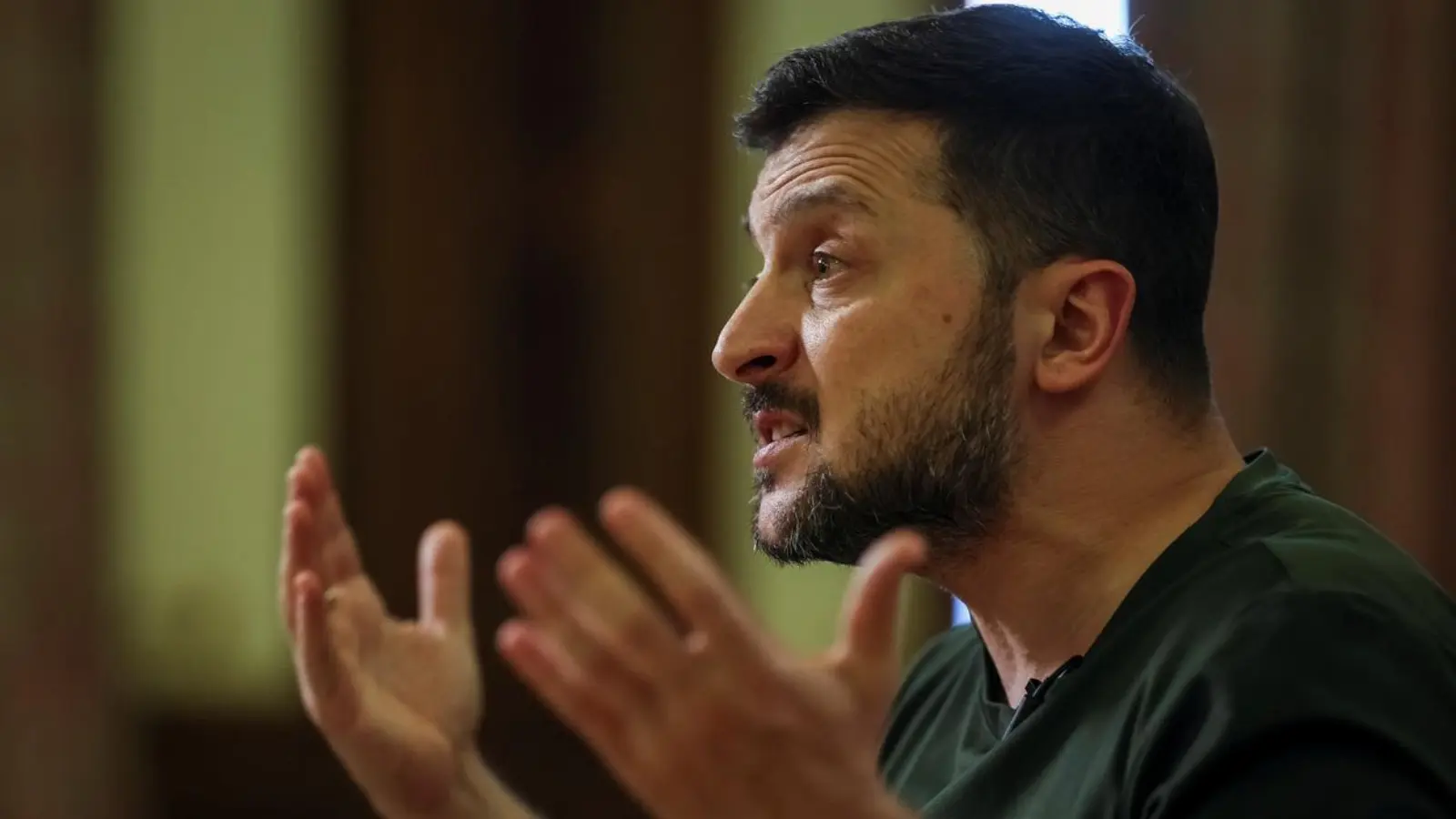
The most painful issue surrounding the negotiations to end the war in Ukraine has once again come down to the topic of the region. In an interview with AFP, Volodymyr Zelenskyy said that in US-mediated talks, Kyiv is being demanded to leave all of Donbas, and positions with Russia are becoming similar in this regard. He emphasized that the call "if you want the war to end tomorrow - leave Donbass" is sounding from both sides.
Territorial issues have been the main obstacle until now, and now they have become a "test point" for negotiations: Moscow claims the entire Donbas, and Kyiv categorically rejects this demand, putting forward at least the option of "freezing" the front line.
Sources note that Ukrainian troops are currently holding approximately one-fifth of the Donetsk region, while Russian forces control almost the entire territory of the Luhansk region. These two regions are collectively called Donbas.
Frozen Front and the idea of European troops
In an interview, Zelenskyy supported the idea that in the event of a ceasefire, European troops would be deployed closer to the frozen front line. At first glance, this is a signal "come with a guarantee, not coffee": that is, the stronger the security guarantee, the more a peace plan "works."
"Ukrainians, of course, want our partners to stand alongside us on the front line," he said, while admitting that "of course, no one wants to stand on the front line."
The initiative to create a multinational contingent is particularly actively promoted by France and Great Britain. After Emmanuel Macron and Kir Starmer signed the "statement" in Paris, "additional security infrastructure and force format" were openly discussed if the firing stopped.
At the same time, Macron said that the contingent should be on land, in the air, and at sea, but located far from the line of contact. Zelenskyy, on the contrary, expressed his desire to see it closer - because there is a strong position that near the front, a real deterrent is needed, not a "paper guarantee."
Germany is cautious, but not closing the door
Friedrich Mers also said that Germany's political, economic, and military participation could continue, citing the possible scenario of deploying forces in the territory of a neighboring NATO member state after the ceasefire - that is, the approach "near Ukraine, not inside."
"Germany will continue its political, financial, and military participation. This could also mean, for example, that after the ceasefire, we will deploy our forces to neighboring NATO territory for Ukraine," Mers said at the time.
Why is this message important?
In the current picture, the "peace formula" is not just a ceasefire. The most difficult questions are here: who will give up what to what extent in the territory, who and how will control the fire, where and by what force the guarantees will be provided. Therefore, without resolving the dispute around Donbas, it is difficult for negotiations to be resolved quickly - realistically speaking, in this case, the scenario of a "long dispute" is more pronounced than a "quick end."



Comments 0
…