


Building the future of AI at the Human Center - Summit on the impact of AI 2026
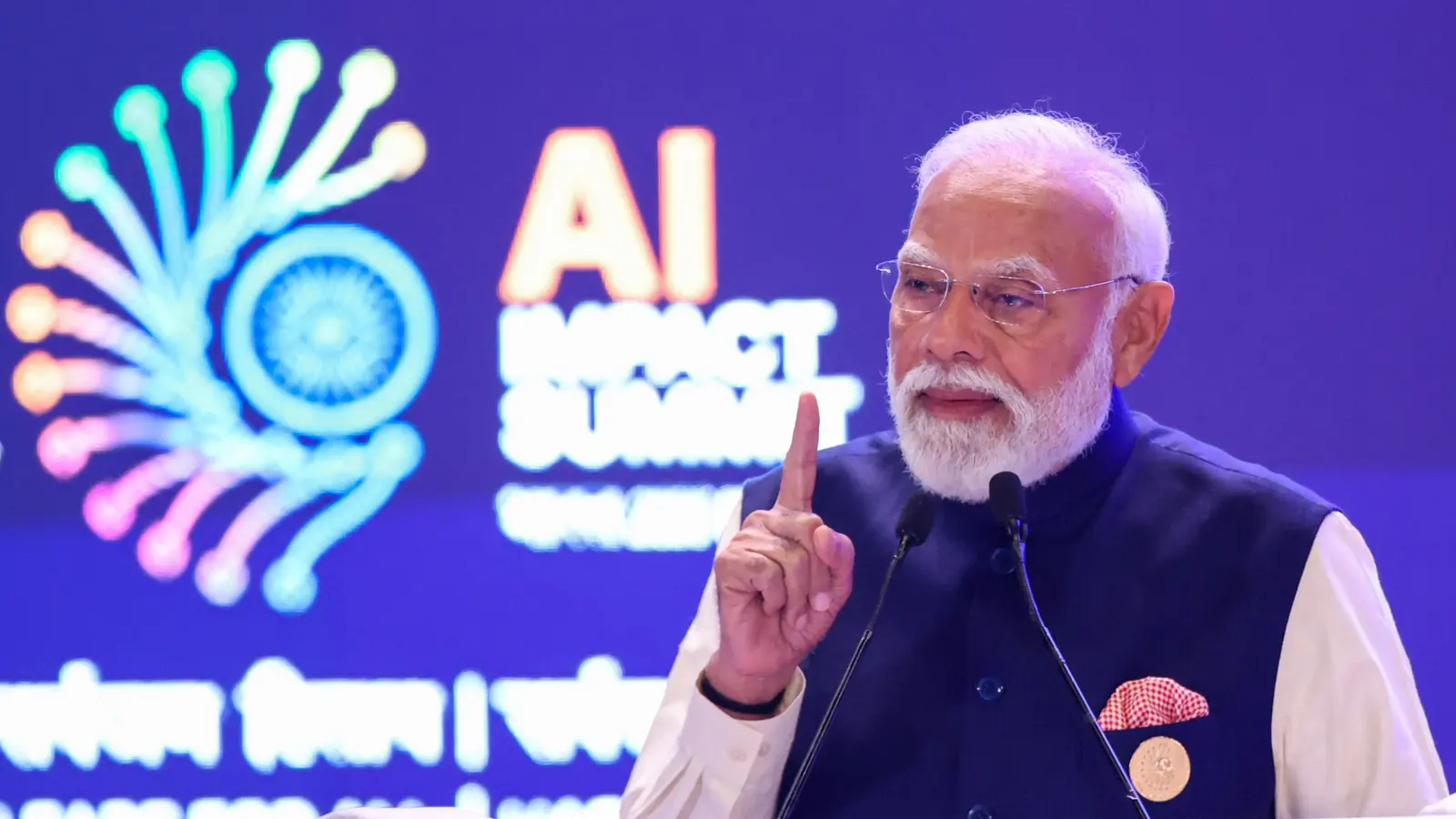
The 2026 Summit on the Impact of Artificial Intelligence in New Delhi once again demonstrated that humanity has entered a new stage with technology. For India, this conference was described as a great responsibility and an honorable moment of receiving heads of state and government, delegates, and innovators from around the world. Representatives of more than 100 countries gathered at the summit, and advanced artificial intelligence solutions were presented at the exhibitions. It was emphasized that the questions, interests, and discussions of thousands of young people made this conference "the largest and most democratic AI forum."
In his speech, Prime Minister Narendra Modi emphasized that alongside fire, writing, electricity, and the internet, which have changed the direction of civilization in human history, artificial intelligence will now stand. According to him, the difference between AI is that changes that took decades before can now affect the entire planet within a few weeks. For this reason, artificial intelligence is evaluated not only as a tool that makes a machine smart, but also as a technology that strengthens human intention and opens up new opportunities for it.
The central idea of the summit is to shift artificial intelligence from the center of the machine to the center of the human. Modi explained this by the principle of "Sarvajana Hitaya, Sarvajana Sukhaya" - the well-being of all and the happiness of all. That is, technology should work for the people, not for technology. He recalled that, using the example of digital payments and the COVID-19 vaccination process, India was able to widely implement digital public infrastructure without leaving anyone behind. The same spirit was felt at the summit: agriculture, security, support for people with disabilities, solutions suitable for the multilingual population were cited as examples.
India also cited practical cases on the use of artificial intelligence. For example, the digital assistant "Sarlaben," launched by the dairy cooperative, provides real-time consultations in its own language on livestock health and productivity to farmers (mainly women) producing 3.6 million milk units. It was noted that the "Bharat VISTAAR" platform helps farmers make decisions by providing information in many languages, from weather to market prices.
There is another strict caution in speech: people should never become "data points." Artificial intelligence is a tool of global goodness and should open the doors of progress, especially for the Global South. To implement this, India introduced the "MANAV" concept of human-centered governance:
M - ethical and moral systems: AI should rely on ethical standards
A - accountable management: transparent rules and strong control
N - national sovereignty: respect for the national right to information
A - open and inclusive: don't become a monopoly
V - valid and legal: compliant with the law, verifiable
According to Modi, trust is the foundation of the future of artificial intelligence. As generative systems increase content, the risk of fake images and disinformation also increases. Therefore, he said that digital content, such as "food labels," should also have an authenticity mark, and called for the creation of general standards for water marking and source verification. It was also noted that India has introduced a legal obligation to clearly define artificially created content.
The issue of children's safety was also emphasized: AI systems should be created with responsible, family-controlled protective mechanisms. With the idea that technology yields the greatest results when shared, not hidden, the importance of open platforms and collective intelligence has also risen.
The summit also addressed the future labor market: a new era is beginning, created jointly by people and "smart systems," with the emergence of entirely new professions. Modi stated that Indian youth will be the main driving force of the AI era, and great attention is being paid to retraining and lifelong learning.
India also openly stated that it will build infrastructure for the growth of its AI ecosystem: thousands of graphics processors have been launched as part of the AI mission, and new capacities are planned to be added. It was noted that inexpensive computing resources can turn even the smallest startup into a global player. It was also noted that a national AI warehouse has been created, which "democratizes" access to data and models. Attention is focused on the full value chain, from semiconductors to research and startups.
In the end, India called on the world: Design and develop in India, deliver for the world, deliver for humanity. The main conclusion of the summit is this: artificial intelligence has a great future, but if it doesn't rely on human dignity, trust, openness, and justice, it might become a problem rather than a force.



Comments 0
…