


Robots could be the first 'inhabitants' of Mars
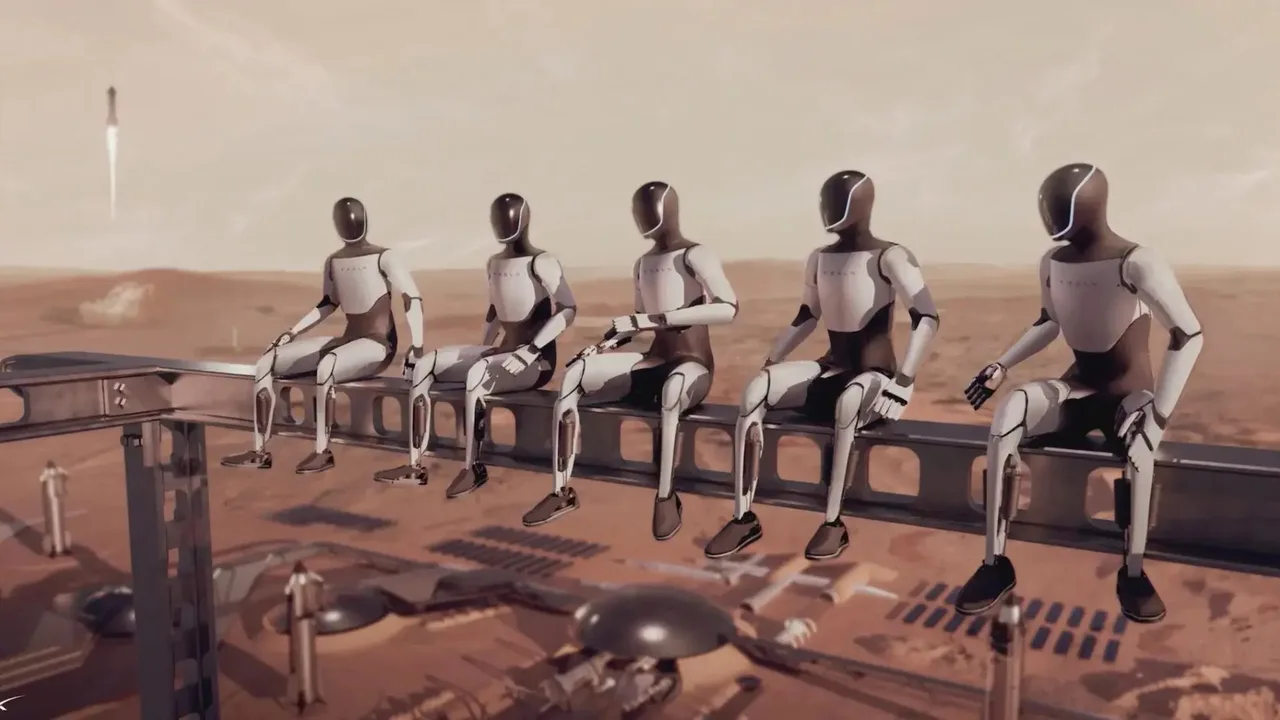
Elon Musk is accelerating his ambitious plans to prepare humanity for life on planets beyond Earth. The billionaire announced that by the end of 2026, the first cargo rocket flights from Earth will be carried out to deliver the equipment and materials necessary to build future colonies on the Moon and Mars. The most interesting aspect is that it will not be humans, but Tesla's Optimus humanoid robots that will set foot on new planets first.
According to Musk's latest plan, SpaceX is focusing primarily on building a permanent city on the Moon first. He believes that since the Moon is much closer than Mars, it will be easier to test the technologies and infrastructure necessary for humanity there. Musk plans to establish a permanent base on the Moon within the next decade, while also regularly sending construction materials and equipment to Mars over the next seven years.
This week, SpaceX submitted another important project to the US Federal Communications Commission (FCC). The company plans to launch a massive network of 100,000 satellites into space. This system is said to serve to strengthen communication between Earth and space, and provide high computing power for billions of artificial intelligence devices and robots working on the Moon and Mars in the future.
Jim Cantrell, a member of the SpaceX founding team, noted that in the future, each robot will not have its own powerful computer. The main computing processes will be carried out through the satellite network. According to him, robots will build and prepare all the infrastructure before humans arrive to live there.
These plans have already begun to enter the implementation phase. SpaceX recently successfully launched another 29 Starlink satellites into low Earth orbit via a Falcon 9 rocket carrier. However, a new, more powerful transport rocket system than Starship is planned to be developed to deliver heavy construction machinery and large cargo to Mars.
Experts believe that one of the biggest problems before moving humans to another planet is taking millions of tons of cargo into space. Former NASA chief technologist Les Johnson emphasized that creating a cheap and reliable reusable transport system is one of the main conditions of this plan.
According to Musk's strategy, before humans arrive on Mars, Tesla Optimus robots will be sent. They will perform tasks such as unloading cargo, installing solar panels, assembling living modules, mining water, producing oxygen, and other engineering work. Expertsnote that it is much easier to maintain robots than humans. They do not need food or air; electricity and maintenance are sufficient.
Scientists emphasize that it is necessary to prepare electricity, water, oxygen, fuel, and a living environment to live on Mars. Nuclear reactors or solar panels can be used as power sources. Since water may exist in the form of ice under the Martian surface, robots will have to mine it. It is also planned to use technologies to produce rocket fuel from the Martian atmosphere and obtain oxygen through electrolysis.
Musk's biggest goal is to establish the first independent cities on Mars that can survive without outside help between 2045 and 2055. Scientists believe that life on Mars for the first colonists will be simultaneously exciting, boring, and dangerous. This is because they will be forced to live mostly in enclosed structures, while the external environment remains extremely dangerous for human life. Nevertheless, SpaceX and Elon Musk are determined to implement one of the largest space projects in human history.


Comments 0
…