


83-Year-Old Mysterious German Boat Found on the Seabed
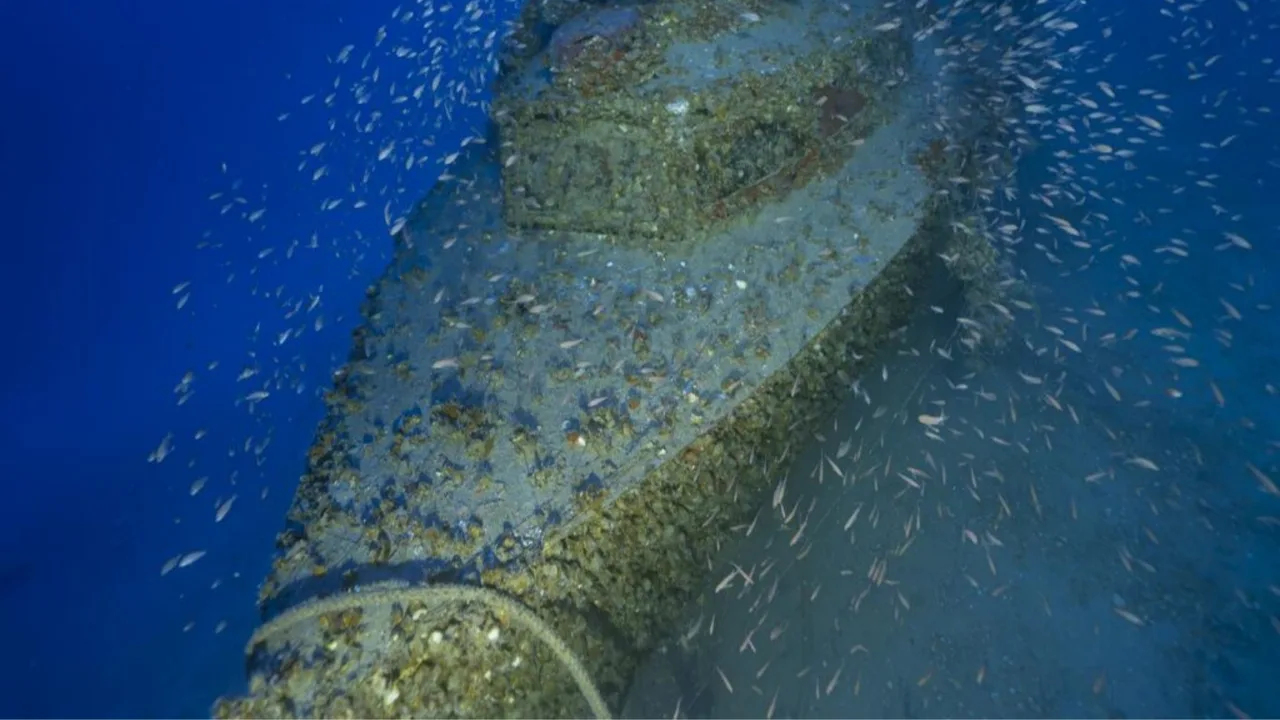
Greek technical divers have discovered a rare German speedboat from the Second World War in the Ionian Sea. The vessel lies at a depth of over 300 feet, in an almost vertical position.
AegeanTec experts identified the 41-foot-long vessel as one that served in the Kriegsmarine, the navy of Nazi Germany, LS6 — a Leichtes Schnellboot. Experts believe it may be the only known surviving vessel of this type.
The boat is located in the Ionian Sea, near Preveza, between the island of Lefkada and the mainland. The discovery was announced earlier this month by AegeanTec maritime history researcher Giorgos Karelas.
The search for the ship began in 2013. German maritime historian Peter Schenk provided information about a small missing Kriegsmarine vessel in the Ionian Sea through archival records. Later, Dimitris Giannoulatos, a ship hunter in the Lefkada area, detected an unknown object via sonar at a depth of 315 feet.
Following this, AegeanTec divers Marinos Giourgas and Vasilis Spyropoulos descended to the depth to inspect the ship. They found the vessel standing almost upright on the seabed, with its aluminum hull and superstructure remarkably well-preserved despite being underwater for over 80 years.
Experts confirmed it was the LS6 based on its dimensions, aluminum construction, stern, and two Junkers Jumo 205 diesel engines. A piece of the towing cable used to pull it remains attached to the bow of the ship.
The LS6 was built by the Dornier company and commissioned in 1941. Initially designed for torpedo operations, the boat was later refitted for anti-submarine warfare and equipped with depth charge launchers.
According to historical records, the boat was attacked on September 24, 1943, while traveling from Igoumenitsa to Corfu. The most likely version is that it was attacked by six Italian Reggiane Re.2002 fighter-bombers.
Explosions near the ship caused severe damage to its light aluminum hull and restricted its mobility. The German military attempted to tow the damaged LS6 to Piraeus for repairs.
However, five days later, on September 29, during the towing process, the damaged hull could not withstand the pressure and ruptured. As water entered the ship, the LS6 sank near Mitikas, off the coast of Preveza.
Experts note that the fact the ship was not completely destroyed by the air attack, but sank while being towed, helped preserve it. The aluminum construction was also a key factor in the LS6 remaining in relatively good condition for decades.
Under Greek law, ship and aircraft wrecks that sank more than 50 years ago are considered protected historical monuments. For this reason, the exact location of the LS6 has not been disclosed to the public.


Comments 0
…