


Ahmad al-Sharaa exposes secret agreements and details of clearing foreign bases
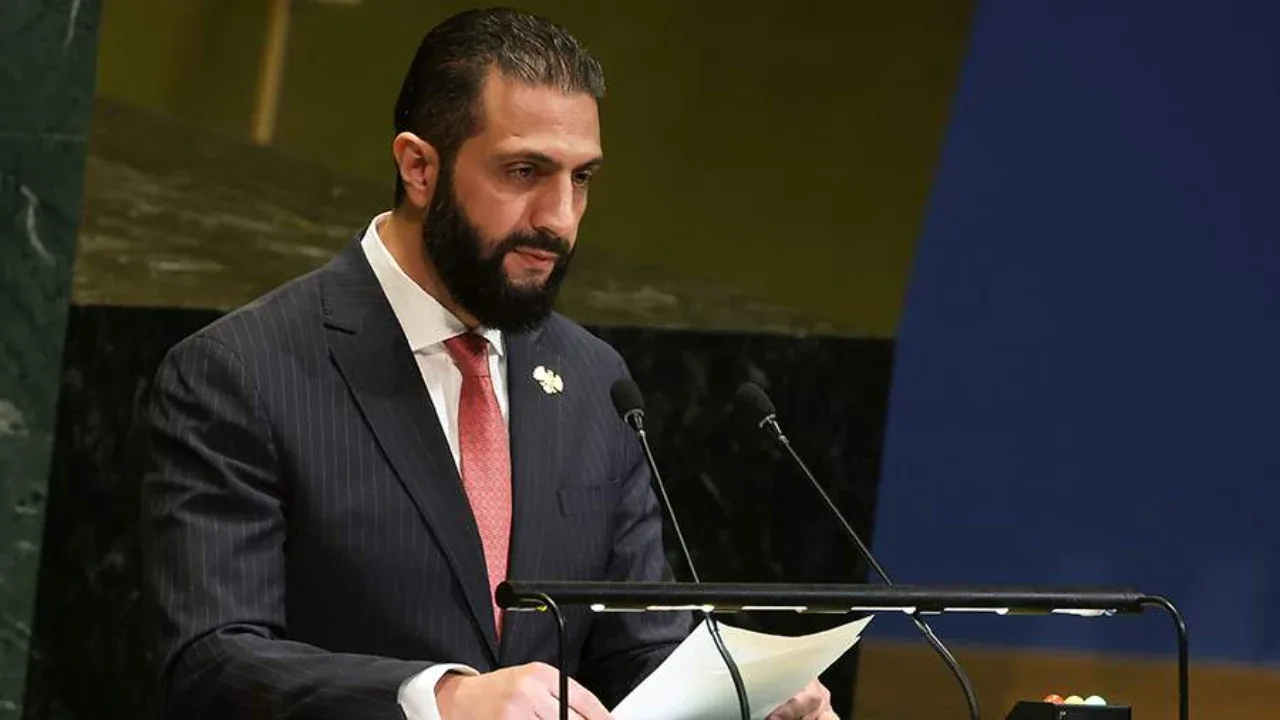
During the political debates organized by the influential Atlantic Council in New York on the sidelines of the UN General Assembly, sensational statements were made that shook Middle East geopolitics. According to "Anadolu Mirror" reports, Syrian President Ahmad al-Sharaa openly accused Tel Aviv of regularly carrying out airstrikes on the country's strategic and state infrastructure: "Even the presidential palace has been hit by Israeli attacks twice! Israel is continuously bombarding our airports. Could this possibly ensure the security of Israeli citizens? Look at our relations with the USA, Great Britain, and Lebanon — they are developing successfully. I believe the problem is not in Syria, but precisely in Israel".
The Syrian leader also stated that direct secret negotiations had been held with Israel for a year, and just as the agreement was 90 percent shaped, Israel unexpectedly withdrew. Damascus's condition is firm: the Golan Heights, recognized by the UN as Syrian territory, cannot be a subject of any bargaining, and for permanent peace, the Israeli army must return to the 1974 border line. Recalling his conversation with Donald Trump at the White House, al-Sharaa revealed that he had ironically remarked: "Why don't you give New Jersey to Israel? You don't have the Golan Heights to give away, and New Jersey is yours anyway (the Democrats there don't vote for you anyway)".
As one of the historical sensations, al-Sharaa announced the beginning of purging Syria of all foreign military bases: about 170 Russian bases and military points in the country are being reduced and transformed into just 2 training centers for the Syrian army, while Turkish bases are being transferred to a strict legal status approved by parliament. In addition, to bypass the Strait of Hormuz, Syria is launching a massive strategic pipeline project that will transport Iraqi oil to Syrian ports.
Well, will this firm and independent position of Damascus be able to stop Israeli airstrikes, will Syria become an independent center of the region during the 5-year transitional period, and how will the withdrawal of foreign bases change the balance of power?
"The bombed palace, the New Jersey joke, and the closure of 170 bases": 5 main points of the negotiation
The most surprising facts from Ahmad al-Sharaa's speech in New York:
Two strikes on the presidential palace: The Israeli Air Force carried out direct airstrikes on the presidential residence in Damascus twice;
The collapse of the 90-percent deal: Israel and Syria held direct peace negotiations for a year, but at the last moment Tel Aviv set new conditions and disrupted the agreement;
The Golan Heights are not up for discussion: The Syrian leader stated that the Golan Heights are UN-recognized Syrian land and permanent peace will happen only after Israeli troops return to the 1974 border;
Russian and Turkish bases are being reduced: About 170 Russian military points were reduced to the level of just 2 training centers; Turkish bases are being granted legal status with the consent of the People's Council;
Pipeline bypassing the Strait of Hormuz: A new strategic transit project was announced to safely bring Iraqi oil to the world market through Syrian ports.
Syria's new geopolitical doctrine: Comparison of relations and security
Parameters of the new foreign and domestic policy announced by Ahmad al-Sharaa:
Directions and issues | Previous situation and problems | New political direction announced by Ahmad al-Sharaa |
Relations with Israel | Permanent state of war and uncertainty | One year of negotiations took place; the condition is to return troops to the 1974 line |
Status of the Golan Heights | Attempted annexation by Israel | An inseparable territory of Syria, the issue of sovereignty is absolutely non-negotiable |
Russian military presence | About 170 bases and points across the country | Reduced to only 2 centers (will serve as training bases for the Syrian army) |
Turkish military forces | Uncontrolled military presence in the northwest | Being reduced and transferred to a legal status under the control of the People's Council |
Energy and economy | Blockade and destroyed infrastructure | A new pipeline free from the Strait of Hormuz, bringing Iraqi oil to the Mediterranean Sea |
Internal political governance | Dictatorship under the monopoly of a single person | 5-year transition period, rule of law, and full recognition of Kurds as having equal rights |
Military-political and geopolitical expertise: Why do these statements mark a major turning point?
Conclusions of Middle East analysts and international security experts:
Damascus fully coming to terms with the West: Al-Sharaa speaking from the Atlantic Council podium in New York and stating that dialogues with the US and Great Britain have warmed up proves that Syria's new leadership has completely overcome international isolation;
Israel driven into a diplomatic corner: Exposing the strikes on the palace and the violation of the 90-percent agreement by Tel Aviv was a powerful diplomatic move aimed at portraying Israel as the party that does not want peace in the region;
Ending the monopoly of foreign bases: Leaving only 2 out of 170 Russian bases and subjecting Turkish military personnel to local parliamentary control indicate that Damascus is building a neutral defense system independent of any external force;
Prospect of a regional energy hub: The project to lay a pipeline for Iraqi oil transforms Syria into an important player in the transit market against the backdrop of risks in the Persian Gulf and will provide a large currency flow to the country's treasury;
Abandonment of one-man rule: The president's fatigue with governance, his desire to return to normal life, and promises not to concentrate power in one hand create the groundwork for the formation of democratic institutions in Syria.
This open speech by Ahmad al-Sharaa in New York showed that Syria is emerging from an era of old wars and dependence, transforming into an independent state that firmly defends its national interests.
In your opinion, is it possible to sign a permanent peace treaty between Syria and Israel based on the 1974 borders? Will the country's efforts to reduce Russian and Turkish bases and strive for complete military sovereignty strengthen Syria's security or create new threats? Leave your personal thoughts in the comments and share this exclusive article, which uncovers the behind-the-scenes truths of Middle East politics, with all your friends!



Comments 0
…