


Saudi Arabia issues uncompromising statement on Jerusalem and the 1967 borders!
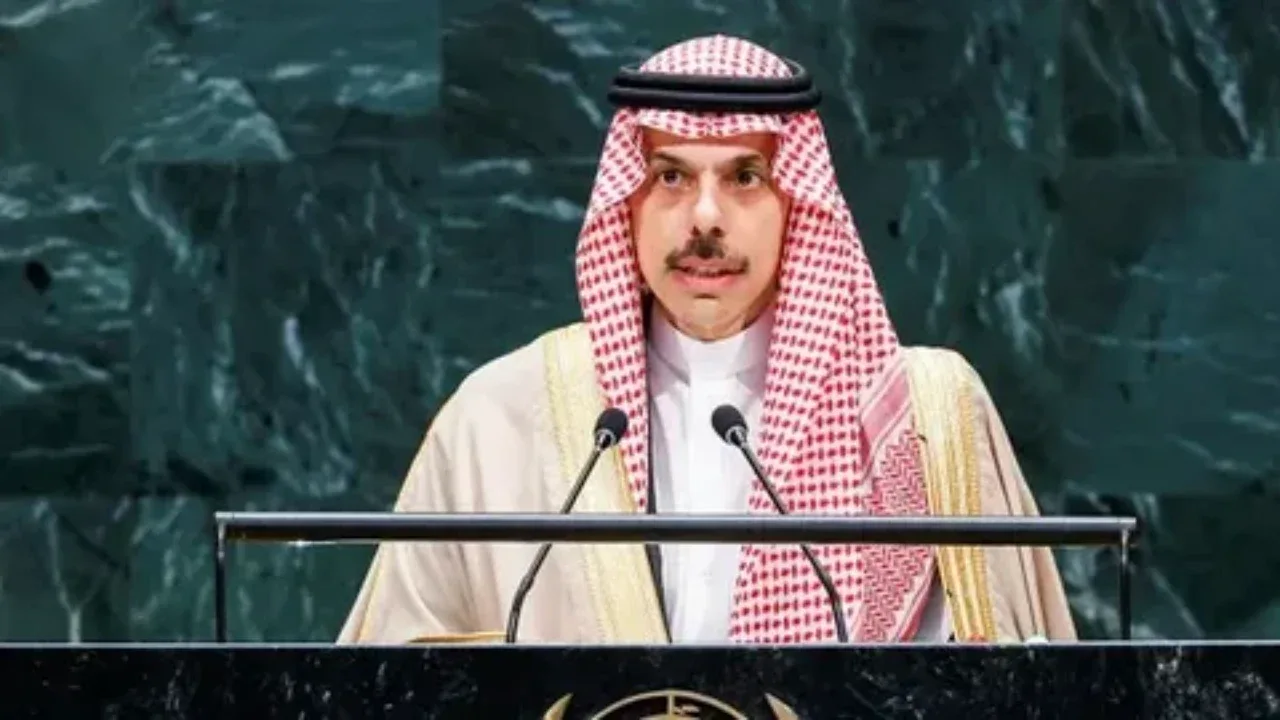
Amid ongoing sharp political processes in the Middle East and the complex situation surrounding Palestine, the Kingdom of Saudi Arabia has once again openly declared its sharp and firm position in the international arena. Saudi Foreign Minister Prince Faisal bin Farhan Al Saud stated that official Riyadh completely rejects any attempts to artificially change the historical and demographic reality on Palestinian soil and to forcibly displace the local population from their native lands.
The minister emphasized that the only way to achieve sustainable and fair peace in the region is the unconditional implementation of the internationally recognized "two-state" principle. This solution stipulates the establishment of a fully independent Palestinian state within the 1967 borders, with East Jerusalem as its capital. The Kingdom's uncompromising statement is being received as an open diplomatic signal to all geopolitical players in the region.
"Veto on land grabs, 1967 borders and East Jerusalem": 5 key points of Riyadh's statement
The most substantial theses from the speech of the Saudi Foreign Ministry head:
Absolute ban on forced displacement: The Kingdom strongly opposed plans to expel Palestinians from their land and change reality;
The "two-state" principle is the only solution: It was noted that regional stability can only be ensured through the existence of two independent states;
Inviolability of the 1967 borders: Official Riyadh set as a condition the restoration of internationally recognized territorial borders of 1967;
Capital — East Jerusalem: It was strictly emphasized that the capital of the future Palestinian state must be precisely East Jerusalem;
Guarantee of diplomatic balance: Saudi Arabia indicated that there will be no compromise agreements until Palestinian independence is secured.
Peace formulas in the Middle East: Comparison of parties' approaches and Saudi demands
A table of existing pressures in the region and Saudi Arabia's firm demands:
Indicators and criteria | Forced pressure and plans of certain circles | Saudi Arabia's official principled position |
Destiny of population and land | Attempts to displace Palestinians to neighboring countries | Unconditional rejection of all attempts at displacement |
Territorial borders | Current annexation and violation of territorial integrity | Full preservation of the internationally recognized 1967 borders |
Status of Jerusalem | Unilateral control and divisions | Status of a sovereign state with East Jerusalem as capital |
Path to achieving peace | Temporary military and economic restrictions | Full adherence to the "two-state" principle |
Role in the Arab-Muslim world | Causing regional divisions | Acting as a full legal defender of the Palestinian people |
Geopolitical and diplomatic expertise: Why is this Saudi statement of crucial importance?
Conclusions of international political scientists, Arabists, and Middle East analysts:
"Commitment to the Arab Peace Initiative": Saudi Arabia is the main architect of the 2002 Arab Peace Initiative; Faisal bin Farhan's statement showed that Riyadh will not back down from this historical principle under any political pressure, and that there will be no peace in the region without Palestinian statehood;
Prevention of the threat of forced displacement: Plans to expel the local population from Gaza and the West Bank into Egypt or Jordan could have thrown the entire region into the fires of a new war; Saudi Arabia's sharp opposition serves as a barrier to the realization of such dangerous scenarios;
Center of gravity in global negotiations: In any normalization negotiations with Washington and Tel Aviv, Saudi Arabia holds East Jerusalem and the 1967 borders as a "red line," which is the greatest lever preserving Palestinian international rights.
Do you think Saudi Arabia's opposition to the displacement of Palestinians and its firm stance on East Jerusalem can serve to establish real peace in the region? Is there any other realistic alternative to the "two-state" formula in resolving the long-standing conflict in the Middle East? Leave your personal thoughts in the comments and share this important analysis on the grand geopolitical stage with everyone!



Comments 0
…