


New evidence found regarding the mysterious ninth planet in the solar system
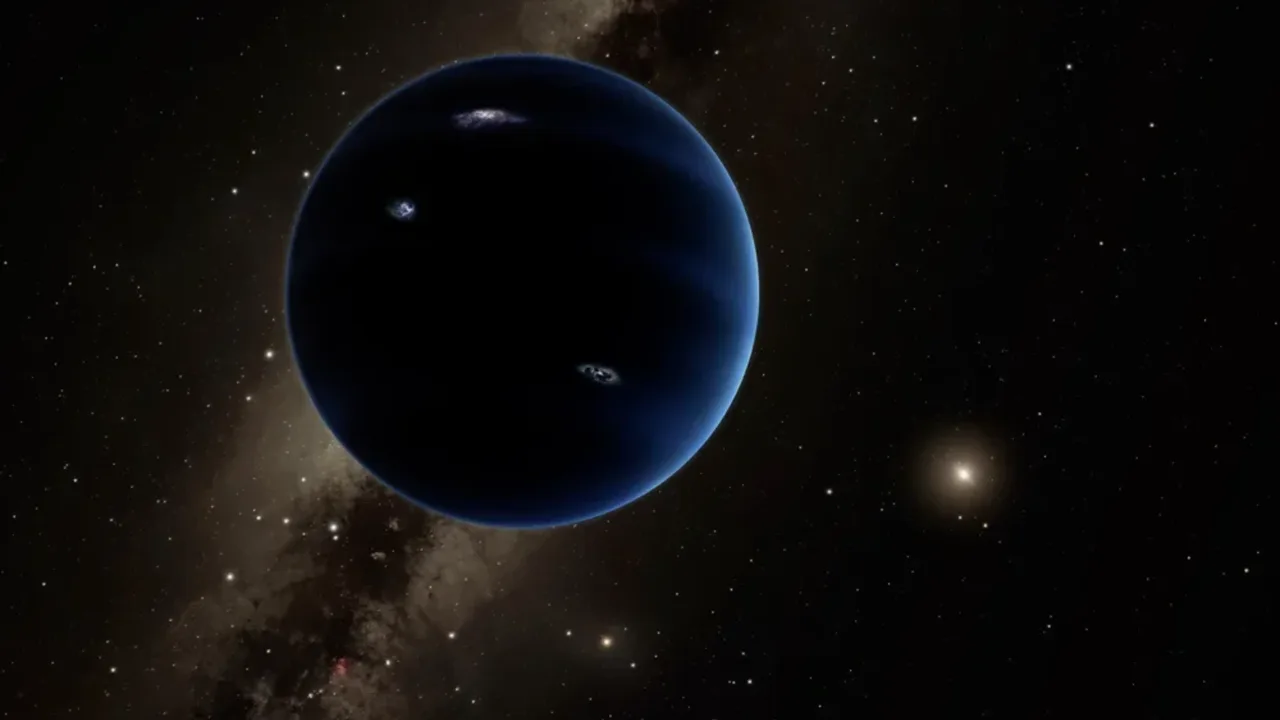
Taiwanese scientists have re-analyzed data from previous space observations and identified a celestial body that could be the hypothesized ninth planet in the Solar System — Planet Nine. If this object truly turns out to be a planet, it could shed light on one of the greatest mysteries of the Solar System. This was reported by "The Economic Times".
According to reports, researchers led by Terry Long Fan from National Tsing Hua University in Taiwan compared data captured in 1983 by the Infrared Astronomical Satellite with observation results collected by Japan's AKARI space probe in 2006–2007.
The 23-year time gap between the two observations allowed scientists to compare changes in the positions of celestial bodies and determine their movement. During the research, among millions of signals, an object was isolated that shifted across the sky by 47.46 arcminutes. Its motion characteristics and infrared radiation matched predictions that it could be a massive planet located very far from the Sun.
Initially, scientists identified 22 objects suspected of being a planet. Then, their characteristics were studied in greater depth, reducing the number of candidates first to 13, and then to one. According to the researchers' calculations, the mass of the final object could be 7 to 17 times greater than the mass of Earth.
Experts note that detecting objects located in such distant regions of the Solar System using ordinary optical telescopes is extremely difficult. Sunlight reaches objects situated 500–700 astronomical units away extremely weakly. For this reason, observing them via visible light is considered complicated.
However, massive planets do not merely reflect light coming from the Sun, but also emit their own internal heat. The infrared radiation generated in this process can be recorded using specialized equipment. Researchers took advantage of this very opportunity to try and detect the potential planet.
Why are scientists interested in Planet Nine?
The hypothesis that there might be a ninth planet in the Solar System arose from the study of unusual orbits of certain icy celestial bodies moving beyond the orbit of Neptune. Their motion paths and orbits appear grouped together in certain regions. This indicates that these bodies might be under the gravitational influence of a yet-undetected massive celestial body.
The location of the newly discovered object also matches existing hypotheses about Planet Nine. If its planetary nature is confirmed, scientists will be one step closer to explaining why certain bodies in the outer reaches of the Solar System move along orbits that differ from the norm.
The research results were published in the scientific journal "Publications of the Astronomical Society of Australia". Nevertheless, scientists have not yet officially confirmed the discovered object as Planet Nine or a new planet of the Solar System. Therefore, additional observations are necessary to determine its nature and true characteristics.
In the next phase, researchers plan to re-observe this object using the Dark Energy Camera mounted on the 4-meter Blanco Telescope located in Chile. This is intended to determine its current location and movement, as well as to check whether the observation results match the predicted orbit.
Thus, the existence of the mysterious ninth planet has not been proven yet. However, new results obtained from old space observation data provide scientists with yet another opportunity to find an answer to this question.


Comments 0
…