


1,000 cities of the world analyzed: Which city took 1st place in terms of quality of life?
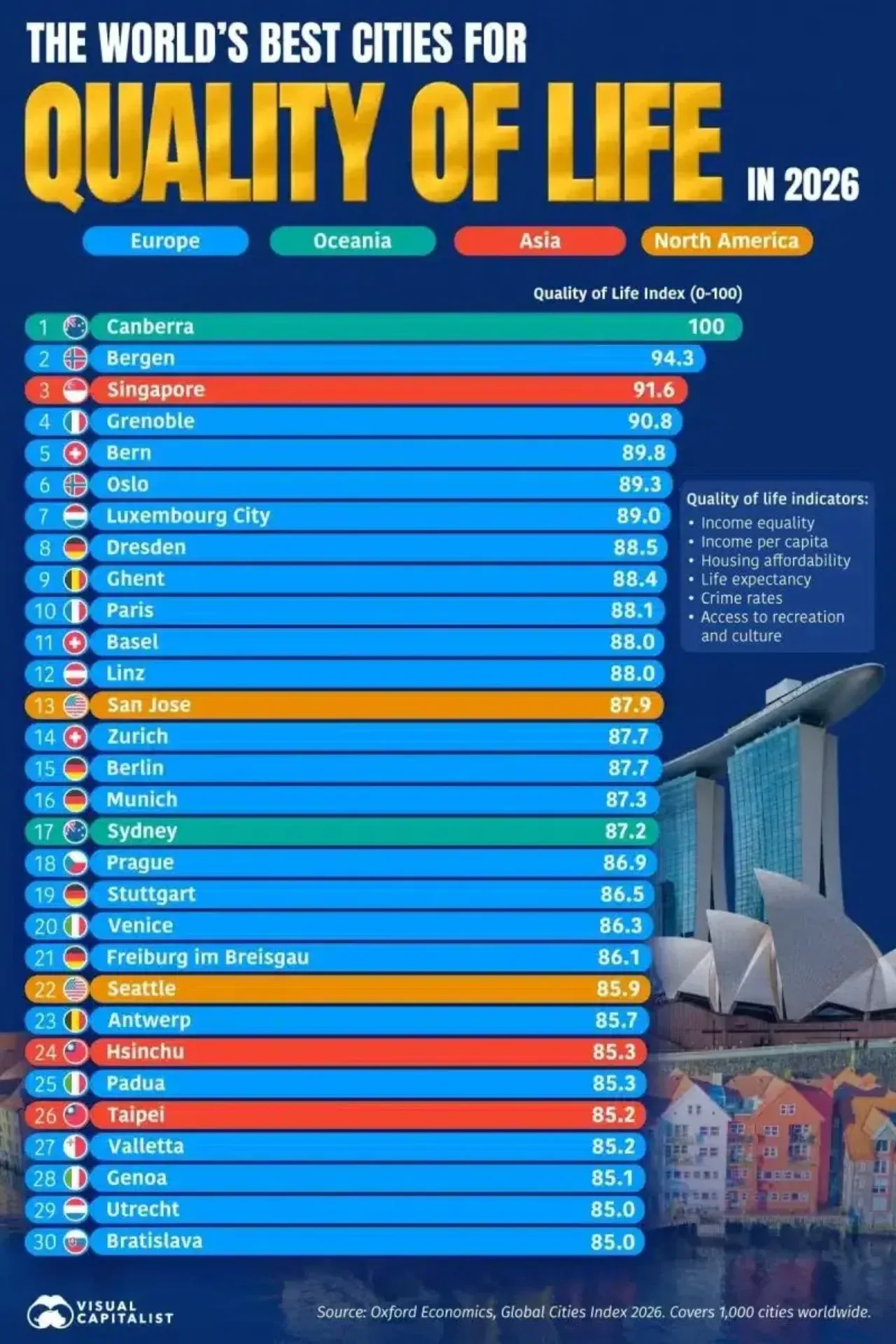
The international analytical platform Visual Capitalist has published the results of a large-scale study covering 1,000 major cities around the world. In this global report, the quality of life in cities was comprehensively evaluated based on such important criteria as per capita income, income inequality, housing costs, life expectancy, the criminogenic situation, and access to cultural and recreational facilities.
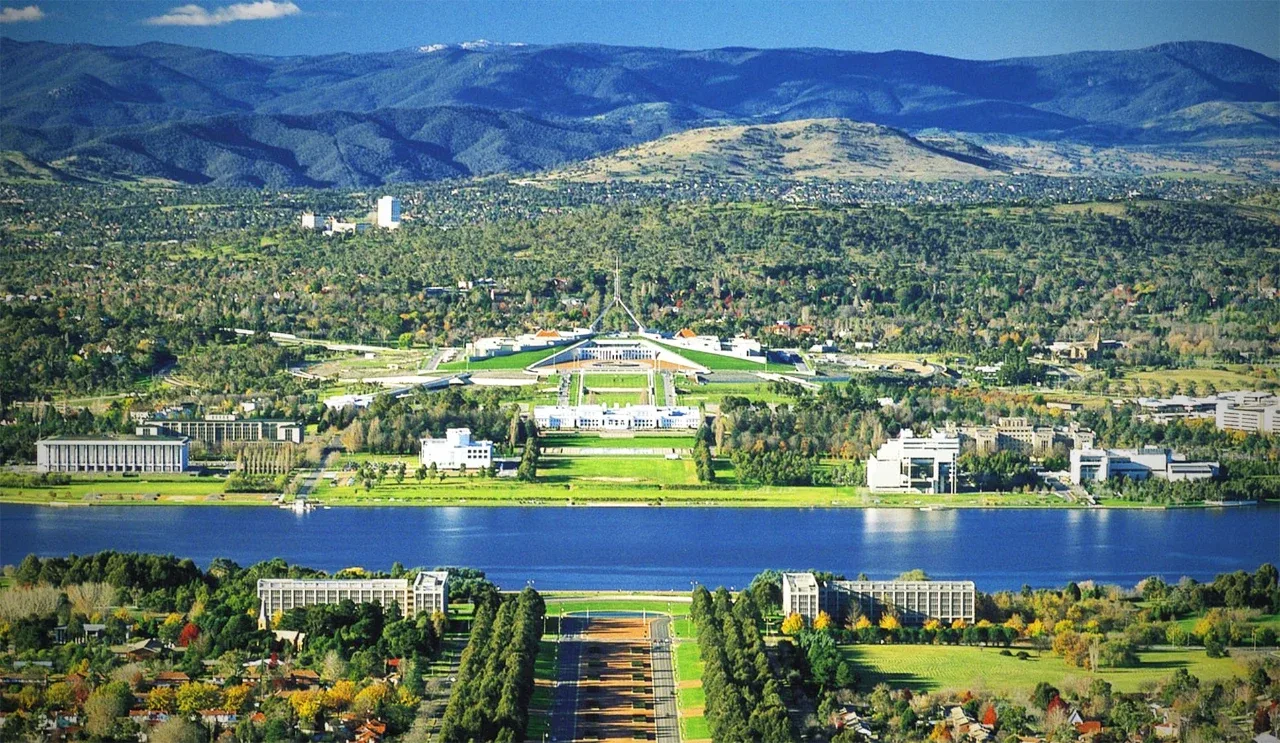
According to the rating results, Australia's capital, Canberra, was recognized as the best city on our planet in terms of quality of life, while European centers almost completely occupied the top positions.
Why is Canberra the leader? The main formula of success
The Australian capital's attainment of leadership among 1,000 cities was based on the following factors:
High wages and small disparity: The city has a high level of wages, and income inequality between population strata is relatively very small;
Stability of the public sector: Guaranteed and high-paying jobs belonging to government institutions make up the majority in the capital;
Health and culture: The life expectancy of the city's population is very high, and leadership was also recorded in terms of the number of recreational and cultural facilities per capita.
However, analysts emphasize an important distinction: although Canberra ranks 1st in quality of life, it took 45th place in the general Global Cities Index ranking, which combines all economic and infrastructural factors.
European hegemony and Germany's record
European cities demonstrated absolute dominance in the top positions:
Leaders of Northern and Central Europe: Bergen and Oslo in Norway, Grenoble in France, and Bern in Switzerland were recognized as the most comfortable regions;
Germany's five cities: Dresden, Berlin, Munich, Stuttgart, and Freiburg im Breisgau secured spots in the top 21;
Switzerland and Italy's success: Swiss cities Bern, Basel, and Zurich entered the top 20, while Italian cities Venice, Padua, and Genoa entered the top 30;
Moscow's position: The capital of Russia took the 180th spot in the global ranking for quality of life indicators.
Outside the European continent, Australia's Canberra and Sydney, the US cities of San Jose and Seattle, Taiwan's Hsinchu and Taipei, as well as Singapore, recorded high results.
Giants that dropped out of the top 30: The housing problem
Some famous cities, considered by many to be the most attractive for living, failed to even enter the top thirty of the ranking. The main reason for this was the exorbitant cost of real estate:
Copenhagen's decline: Despite ranking 1st in the world for governance quality and 18th in the overall ranking, the capital of Denmark dropped to the 160th spot in terms of quality of life. According to Oxford Economics analysis, the shortage of housing supply and excessively high prices sharply reduced the city's indicators;
Vancouver's collapse: Although Canada's Vancouver took 24th place in the overall index, it slid down to 215th place in quality of life. Developed walking and recreational infrastructure and high life expectancy indicators could not offset the heavy cost pressure in the real estate market.
This global study shows that in the modern world, only high technologies or beautiful nature cannot guarantee a happy life for urban residents — affordable housing and fair income distribution are becoming the decisive conditions for human comfort.



Comments 0
…