


The "Big Three" summit in Shenzhen at risk: Trump and Xi Jinping cannot reach an agreement
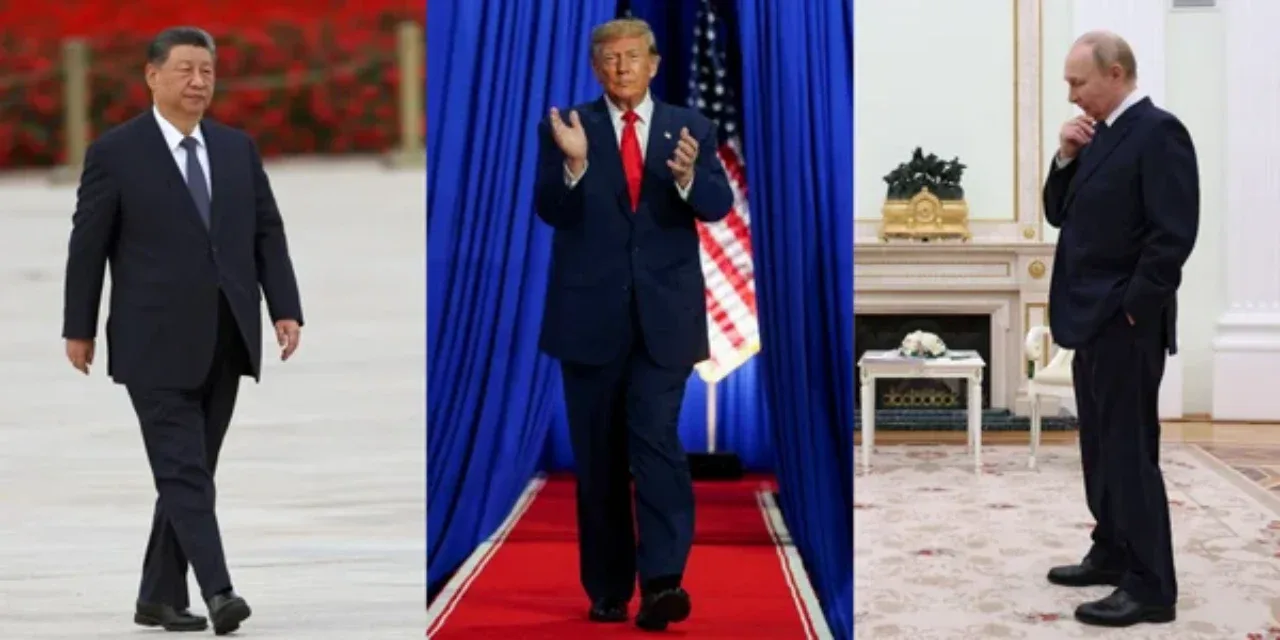
A historic meeting between the leaders of the world's three major nuclear powers — the US, Russia, and China — scheduled for November in Shenzhen is on the verge of collapse. According to The Wall Street Journal, Washington and Beijing have faced serious disagreements over the format and agenda of the negotiations. The meeting between US President Donald Trump, Russian President Vladimir Putin, and Chinese President Xi Jinping on the sidelines of the APEC summit remains in serious doubt.
"Strict script" and "free debate": What are the parties demanding?
At the heart of the disagreement lies the format of the dialogue. Beijing is insisting that the meeting be conducted based on a 100 percent pre-written script to avoid any accidents or unexpected debates. According to this, the leaders would only read prepared statements, leaving almost no room for free Q&A sessions or discussions.
The Trump administration, conversely, is demanding a lively and free exchange of ideas, free from protocol. In the view of the US side, such a rigid regulation indicates that Xi Jinping is not prepared for direct, open dialogue.
Topic / Aspect | Washington's position (Trump) | Beijing's position (Xi Jinping) | Moscow's position (Putin) |
Dialogue format | Lively, free exchange of ideas | Strict script, prepared speeches | Favors finding a compromise consensus |
Nuclear arms control | Forcing China into a 3-party treaty | Sharp refusal to discuss | Proposing agenda items |
Type of negotiation | Three-way direct summit | Separate bilateral format if necessary | Interested in a three-way meeting |
Main goal | Denuclearization and global influence | Image, security, zeroing out political risks | Agenda acceptable to all parties |
"For Xi Jinping, such a meeting is an excessively dangerous and unpredictable process. Beijing wants to get only successful photos and a propaganda effect from this summit, but wants to completely avoid the discomfort of a live debate."
— Kurt Campbell, head of the Asia Group consulting firm, former Deputy Secretary of State of the United States.
The main obstacle: The problem of the nuclear arsenal and a new pact
The second and most difficult obstacle is the issue of arms control. The last treaty between Russia and the US on the limitation of strategic offensive arms (New START) officially expired on February 5, 2026. As a result, there is no document left in the world that limits nuclear arsenals.
Trump and Secretary of State Marco Rubio are openly stating that China must be included in a new treaty and that this very topic should be resolved in Shenzhen. However, official Beijing has flatly refused to discuss this matter on a trilateral basis. China's main concern is the fear of being limited by a treaty while its nuclear reserves are significantly smaller in volume than those of the US and Russia.
Xi Jinping's caution and the Kremlin's wait-and-see position
The Chinese leadership's extreme caution is not without reason. According to observers, on the eve of the 21st Congress of the Chinese Communist Party to be held at the end of 2027, any political or image risk could have serious negative consequences for Xi Jinping. For this reason, Beijing prefers to hold separate bilateral meetings with Washington and Moscow, demanding concessions from each, rather than engaging in a sharp three-way debate.
The Kremlin is also watching the situation closely. On November 8, Russian Presidential Press Secretary Dmitry Peskov noted that the three capitals are exchanging proposals on the agenda, and that some topics are very important for one side while being unacceptable for another. According to presidential aide Yury Ushakov, for the summit to take place, the parties must first reach a compromise on the agenda. Whether the meeting on the sidelines of APEC will take place on November 18—19 or if the summit will end only with protocol photos — this will become clear in the coming days.
Do you think China should join a new treaty on nuclear restrictions, or is Beijing right to increase its arsenal? Share your opinion in the comments.



Comments 0
…