


Why do Chinese people consider the number 4 unlucky?
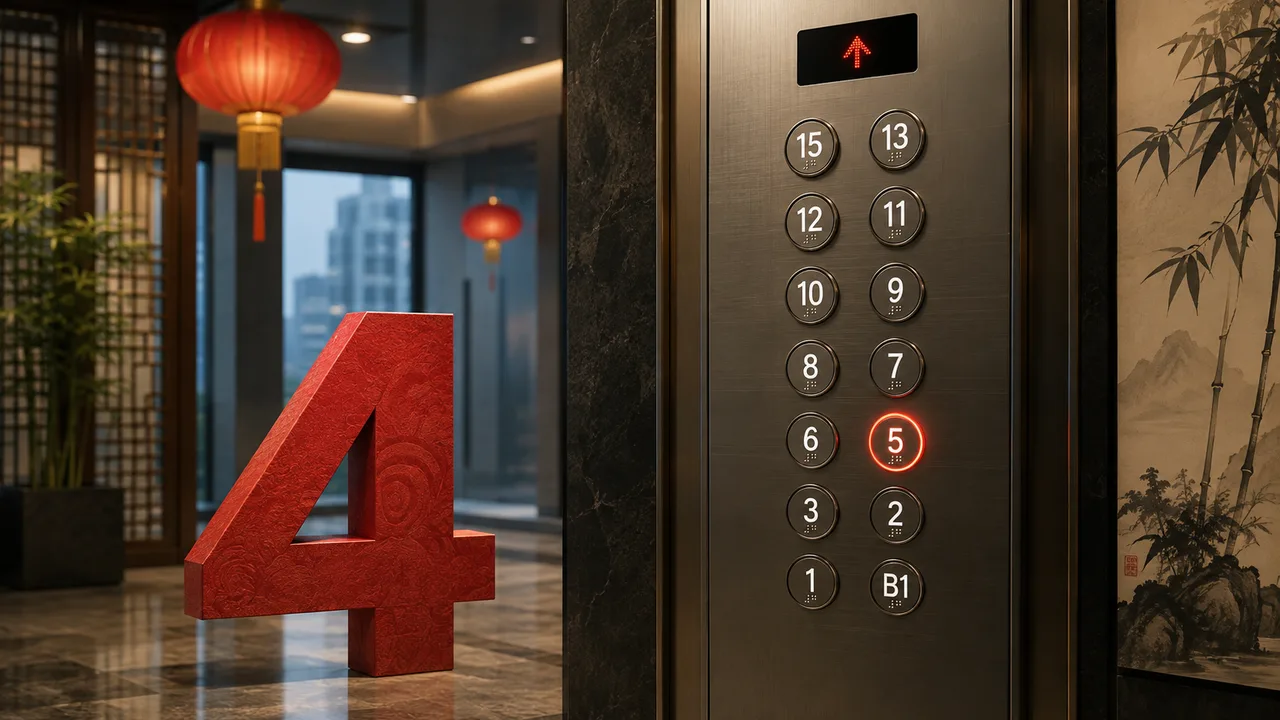
The main reason people in China are wary of the number 4 is related to its pronunciation. In Chinese, the number 4 is written as “四” and pronounced “sì” in Mandarin. The word “死,” meaning “death,” is pronounced “sǐ.” Because the two words sound very similar, the number 4 has become associated with an unpleasant meaning in the minds of many people.
This belief is reflected not only in speech but also in everyday life. In some buildings, the 4th or 14th floors are not labeled with numbers, and elevator buttons may show the 5th floor immediately after the 3rd. Some hospitals in China have also avoided using the numbers 4 and 14 in floor designations out of consideration for the feelings of patients and their relatives.
Avoiding this number is known as “tetraphobia.” According to the Cambridge Dictionary, this phenomenon is more common in China, Vietnam, Korea and Japan because in these cultures the pronunciation of the number 4 resembles words meaning “death.”
Beliefs about numbers also affect the market. A study of housing transactions in Chendu found that the numbers 6 and 8 were considered lucky, while 4 was regarded as unlucky. Demand for the number 8 was particularly high because it is associated with wealth and good fortune.
At the same time, the number 4 is not absolutely forbidden in China. It also appears in historical and cultural expressions: concepts such as the four seasons, the four directions and the four great classical novels use the number in its ordinary sense. In other words, the issue is not the number itself, but its pronunciation, which is similar to the word “death.”



Comments 0
…