


Scientists and doctors reveal the hidden harms of the beshik (cradle) to child health (video)
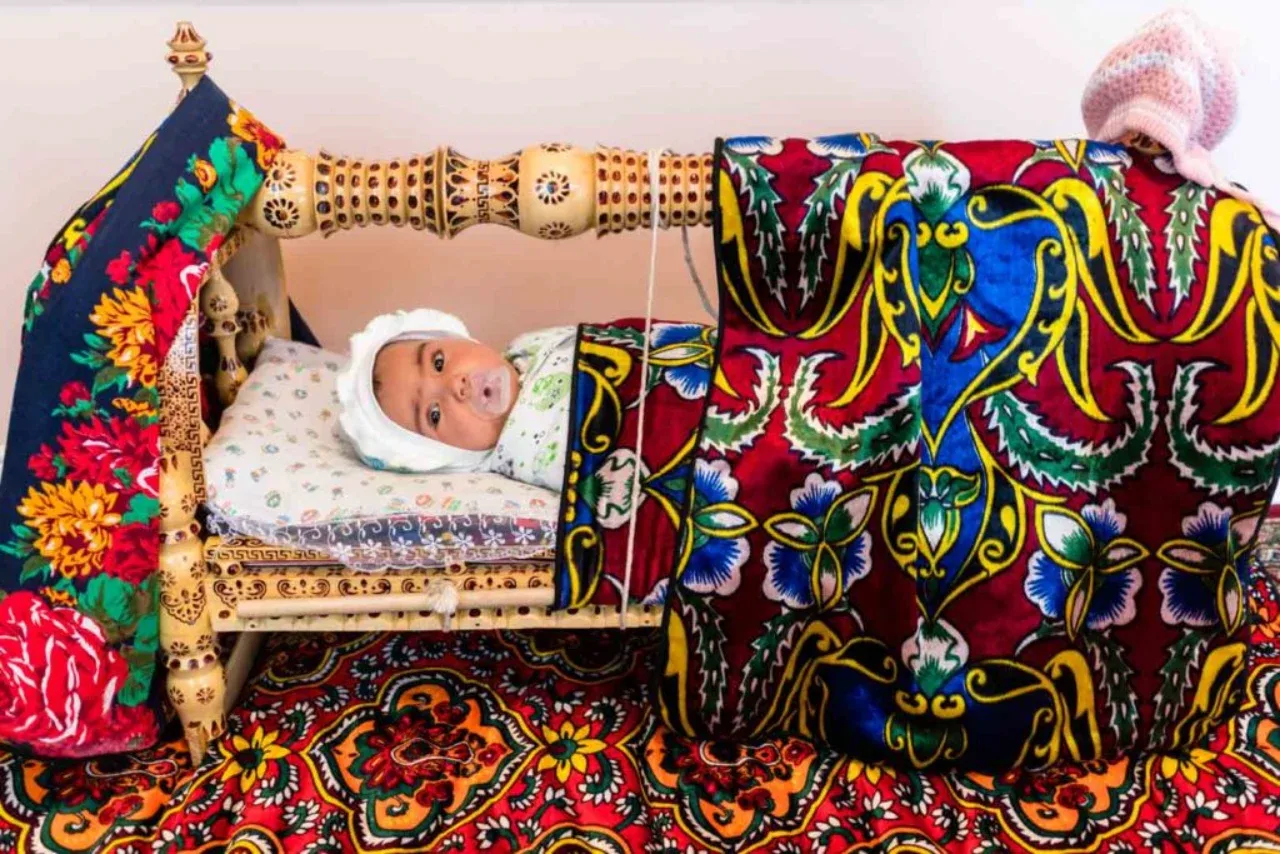
Have you ever felt the back of your head? For many of us, the occipital region is flat, meaning it has a flattened shape. Anthropologists and medical scientists directly link this feature, widely seen among Central Asian peoples, to our national tradition — the beshik.
Scientific studies are proving that lying motionless for hours on a hard pillow and having the body tightly swaddled during infancy seriously affects not only the child's head shape, but also their musculoskeletal system and overall physical development.
"Beshik deformation": Where does a flat back of the head come from?
An infant's skull bones are very soft and flexible:
Hard pillow and constant position: Lying all day with equal pressure on a hard pillow causes the back of the head to easily flatten under the influence of gravity;
Scientific term: Russian anthropologists, while studying ancient skulls, officially defined this exact shape as "beshik deformation";
The misconception that "it will go away": A study conducted in Tajikistan showed that even after the age of 1, the head shape of children who were swaddled in a beshik remained noticeably flatter, even when reaching 4–5 years of age.
Movement restriction: Delayed sitting and walking
Tight body swaddling in the beshik completely deprives the child of natural freedom — the ability to kick, roll to the side, and lift their head independently:
Delayed skills: According to studies, only 44 percent of 8-month-old babies regularly swaddled in a beshik were able to sit independently;
International standards: World Health Organization (WHO) standards indicate that 95 percent of 8-month-old infants should be able to sit;
Failure to walk at 16 months: One in every three children in this study was unable to start walking independently even by 16 months of age.
Joint dislocation and posture issues: Orthopedist's conclusion
Orthopedic doctor Farhod Orifov emphasizes that the more freely a child moves, the more correctly their posture forms:
Muscle weakening: Neck and back muscles strengthen only through the process of active movement;
Risk of hip dysplasia: Swaddling a child with their legs straightened and pressed together increases the risk of hip joint dislocation by several times;
Mongolian experience: In a test involving 80 infants whose joints were not yet fully mature, 8 out of 40 tightly swaddled babies were diagnosed with dysplasia, while not a single case was observed among the 40 left free. If left untreated in severe cases, dysplasia leads to leg length discrepancies, limping, and joint degeneration from an early age.
Sumak (cradle bedding) hygiene and suffocation
Pediatrician Mahsud Muxtorov warns about the dangers of beshik accessories:
Source of infection: If regular and proper hygiene is not maintained for the sumak and its surroundings, severe bacterial and inflammatory infections develop in the sensitive genital area;
Lack of air and heat stroke: When a thick cover (beshikpo'sh) is draped over the beshik, air and oxygen inside decrease. Pediatricians strongly emphasize that a sleeping infant's head must always remain uncovered and the body should not overheat.
The notion "We also slept in a beshik and nothing happened" cannot serve as scientific evidence in modern medicine regarding a child's health. Do not leave your child motionlessly swaddled for hours — untie the swaddles and allow them to move freely and strengthen their muscles. Do not leave the negative traces of the beshik as a lifelong legacy for your child.



Comments 0
…