


China Aims for Leadership in Space Race: New Satellite Engine Passes Test
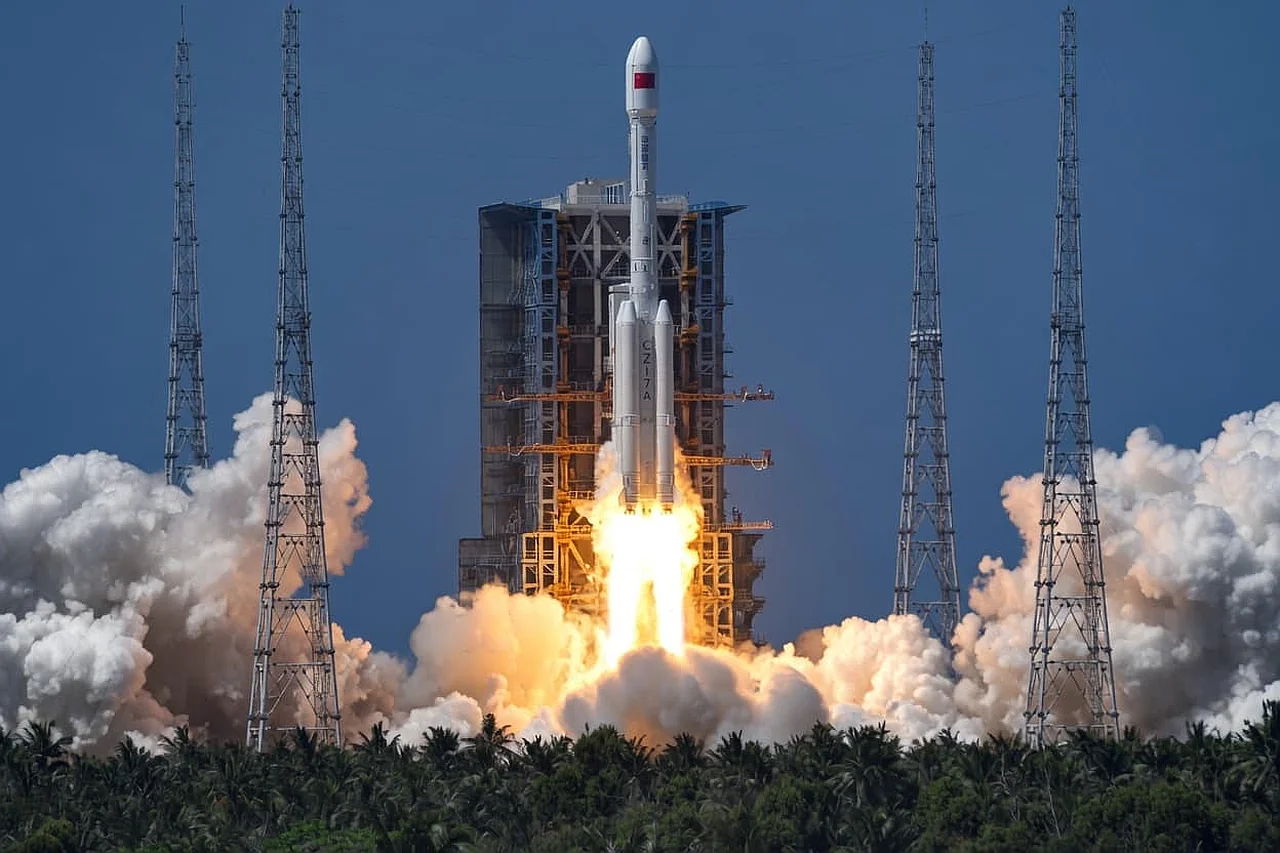
Chinese engineers have taken another major step in space technology. A satellite engine with a record-breaking service life has been successfully tested, enabling the country's largest communication, military, and deep-space spacecraft to reach designated orbits faster and more reliably. This development is expected to elevate competition with Western nations in the global space industry to a new level. Ixbt.com reports .
According to South China Morning Post, the upgraded engine developed by the China Academy of Aerospace Aerodynamics in Xi'an has a thrust of 750 newtons. During its maiden flight conducted at the end of June, the device operated continuously for 11,617 seconds (approximately 3.2 hours) to carry the Communications Technology Experiment Satellite 26A into an orbit 35,800 kilometers above Earth's surface.
In ground laboratory tests, the engine demonstrated an impressive result, enduring over 14 hours of uninterrupted operation. However, during the design phase, its maximum operating time was estimated to be around 10 hours. Such high durability was achieved through the application of a new type of protective coating resistant to high temperatures and oxidation.
Efficiency Compared to Western Competitors
In terms of efficiency metrics, China's new engine has come significantly closer to the world's most advanced models. The specific impulse of the device is approximately 320 seconds. For comparison, Europe's renowned LEROS-1B engine has 317 seconds, while the US R-42DM model has around 327 seconds. This means that Chinese technology is already at the level of world standards.Experts emphasize that the 750 N thrust engine can reduce the time to launch heavy satellites into orbit by 30 percent compared to China's previous 400 N engines. This plays a crucial role not only in saving time but also in increasing the economic efficiency of space missions and optimizing fuel consumption.
Chinese scientists do not intend to stop at this achievement. As the next phase of the program, even more powerful engines with 5,000 N thrust are planned to be developed. Such immense power will serve as a foundation for large space stations, orbital tugs, and long-distance space expeditions.
This technological breakthrough is also significant for countries like Uzbekistan that are showing interest in space exploration and utilizing satellite services. The reduction in the cost of launching payloads into space and the increased reliability of technologies could facilitate the implementation of regional communication and monitoring projects in the future.


Comments 0
…