


Bosgame demonstrates how to run the DeepSeek-V3.1 model using seven mini-PCs
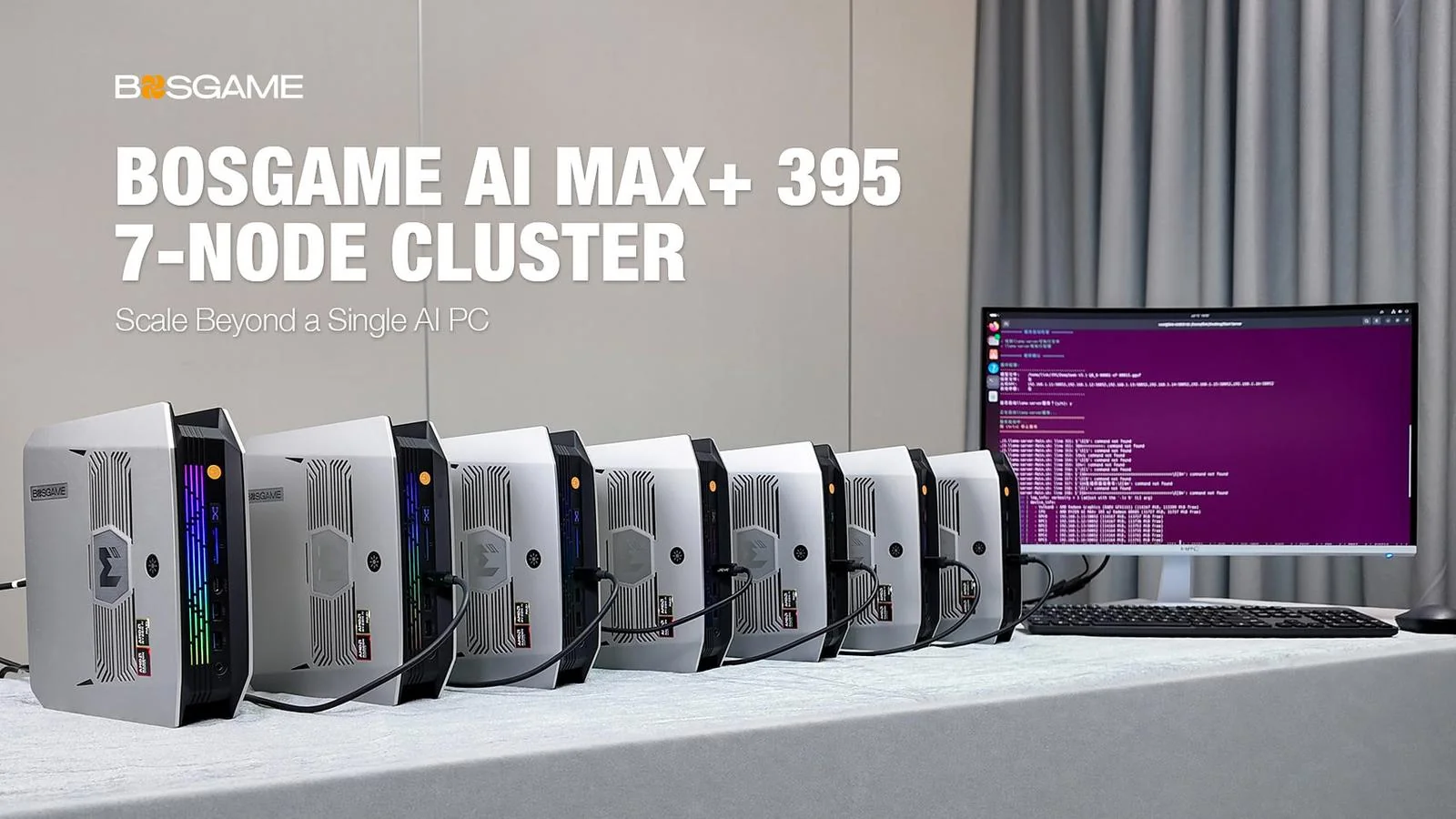
In an era of rapidly evolving AI technologies, running large language models on local devices remains a pressing challenge. Bosgame has offered an unexpected and efficient solution using its M5 AI mini-PCs. Company engineers successfully ran the 671-billion parameter DeepSeek-V3.1 model by clustering seven mini-PCs together, as reported by Ixbt.com reports. states.
The M5 AI model, introduced last year, was chosen as the foundation for this experiment. The device is equipped with a Ryzen AI Max+ 395 processor, and its top configuration comes with 128 GB of RAM. According to ixbt.com, although the power of a single device is insufficient to process such large models, the system's scalability allows it to function as a powerful computing center.
Advantages of USB4 Direct Connection technology
System expansion was achieved via USB4 Direct Connection technology. This solution allows multiple mini-PCs to be interconnected directly without a traditional centralized server architecture. As a result, seven nodes combine to provide a total of 896 GB of unified memory. Of this, 672 GB is allocated directly for GPU needs, which is sufficient to run heavy models like DeepSeek-V3.1 locally.The main advantage of the solution proposed by Bosgame is its cost-effectiveness. While professional server clusters with similar power can cost tens of thousands of dollars, a system composed of mini-PCs is several times cheaper. Additionally, such a cluster consumes significantly less electricity than traditional servers.
Flexibility and pricing policy
Company representatives emphasize the user-friendliness of this approach. Buyers can start by purchasing a single mini-PC and add new nodes later based on their needs and budget. This provides great convenience for AI startups and researchers in budget planning.Regarding pricing, the most powerful version of this system was sold for approximately $1,700 last year. Currently, the manufacturer has set a price of $2,800 per unit. Despite the price increase, a seven-unit cluster is still significantly cheaper than systems composed of professional NVIDIA H100 or A100 graphics accelerators.
In conclusion, the Bosgame experiment proved that mini-PCs are capable of handling not only office tasks but also the most complex AI workloads. Such innovations will undoubtedly contribute to the further democratization and affordability of high-tech computing power in the future.


Comments 0
…