


Astronomers make an unexpected discovery: asteroid 1998 SH2 turns out to be a comet
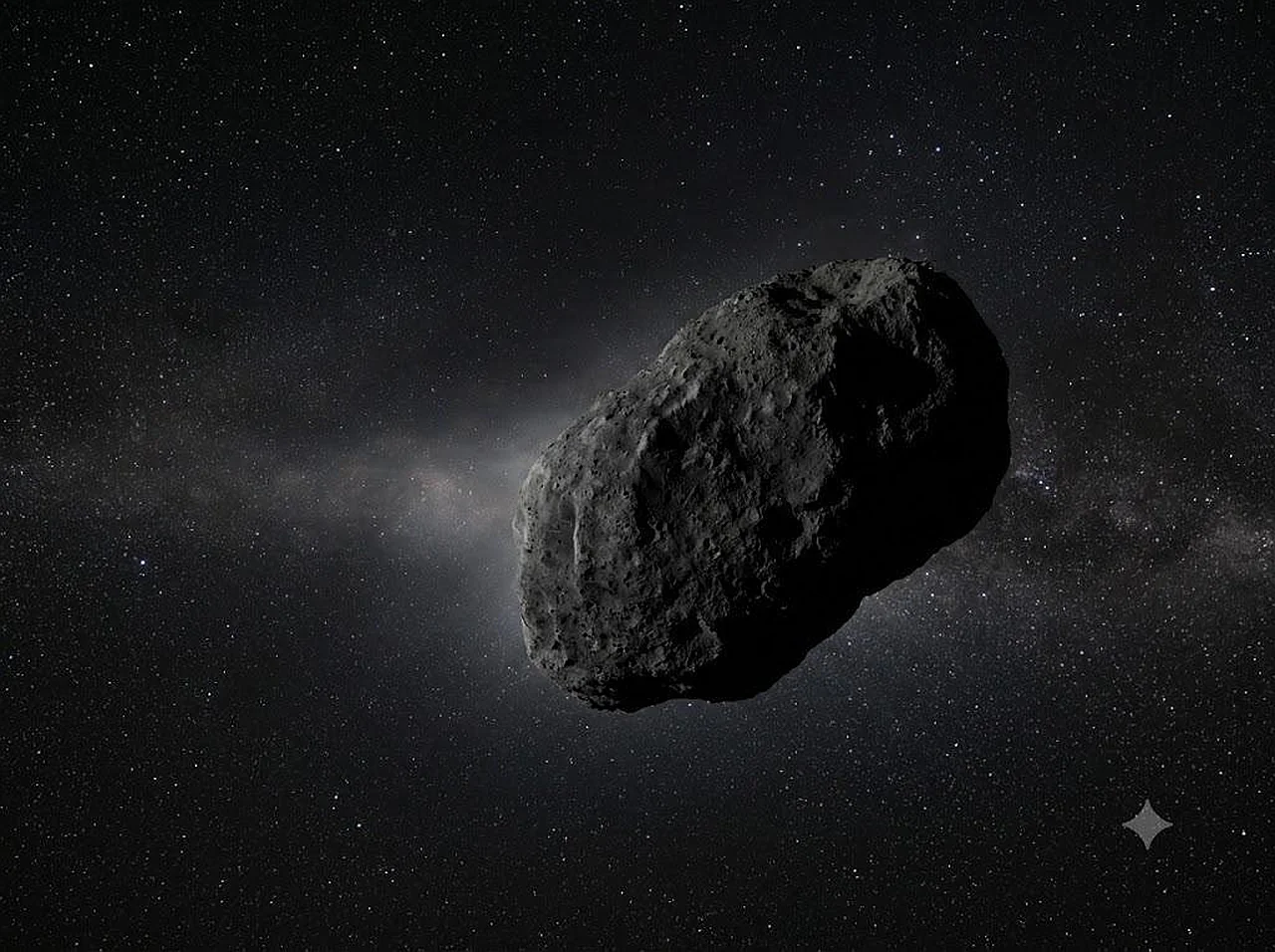
A major event in the world of astronomy has overturned long-held assumptions. The celestial body 1998 SH2, discovered in 1998 and previously considered a simple asteroid, has been proven to be a comet. According to research published in the journal Nature Astronomy, this discovery was confirmed not only by mathematical calculations but also through direct visual observations. This is reported by Ixbt.com reports .
The study of this object was prompted by an unexpected event in August 2025. At that time, the 380-meter body approached Earth at a distance of 0.02 astronomical units. Planned observations via the Goldstone radar complex in the USA failed due to an unexpected error: the object was not found at the calculated coordinates. Meanwhile, the Wykrota-Centro de Estudos Astronómicos de Minas Gerais observatory in Brazil recorded that the body had deviated significantly from its orbit.
From mathematical prediction to visual confirmation
Scientists determined that such a deviation in the body's movement could only be explained by non-gravitational acceleration. This phenomenon is characteristic of comets and is a reactive force resulting from the evaporation (degassing) of their ice layer. Calculations show that the object is releasing 1.2 × 10^24 molecules of gas per second, which indicates that it contains ice reserves.Although no signs of activity were initially visible, the world's largest telescopes were deployed. Images obtained using the CFHT in Hawaii and the VLT (Very Large Telescope) in Chile revealed a very faint gas-dust shell and a narrow tail forming around 1998 SH2. It was determined that the comet's ability to "mask" itself is related to the low light-reflecting property (albedo) of its surface.
Planetary defense and new threats
This discovery is crucial for the strategy of protecting Earth from space threats. "Hidden comets" like this body, renamed P/1998 SH2, are considered more dangerous than asteroids. This is because their orbits can change in unexpected directions under the influence of reactive forces, making it difficult to calculate the probability of their collision with Earth.Currently, scientists are aware of over 2,000 near-Earth asteroids moving in comet-like orbits. 285 of them are larger than 140 meters and are classified as potentially hazardous. New data suggests that many of these bodies may actually be frozen comets. This requires taking the porous structure of the body into account when developing future projects to change the trajectory of asteroids, such as the DART mission.
Furthermore, this research may also alter theories about the origin of Earth's oceans. It is highly probable that such hidden comets transported water to our planet in ancient times. In the future, mass searches for such "dark comets" are planned using the Vera Rubin Observatory currently under construction in Chile.


Comments 0
…