


Traces of an asteroid-scale impact that wiped out dinosaurs found on Mars
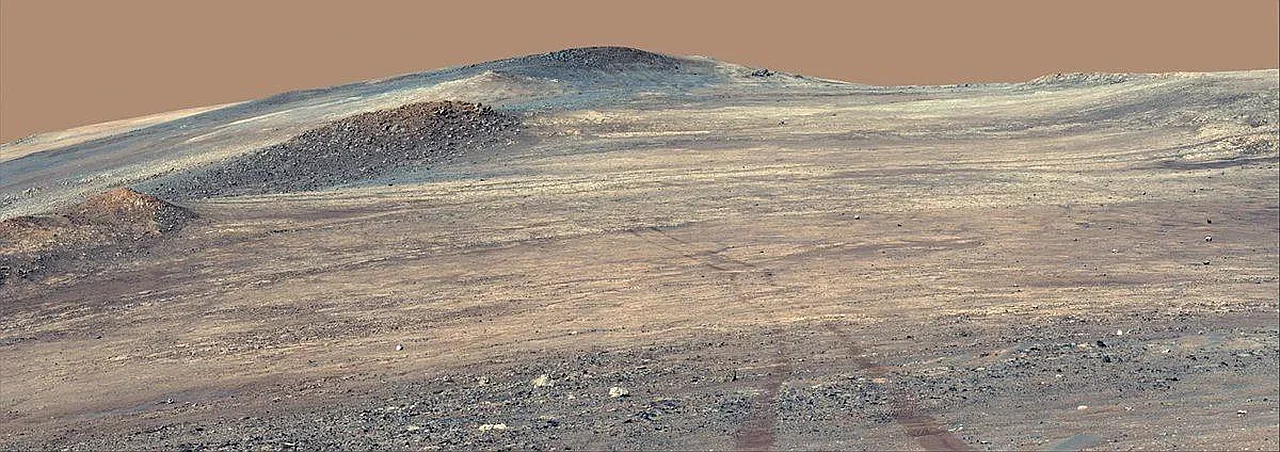
NASA's Perseverance rover has made one of the most significant discoveries in the history of the Red Planet. While studying ancient rocks on the edge of the Jezero crater, scientists identified traces of catastrophic events comparable to the Chicxulub asteroid impact that caused the extinction of dinosaurs on Earth. According to a study published in the Journal of Geophysical Research: Planets, this finding provides a new perspective on Mars' chaotic and destructive period 3.9 billion years ago. This is reported by Ixbt.com reports .
The 75-meter-thick layers studied by the rover, named "Broom Point," are among the oldest parts of the planet's crust. Ken Farley, project scientist at the California Institute of Technology, explains that on Earth, such ancient geological history has been completely erased due to plate tectonics. Since Mars lacks such processes, the "geological diary" of the early Solar System's formation has been preserved intact.
A rain of molten rock from space
Analyses conducted using Perseverance's instruments identified six types of rock in the "Broom Point" area. Among them are rock fragments saturated with gas bubbles and in a molten state, as well as tiny glass-like spheres—spherules. Scientists note that such spherules are formed as a result of the instantaneous melting and subsequent solidification of rock due to an asteroid impact.According to Alex Jones, a researcher at Imperial College London, these layers indicate that at that time, it was not rain or snow falling from the Martian sky, but an almost continuous shower of molten rock fragments and dust. The size of the discovered spherules, which matches the scale of particles formed during the asteroid impact that wiped out the dinosaurs on Earth, is astonishing experts.
A double catastrophic impact
Currently, these geological layers are positioned almost vertically, at an angle of more than 80 degrees. Scientists explain this situation with two consecutive massive collisions:- Initially, a massive asteroid impact that formed the 1,900-kilometer-wide Isidis Basin overturned the planet's crust;
- Later, a second asteroid impact that created the 45-kilometer-wide Jezero crater further fragmented these layers and lifted them to their current height.
This discovery opens a new chapter in understanding not only the past of Mars but also the formation stages of all planets in the Solar System. For now, Perseverance continues its research and is preparing to analyze other ancient regions of the planet.


Comments 0
…