


Scientists Test Two New Ways to Destroy “Forever Chemicals”
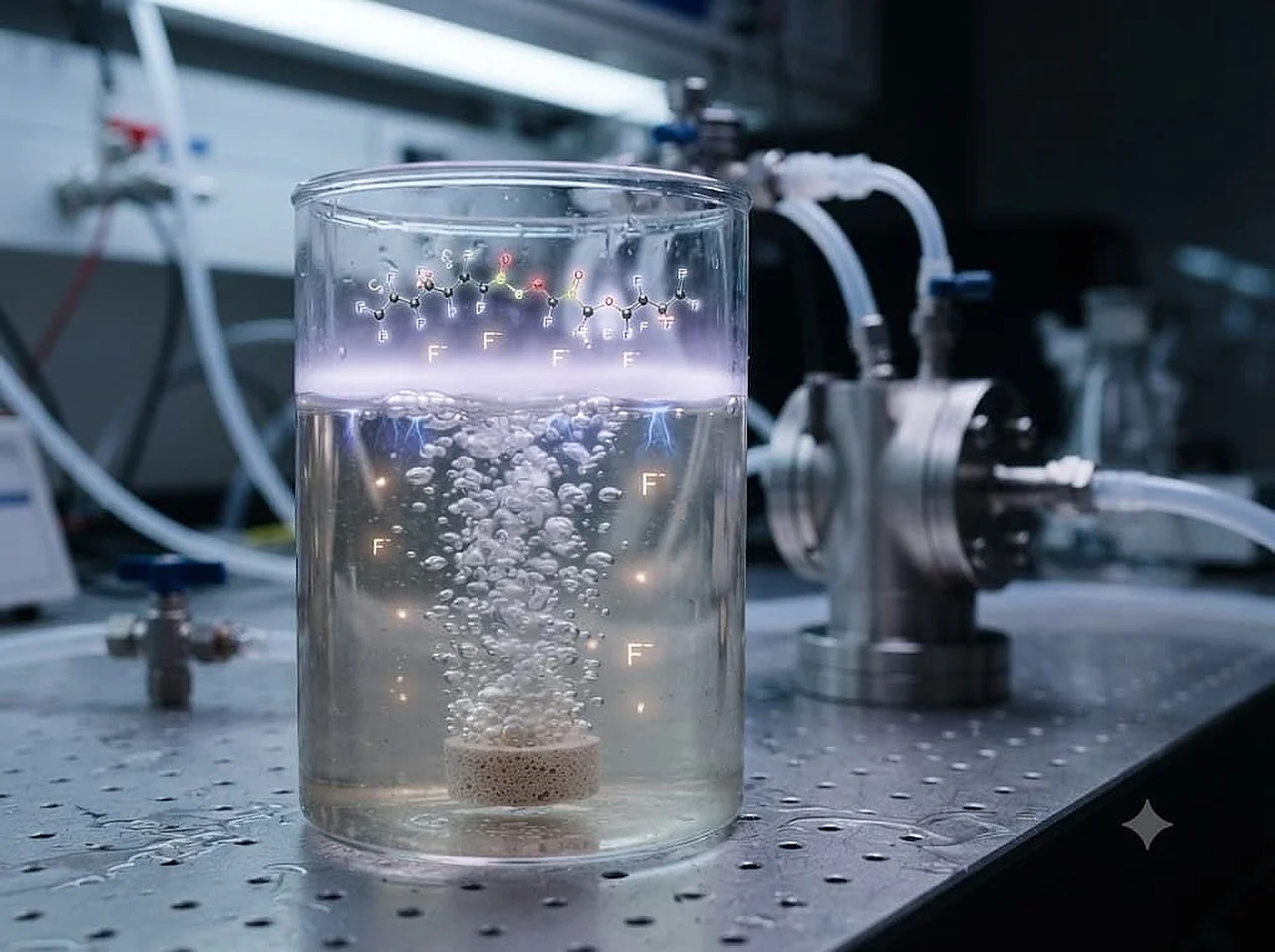
German researchers have experimentally confirmed two independent and promising methods for neutralizing per- and polyfluoroalkyl substances (PFAS), which do not break down in nature, accumulate in organisms and cause dangerous diseases. According to findings published in Chemical Engineering Journal Advances and Scientific Reports, these technologies target the extremely strong carbon–fluorine bond and produce non-toxic fluoride ions as waste. Ixbt.com reports .
Hydrodynamic Cavitation and Its Potential
The first approach tested in the study is known as hydrodynamic cavitation. It involves forcing contaminated water through a narrow nozzle, where pressure differences create vapor microbubbles in the flow that subsequently collapse. During collapse, the temperature inside the bubbles rises sharply to several thousand degrees, releasing highly reactive hydroxyl radicals from the water.PFAS molecules attached to the bubble surfaces are exposed to both thermal and chemical shock simultaneously. Experiments with perfluorooctanesulfonate (PFOS), one of the most persistent substances, showed that nearly 37% of the dissolved compound decomposed in a single treatment cycle. Scientists are now working to raise this figure above 80%.
Better Results with Cold Atmospheric Plasma
The second method relies on cold atmospheric plasma generated directly on the water’s surface. Air is bubbled through the liquid and continuously mixed. Solvated electrons surrounded by solvent molecules attack carbon–fluorine bonds and act as the primary decomposing agents.According to the report, PFOS at an initial concentration of 5 mg/l decomposed by 99.99% in just 20 minutes under this regime, while its half-life fell from 13.4 minutes to 1.6 minutes. Energy consumption was considerably lower than with conventional methods, amounting to 39 kWh per cubic meter.
Conventional treatment technologies, including activated carbon and ion-exchange resins, merely concentrate PFAS in one place and generate secondary toxic waste. Emerging cavitation and plasma technologies could become the first industrial-scale methods to irreversibly destroy “forever chemicals” without additional chemical reagents.


Comments 0
…