


Venus life search mission tied to Neutron rocket
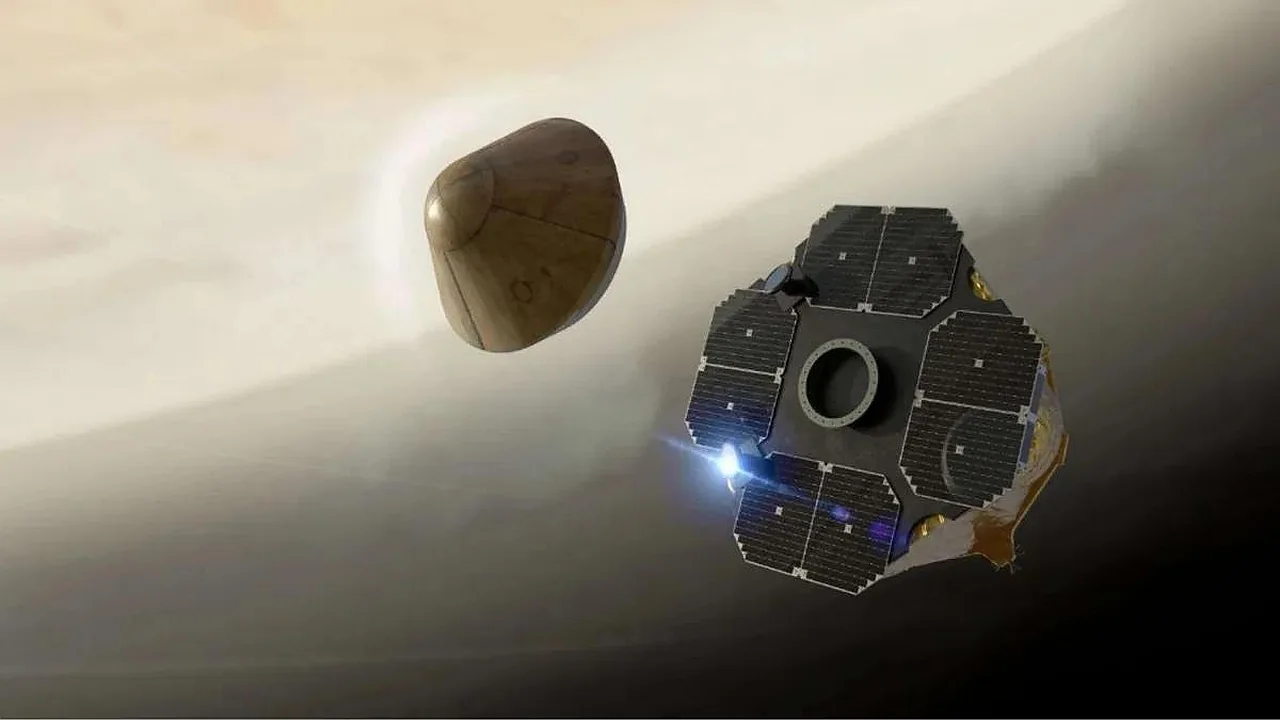
The first private scientific project in history aimed at exploring the mysterious clouds of Venus has encountered unexpected technical obstacles. According to ixbt.com, the Venus Life Finder mission, being prepared in collaboration between Rocket Lab and scientists from the Massachusetts Institute of Technology (MIT), is currently entirely dependent on the readiness of the all-new Neutron launch vehicle. This is reported by news source.
This project is the first stage of the Morning Star Missions to Venus program, and its main goal is to detect organic molecules in the Venusian atmosphere. According to initial plans, the spacecraft was intended to be launched using a different rocket, but Rocket Lab later decided to move it to its own new Neutron carrier. However, despite the rocket's maiden flight being scheduled for 2024, the deadlines have been postponed several times.
Scientific equipment and preparation process
Despite the uncertainties regarding the rocket, the spacecraft itself is almost ready. Currently, the special probe is being stored at Rocket Lab's headquarters in Long Beach. Specialists there have completed the final assembly of the transition module and the hermetic housing of the atmospheric probe.In turn, NASA has also contributed to this important project by providing a special heat shield called HEEET. This woven composite material is capable of withstanding extreme temperatures of up to 2500 degrees during entry into the Venusian atmosphere. The apparatus's primary scientific instrument will be the AFN autofluorescent nephelometer developed by the MIT team.
The mysterious world of Venusian clouds
During the descent, the AFN instrument will analyze individual aerosol particles in the Venusian clouds, determining their size, shape, and chemical composition. The main goal is to find potential organic molecules. Modern astrobiology considers the Venusian clouds to be one of the most interesting objects.It is known that extreme temperatures and pressure dominate the planet's solid surface, but conditions in certain layers of the atmosphere are considered much milder. Furthermore, complex laboratory experiments have shown that short amino acid chains — peptides — are capable of maintaining stability and forming complex structures even in highly acidic environments.
Venus Life Finder is just the beginning of a series of large-scale studies. In the future, scientists plan to send a laser desorption mass spectrometer called ORIGIN to Venus, as well as small molecular sensors and a five-meter diameter balloon capable of operating on the planet for a week. Thus, although the scientific equipment is fully ready, the fate of the mission now depends solely on the launch date of the Neutron rocket.


Comments 0
…