


Giant decagonal atmospheric anomaly discovered on Saturn
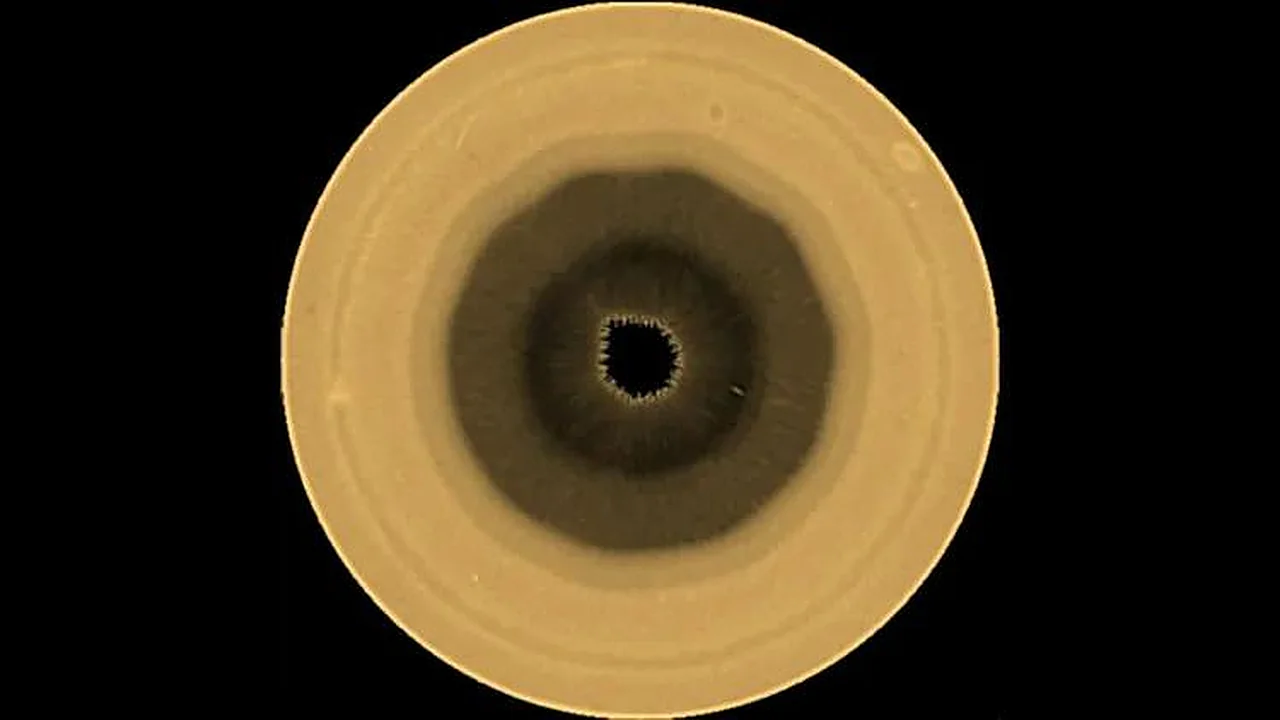
Astronomers have identified a giant decagonal cloud structure in the southern hemisphere of Saturn. According to ixbt.com, this unusual decagon is the second largest atmospheric polygon discovered, following the famous hexagon located in the planet's northern region. This is reported by Ixbt.com news states.
This significant discovery was made possible thanks to images captured by the Hubble space telescope in 2023. Due to Saturn's orientation relative to Earth between 2012 and 2023, the planet's southern region was largely obscured from view, which is why previous research had yielded no results.
Scale and characteristics of the giant structure
The decagonal cloud formation attracts attention with its massive dimensions. Estimates suggest that the perimeter of the cloudy decagon is approximately 167,820 kilometers, with each side estimated to be around 16,782 kilometers long.For comparison, the famous hexagon at Saturn's north pole has a width of approximately 32,000 kilometers. According to initial calculations by scientists, it takes nearly 800 days to complete a full rotation around the newly discovered polygon.
The role of atmospheric currents
Experts believe that this decagon was formed as a result of the interaction of strong atmospheric currents. Computer modeling has shown that curved waves maintained by jet streams have the capacity to form stable polygonal structures.Using the same mechanism, scientists had previously explained the origin of the northern hexagon. However, there are distinct differences between the two formations.
While the northern hexagon has maintained its shape almost unchanged for decades, certain parts of the southern decagon change their brightness significantly. This indicates that the new structure is still in the process of formation or is unstable.
Currently, researchers plan to observe the decagon over several years. They need to determine whether this structure will remain as stable as the northern hexagon or dissipate as Saturn's seasonal illumination changes. Maximum solar illumination of this region is expected by 2032.


Comments 0
…