


For the first time in scientific history, antimatter has been transported by vehicle
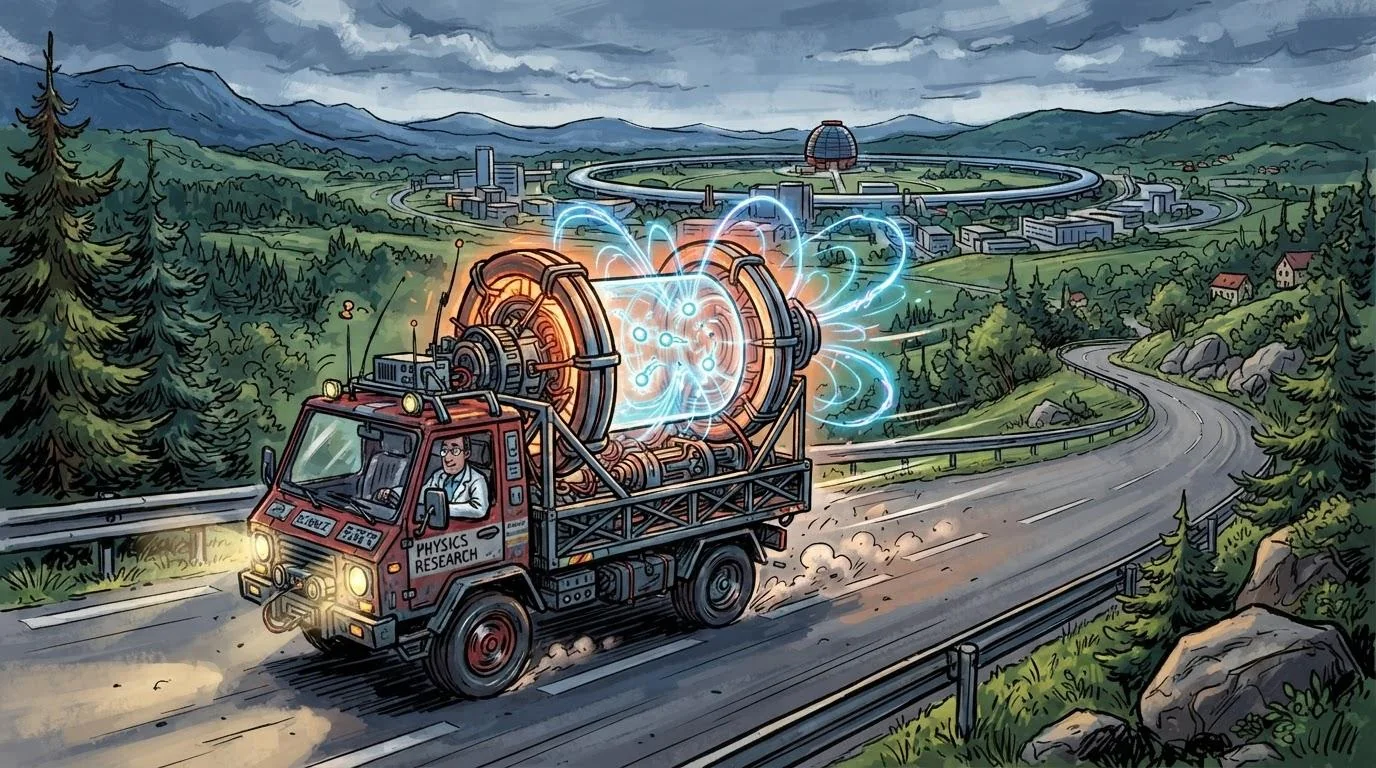
A significant historical milestone in global science has been recorded: CERN researchers have successfully transported antimatter via public road for the first time using a specialized mobile device. According to results published in the journal Nature, this complex experiment was conducted in March of this year at the European Organization for Nuclear Research in Geneva. This was reported by Ixbt.com reports.
It is reported that scientists from the BASE project extracted 92 antiprotons from the Antimatter Factory complex and placed them into a mobile device called BASE-STEP. Subsequently, this unique equipment was loaded onto a truck and transported for approximately 30 minutes over a distance of 8 kilometers within the research center's area. Crucially, not a single antiproton was lost during the transport process.
A new record for storing and managing antimatter
It is noted that the experiment did not end with this successful transport. Experts managed to store and controllably move the antiparticles inside the device for over a month in total. This is an absolute record for open-type mobile systems.One of the main technical challenges in performing such a delicate process was maintaining an ultra-high vacuum environment, as an antiproton annihilates immediately upon contact with ordinary matter. Throughout the storage period in the BASE-STEP device, the pressure was kept even lower than the project specifications — below 2.2×10⁻¹⁸ mbar.
To keep the antiparticles in equilibrium without touching the walls, a Penning trap combining electric and magnetic fields was used.
Future plans and scientific significance
Scientists believe that moving antimatter outside the CERN area is necessary to drastically increase the accuracy of measurements. Currently, the Antimatter Factory infrastructure generates strong magnetic vibrations, which has become one of the main factors limiting the accuracy of future experiments. Physicists aim to deliver antiprotons to special "quiet" laboratories located far from powerful accelerator equipment.According to the BASE team's calculations, this could increase the accuracy of some measurements by at least 100 times. Such fundamental research plays an important role in understanding the world of matter and antimatter more deeply. According to current theories, matter and antimatter should have been created in equal amounts during the Big Bang, yet the observable universe consists almost entirely of matter.
In the next stage, scientists plan to transport it over a longer 10-hour distance from Geneva to Düsseldorf. A special high-precision laboratory designed specifically for comparing matter and antimatter is being built at the Heinrich Heine University in Germany.


Comments 0
…