


1,700 unknown proteins discovered in 'junk' DNA, leading to a cancer vaccine
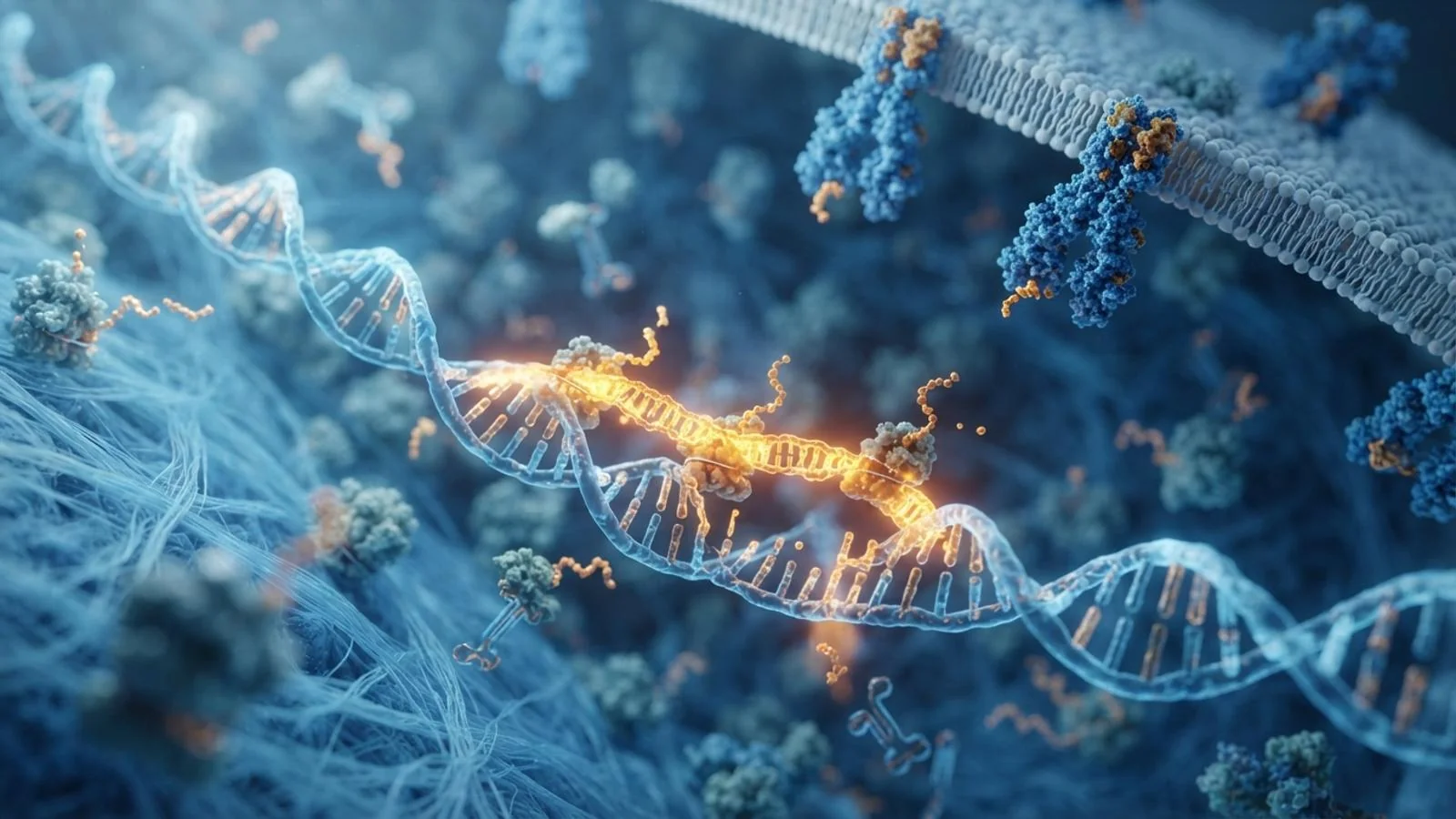
An international team of researchers has identified short molecules consisting of dozens of amino acids—peptidins—in regions previously labeled as "junk DNA," which were thought to perform no useful function. According to ixbt.com, the discovery of this hidden layer marks a breakthrough in medicine and oncology, enabling the testing of entirely new vaccines against malignant tumors. This is reported by Ixbt.com reports .
Previously, geneticists studied only classic proteins with hundreds or thousands of chains, ignoring a large part of the genome. More than 60 researchers, united within the TransCODE international consortium, analyzed over 7,000 regions previously not considered coding. As a result, it was found that about a third of them—nearly 1,700—produce unique short molecules.
Ribosome profiling played a key role in uncovering this hidden layer. This technology precisely records where protein-assembly machinery is active in the genome. It turns out that ribosomes read thousands of non-annotated regions. The discovery of guponin, a 24-amino acid protein that protects cells from stress, in 2001 was the first documented case in this broad class.
Practical application in oncology
The most significant clinical result of the study lies in the field of oncology. Cancer cells contain many peptidins not found in healthy tissues, and most importantly, they depend on them. It was found that blocking the corresponding parts of "dark DNA" stops the growth of breast, prostate, colon, and brain cancer cells.Fragments of these molecules are presented on the cell surface via HLA-complex proteins, making them easy targets for the immune system. This exact principle formed the basis for creating a vaccine against Ewing sarcoma—a rare and aggressive bone tumor diagnosed in about 600 young people in Europe annually.
Sebastian van Heesch from the Princess Máxima Center for Pediatric Oncology combined several peptidin fragments specific to sarcoma cells into a single preparation. He explains that the molecules are so small that it is possible to include multiple targets in a single vaccine.
Future prospects and evolutionary significance
Currently, clinical trials funded by the Fight Kids Cancer program are underway at the Institut Curie in Paris and Heidelberg University, involving up to 45 patients. This approach is expected to be useful in treating other types of malignant tumors as well.At the same time, peptidins raise a fundamental question regarding evolutionary theory. Although most human proteins have similar analogs in other species, scientists comparing heart tissues found that the landscape of these molecules differs fundamentally. This shows that evolution at the molecular level is much more dynamic than previously thought and that peptidins may evolve into full-fledged proteins in the future.


Comments 0
…