


Swiss scientists create a robotic hand that walks on its fingers
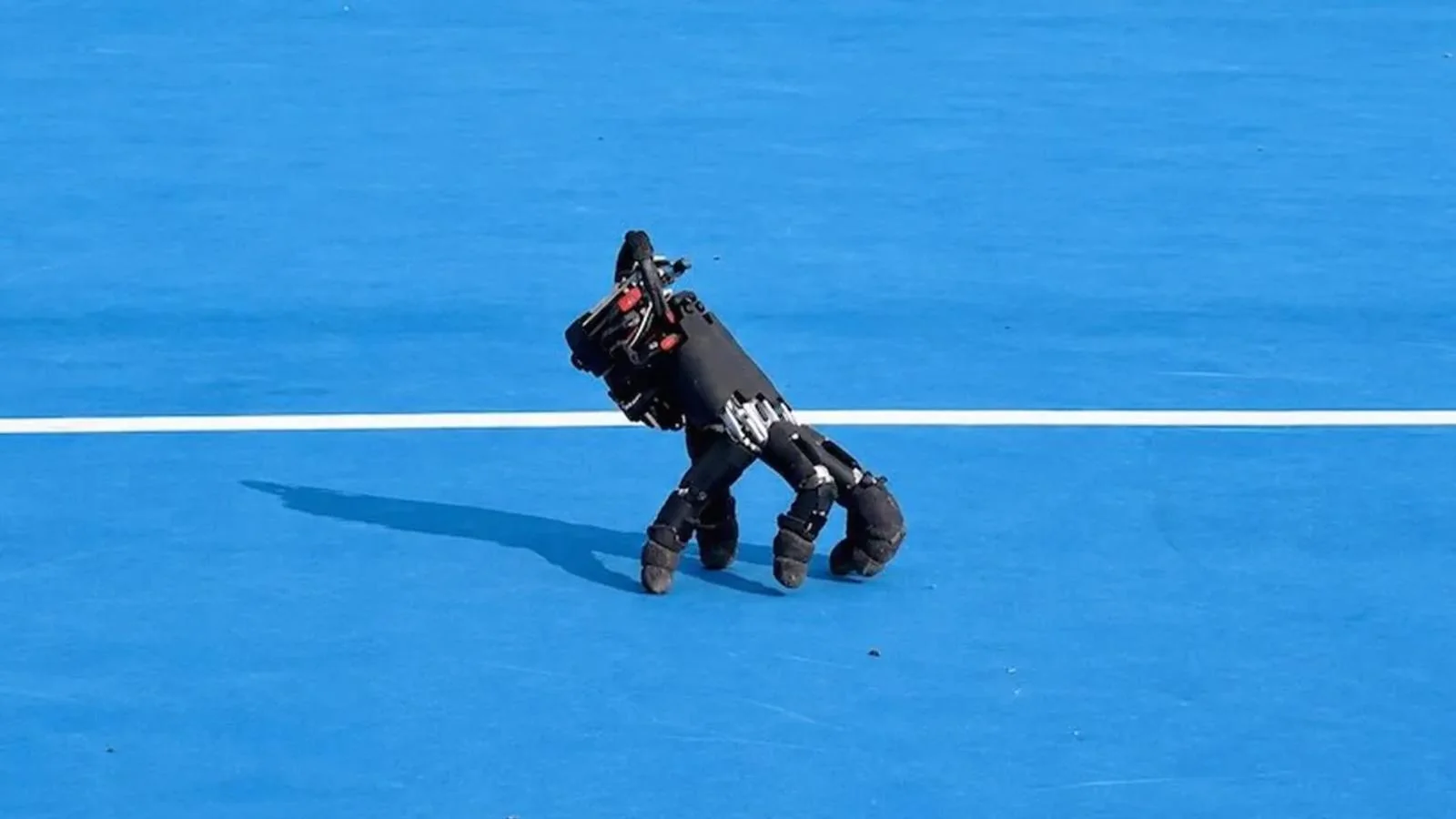
Experts from the Soft Robotics laboratory at ETH Zurich have developed a unique robotic hand capable of moving independently on its fingertips. According to Ixbt.com, this innovative device has demonstrated the ability not only to maintain balance but also to adapt to various surfaces and interact with surrounding objects. This is reported by Ixbt.com reports .
During the experiment, the scientists used a ready-made anthropomorphic robotic hand and decided not to change its finger length or control unit. Since human fingers have different lengths, such geometry significantly complicates the task of ensuring stability during movement. However, to make the system truly autonomous, a special battery, a computing module, and a set of sensors were installed.
A reinforcement learning method in a virtual environment was used to create the control algorithm. During training, the AI system was rewarded for successful movements while being taught to maintain the natural position of the fingers. After numerous attempts, the algorithm learned to independently select trajectories that maintain balance, and the finished model was transferred to the physical device.
Tests on various surfaces and practical capabilities
During practical tests, the robotic hand was able to move across more than ten different types of surfaces both indoors and outdoors. It successfully walked on surfaces with different friction coefficients, such as tiles, grass, and stones, quickly adjusting finger movements depending on the conditions. As a special test, the experts also tried computer control.During the experiment, the robotic hand, without losing balance, pressed the arrow keys on a computer keyboard one by one, independently completing a level of the Sokoban puzzle game. This ability for autonomous movement is of great importance for robotics systems operating in confined spaces in the future.
For instance, a large robot could leave its hand near a narrow gap, allowing it to independently reach an internal control element, perform the necessary operation, and return. Such an approach eliminates the need for the main mechanism to force the entire manipulator into a tight area.
Future scientific plans
The authors of the project believe that the ability to move independently makes robotic hands more universal for human-designed interfaces and spatial operations. The next step in this direction will be to combine independent movement with more complex manipulations.In the future, the robotic hand will be required not only to reach the necessary point independently but also to perform complex work operations there without errors. This will bring the capabilities of robots used in industry and daily life to a new level.


Comments 0
…