


"Siesta" in tourist cities: a new schedule has been proposed
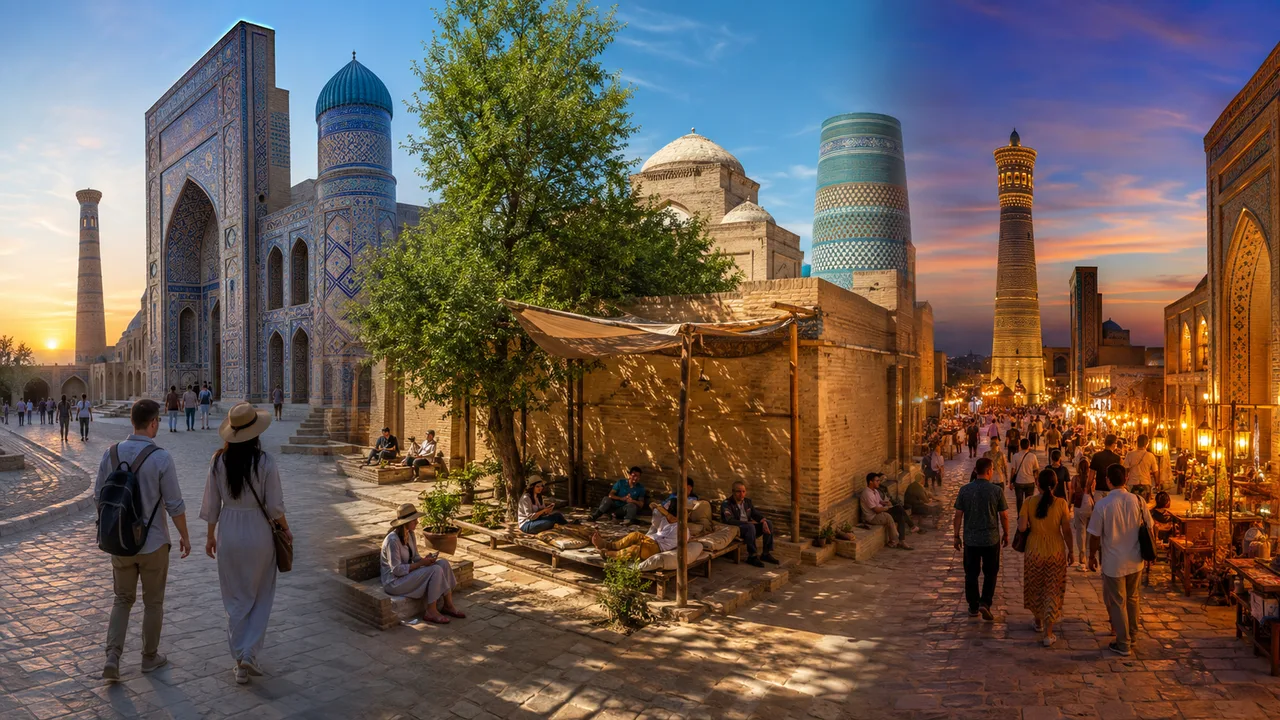
It is proposed to radically change the summer travel schedule in four major tourist cities of Uzbekistan. If the draft submitted for public discussion is approved, tourist sites in Tashkent, Samarkand, Bukhara, and Khiva could take a break during the hottest part of the day and stay open until 23:00.
The new regime is not just a shortening of working hours. The initiative envisions shifting tourist activity to the cool morning and evening hours, as well as developing new programs such as the "Night Museum" and "Evening Tour."
How will the new schedule work?
According to the presented project, the activities of tourist facilities will be divided into two shifts. During the four hottest hours of the day, visits will be temporarily suspended.
Stage of work | Recommended time |
|---|---|
Morning shift | 07:00–13:00 |
Daytime break | 13:00–17:00 |
Evening shift | 17:00–23:00 |
Thus, tourist facilities will operate for a total of 12 hours a day. However, instead of continuous operation, the activity will be split into two periods when temperatures are relatively favorable.
It is proposed to apply the plan starting from the summer season of 2026. For now, this is not a final decision, but a project submitted for public discussion.
Why is a four-hour daytime break proposed?
Many tourist destinations in the historical cities of Uzbekistan are located in the open air. Tourists often walk from one site to another, and historical complexes are viewed in open areas for extended periods.
The period from 13:00 to 17:00 is considered the time when temperatures rise to their highest in the summer. The initiators of the project aim to reduce the flow of tourists during this exact time, shifting visits to the morning and evening.
Expected results:
creating more comfortable conditions for tourists;
reducing prolonged exposure to open areas during hot weather;
adapting the working hours of tourist facilities to the climate;
reducing the load on the energy system during daytime hours;
expanding the market for evening services.
Nightlife in historical cities may become more active
The most interesting part of the project is not just closing tourist sites later, but turning evening tourism into a separate product.
Through programs like "Night Museum" and "Evening Tour," it is planned to provide special lighting for historical monuments, conduct evening tours with guides, and increase cultural programs.
This format can open up new opportunities, especially for cities with many architectural monuments such as Samarkand, Bukhara, and Khiva. Historical buildings look completely different under night illumination compared to daytime.
An increase in the evening tourist flow may also affect the following areas:
restaurants and cafes;
guide and translation services;
taxis and public transport;
souvenir shops;
theater and concert venues;
hotels and entertainment establishments.
How will the "siesta" change a tourist's day?
If the new regime is introduced, tourists will be able to start sightseeing historical sites from 07:00 in the morning. During the afternoon break, they will have the opportunity to rest at the hotel, go to a restaurant, or use services in indoor facilities.
After 17:00, main tourist activities will resume, and evening tours can continue until 23:00.
In this sense, the "siesta" does not shorten the tourist program. On the contrary, it divides the one-day trip into two active parts — morning and evening — leaving the most uncomfortable hours for rest.
Will all facilities close for four hours?
The project proposes a special work schedule for tourist facilities. However, it remains to be clarified whether the same regime will apply equally to museums, historical complexes, retail outlets, hotels, and public catering establishments.
For example, hotels, restaurants, or indoor entertainment centers may continue to operate during the daytime break. A special regime seems logically more suitable for open-air excursions and historical sites.
It is important that the final document clearly defines which facilities will transition to the new regime on a mandatory basis and which on a voluntary basis.
Main questions facing the project
The "siesta" regime may be convenient for tourists, but its implementation is not limited to merely changing working hours.
For the system to work effectively, it will be necessary:
to announce the new schedule of museums and monuments in advance;
to update working hours on tourist platforms;
to increase evening public transport;
to strengthen lighting and security in tourist areas;
to establish shift work schedules for guides and service staff;
for tour operators to reorganize excursion programs.
Otherwise, a tourist unaware of the daytime break might end up in front of a closed facility or struggle to find transport after the evening program ends.
A new tourism model may be tested
At a time when the flow of tourism in Uzbekistan is increasing, adapting services to the local climate is becoming a crucial issue. The presented initiative proposes transitioning from traditional daytime tourism to a new model based on morning and night activity.
If the project is organized properly, tourists will have the opportunity to rest during the hottest time and explore historical cities on cool, illuminated nights. At the same time, operating hours and revenue opportunities for restaurants, cultural venues, and other services may expand.
However, the initiative is currently in the discussion stage. Its exact scope, validity period, and which facilities it will apply to will become known after the final decision.
Do you think it will be convenient for tourists to close tourist facilities during the day and keep them open until 23:00 at night? Leave your opinion in the comments and share the article with your friends on Telegram or other social networks!



Comments 0
…