


Do you know how to read your PINFL? Important information every citizen should know
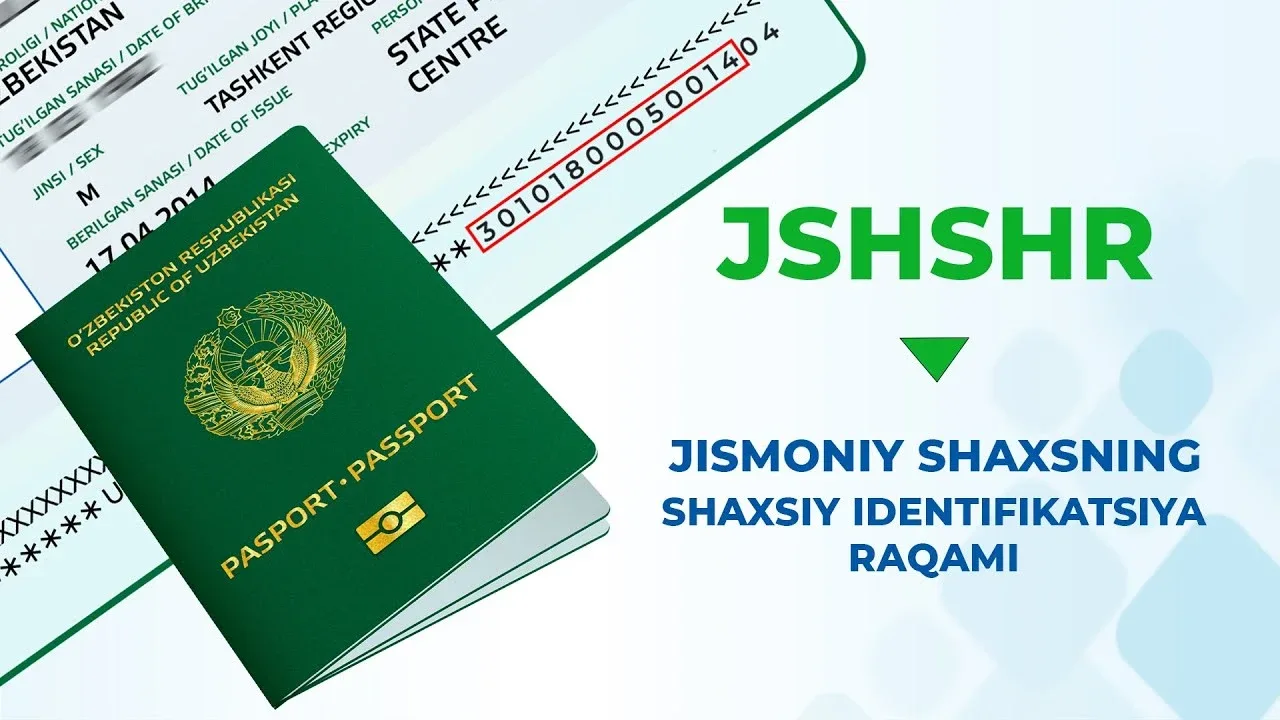
Today, the primary information requested from citizens by banking institutions, notarial offices, tax services, and the Unified Interactive State Services Portal (my.gov.uz) is the PINFL (Personal Identification Number of an Individual). Many people think that these 14 numbers shown at the bottom of a passport or ID card are just a random set of numbers, but these numbers are a strict algorithmic digital cipher that encapsulates important information about a person.
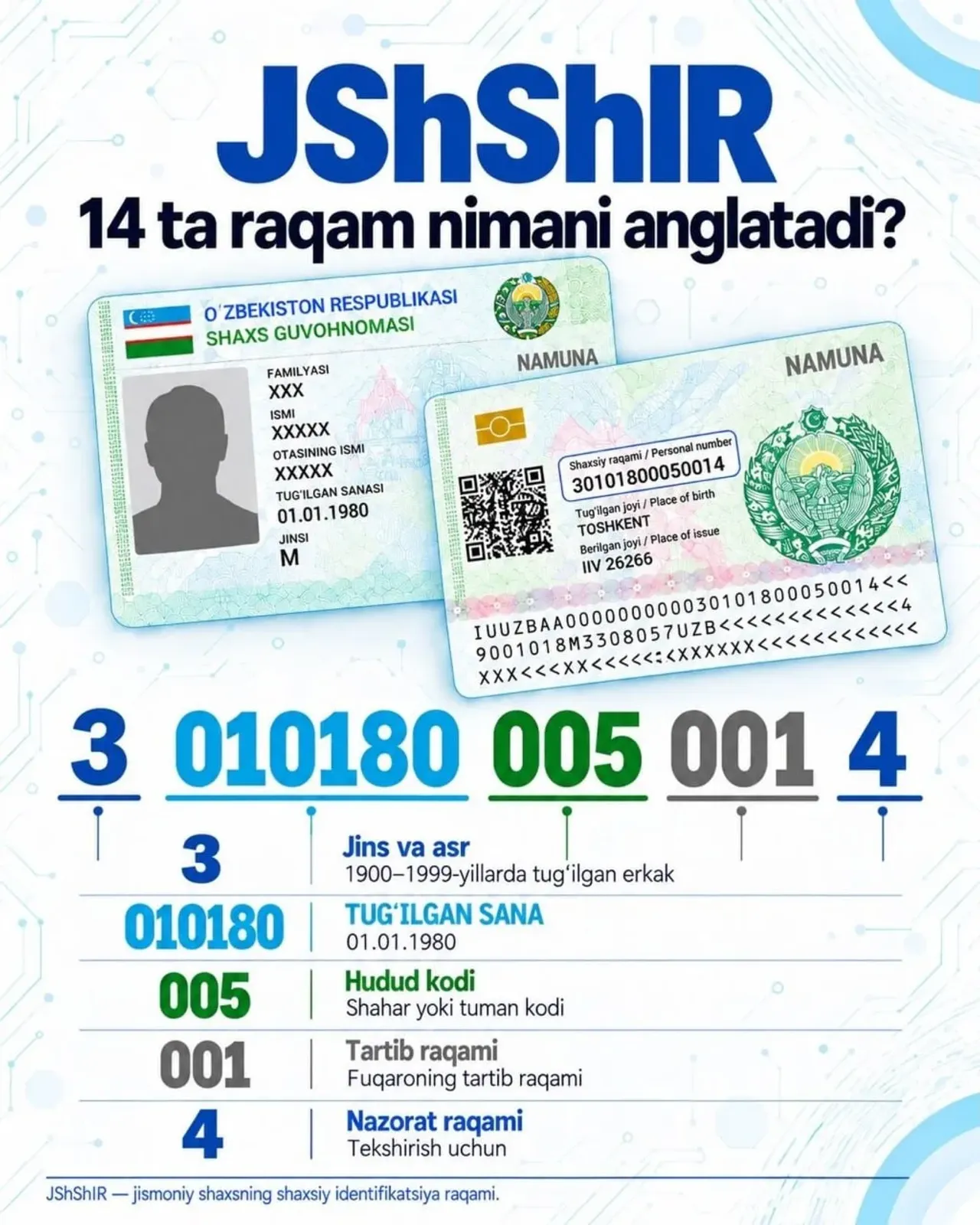
Using the example shown in the infographic (e.g., 3 010180 005 001 4), let's look at the function and meaning of each of these 14 digits.
Structure of the 14 digits: How is the code encrypted?
The PINFL consists of five main blocks, which provide complete information about the citizen's gender, date of birth, and place of birth:
1st digit — Gender and century index: This number indicates the century in which the citizen was born and their gender (for example, the number "3" in the infographic represents a male citizen born between 1900 and 1999);
The next 6 digits — Exact date of birth: Sequentially reflects the citizen's day, month, and year of birth (for example, the number "010180" signifies January 1, 1980);
The next 3 digits — Region (city or district) code: The code of the specific administrative region where the person was born or registered, according to a special classifier (in the sample: "005");
The next 3 digits — Personal sequence number: The sequential order in which citizens born on that exact day and in that region were entered into the system (in the sample: "001");
The last 1 digit — Control code: The final control number that checks and confirms the correctness of all the previous 13 digits using a special mathematical formula (in the sample: "4").
Why is PINFL superior to the passport series?
While previously the passport series and number (e.g., AA 1234567) were used as the main identifier, nowadays the entire state and financial system is completely transitioning to PINFL:
A code given for life: When a passport is lost, expires, or a surname changes, the passport series changes, but the PINFL remains unchanged from a person's birth to the end of their life;
Impossibility of falsification: Since the system has a control code and algorithmic protection, it automatically rejects fabricated numbers;
Single digital key: Driver's licenses, taxpayer identification numbers (TIN), funded pension record books (FPB), and bank accounts are now unified around a single PINFL.
Therefore, when opening a plastic card, getting a loan, using public services, and processing official documents, this 14-digit sequence is considered the most important digital document.



Comments 0
…