


What happens to our brain in space? The surprising truth discovered by scientists
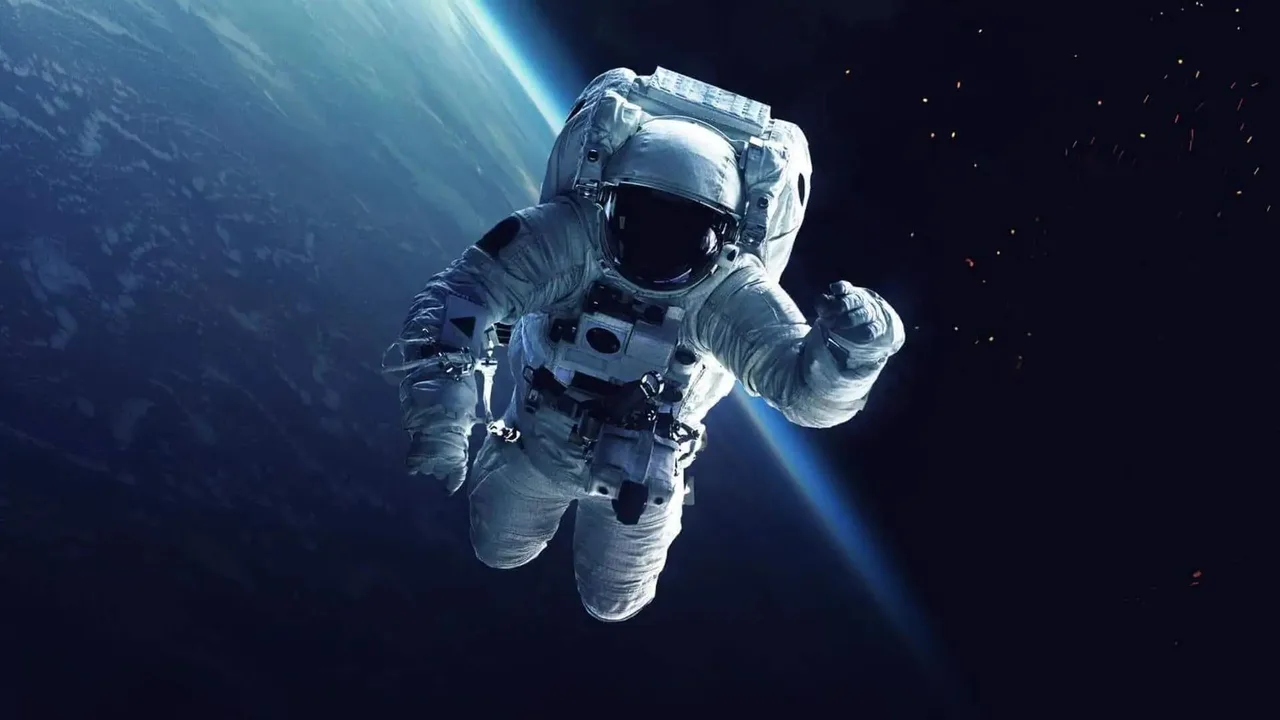
The human body has adapted to Earth's gravity over billions of years of evolution. Therefore, when space travel first began, scientists were deeply concerned about one question: what happens to the human body, especially the brain, in a weightless environment? Does blood circulation fail, do bones deteriorate, or is there a serious impact on the brain?
Experiments in the late 1950s involving mice, spiders, and dogs showed that living organisms could survive in space. Later, human spaceflights proved that people could not only survive but also adapt to the new environment.
European Space Agency (ESA) astronaut Luca Parmitano notes that the human body changes significantly within a few weeks in space. According to him, the face becomes rounder, the legs thin out, and a person begins to feel their body in a completely different way. Parmitano considers this a natural adaptation of the body to weightlessness.
However, space affects not only human muscles and bones but also the brain. While every movement on Earth involves overcoming gravity, there is no such need in space. As a result, bones begin to lose calcium, muscles weaken, and certain changes are observed in the heart. Also, because body fluids shift to the upper part, astronauts' faces appear swollen.
That is why astronauts serving on the International Space Station are forced to exercise for about two hours every day. Despite this, after a six-month flight, astronauts returning to Earth cannot exit the capsule on their own and are carried out on stretchers. It sometimes takes up to four years for their bones to fully recover.
According to experts, the most important organ in the human body is the brain. ESA flight surgeon Alessandro Alcibiade emphasizes that if a person does not go to space with a healthy and efficiently functioning brain, all other preparations lose their significance.
To date, research on the effects of space on the brain has been conducted on a limited number of astronauts. For example, American astronaut Scott Kelly spent a year on the International Space Station, while his twin brother Mark Kelly remained on Earth. According to the study results, no major changes were observed in Scott's cognitive abilities during the flight, but they declined to some extent for about six months after returning to Earth.
Recently Frontiers in Psychology in a new study published in the journal, scientists from Birkbeck, University of London, analyzed 15 brain imaging studies involving 377 participants. These included both astronauts and volunteers who participated in experiments simulating space conditions on Earth.
Scientists concluded that in weightless conditions, the human brain also physically and functionally re-adapts. Specifically, changes occur in parts of the brain responsible for movement, balance, spatial orientation, and body perception. This shows that the human brain accepts gravity as a constant external signal and relies on it to function.
Professor Elisa Raffaella Ferrè notes that even when lifting a cup of coffee, the brain automatically takes Earth's gravity into account. In space, this mechanism needs to be 'recalibrated'.
Although this adaptation is necessary for astronauts, it takes time. Scientists also observed this in the case of Apollo program participants. During their walks on the Moon's surface, their movements were awkward and unstable. The reason for this was not only the heavy spacesuits but also that the brain had not yet fully adapted to the new gravitational environment.
This issue will become even more relevant in the future when long-term expeditions to the Moon and Mars are carried out. For example, after an eight-month flight to Mars, astronauts will be fully adapted to weightlessness. In such conditions, transitioning to Mars' gravity, which is three times less than Earth's, could also cause serious difficulties. It is not unlikely that this could negatively affect the processes of landing, moving, and making important decisions.
To solve this problem, scientists consider rotating spacecraft that create artificial gravity or systems that generate centrifugal force to be the best solution. However, implementing such technologies is very expensive.
At the same time, Professor Ferrè is also developing new methods to stimulate the gravity-sensing parts of the brain through weak electrical impulses. Scientists believe that in the future, such technologies will help humans adapt to new environments in space more quickly.
Experts emphasize that space travel is not only one of the greatest scientific challenges facing humanity but also an unparalleled opportunity to learn more about how the human brain works and how it adapts to external environments.


Comments 0
…