


Scientists find key signs of life on Earth-like planet
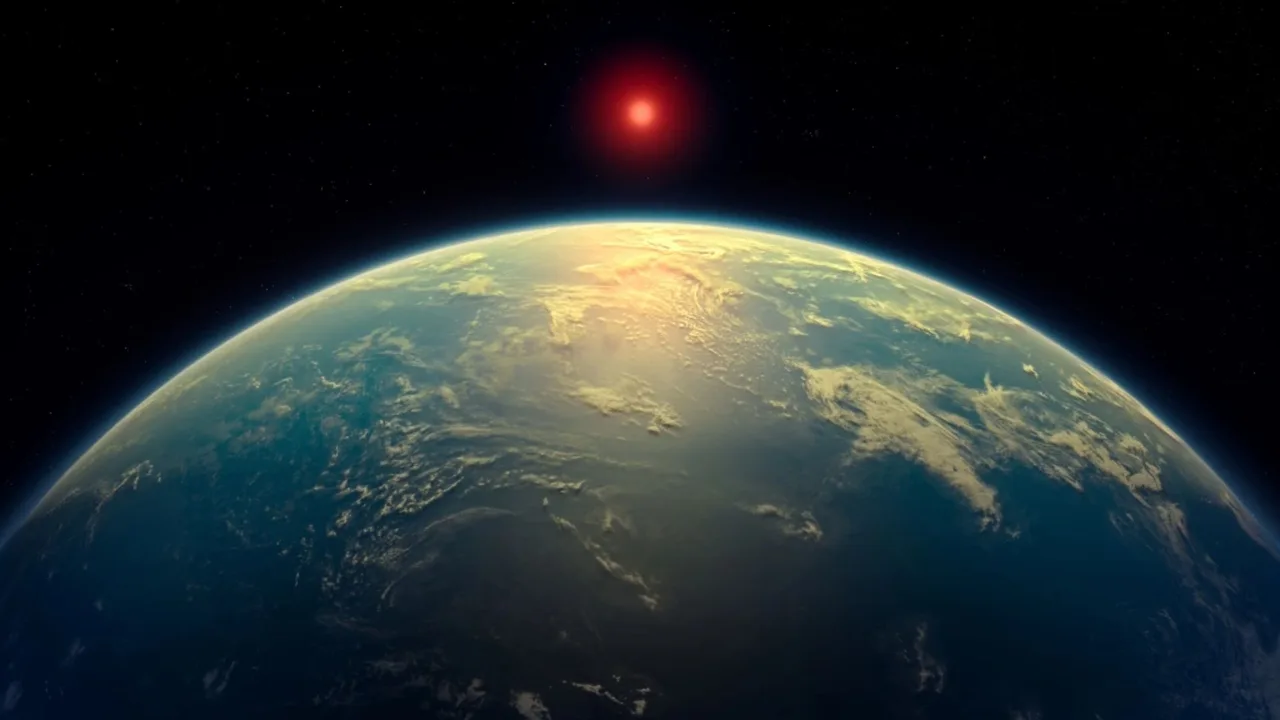
Scientific research aimed at searching for life outside the solar system has yielded another significant result. Scientists have confirmed for the first time the presence of an atmosphere on the exoplanet which has Earth-like characteristics and is located 49 light-years away from us. LHS 1140b This was reported by The Guardian .
Previously, atmospheres were mainly detected on gas giants and 'sub-Neptune' type exoplanets. However, this time, scientists have successfully proven through observations that a rocky planet located in the habitable zone possesses an atmosphere.
The lead author of the study, former Harvard University researcher Dr. Charles Cadieux, noted that this is not only the first confirmation of an atmosphere on a rocky planet in the habitable zone, but also the first direct detection of a substance in its atmosphere.
According to the scientist, this result makes LHS 1140b one of the most promising objects for astrobiology and the study of habitable environments outside the solar system.
It is reported that the planet's mass is 5.6 times that of Earth, and its radius is approximately 70 percent larger. Although it is somewhat similar to Earth in composition and temperature, it is tidally locked, may have more water reserves, and its atmosphere may differ significantly from Earth's.
Discovered in 2017, LHS 1140b orbits a small red dwarf star in the constellation Cetus. Cadieux emphasizes that current data indicate the planet has the essential factors for life: a rocky surface, a temperature that could allow for liquid water, and an atmosphere. The atmosphere may prevent water from escaping into space and protect the surface from harmful radiation.
Researchers were unable to detect traces of an atmosphere on another rocky planet in the same system, LHS 1140c .
According to an article published in the journal Science , the observations were carried out using the Magellan Clay
telescope located at the Las Campanas Observatory in Chile. In 2024 observations, helium gas escaping from the planet was recorded. Although this gas was not detected in subsequent observations, scientists re-checked for potential errors and false results, confirming the reliability of the initial conclusions.


Comments 0
…