


The Last Embrace of a Palestinian Woman: A Hard Fate Behind the Olive Tree
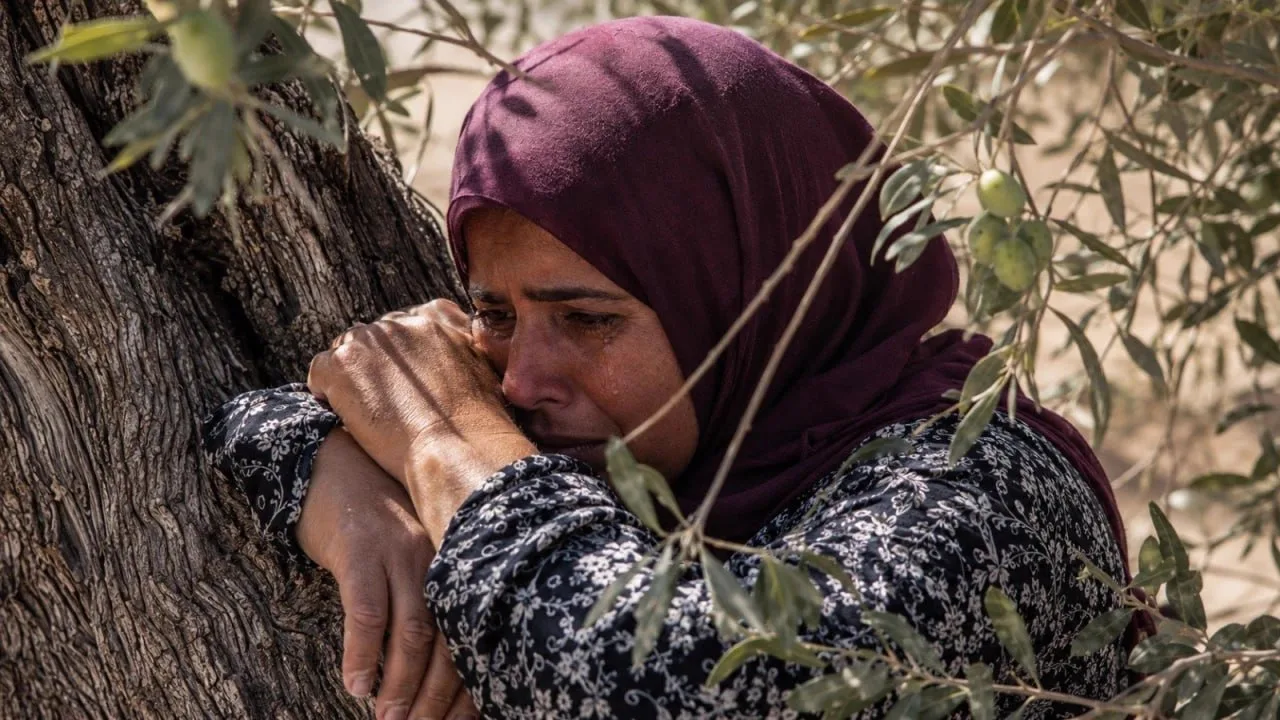
A moment captured on camera in the West Bank has once again highlighted the pain of an entire nation regarding their land and livelihood. A Palestinian woman embraced an olive tree on her land for the last time, watching with tears as it was destroyed.
The incident took place in the Arraba area, south of the city of Jenin, near the road connecting the towns of Arraba and Ya'bad. According to local sources, Israeli military machinery began uprooting olive trees in the area.
Not just a tree, but a family's sustenance
The woman's action in the photo is not a simple farewell. In rural areas of Palestine, olive trees are a source of agriculture, food, and income for many families.
Details of the incident reported by Reuters state that landowners in Arraba use the olive groves as a source of family livelihood. Some trees were reported to be 50–70 years old.
"These trees are our source of income," one of the local landowners told Reuters.
Therefore, the destruction of a single tree for a farmer is not just the loss of an agricultural asset, but can also mean a reduction in income for future seasons.
What happened?
According to reports, the operation began on September 1, 2026, and continued the following day.
Information | Detail |
|---|---|
Region | Arraba, South Jenin |
Event | Uprooting of olive trees |
Time | Early September 2026 |
Land in the area | Approximately 200–223 dunums |
Trees | Some are 50–70 years old |
Reason | The Israeli side cited security and planning grounds |
According to Reuters, the Israeli military stated that the operation was carried out after a "systematic planning process." Palestinian landowners, however, said the destruction of the trees is causing serious damage to their livelihoods.
Road construction and land issues
Local sources reported that the uprooting of trees was carried out along the road connecting Arraba and Ya'bad.
The "Al-Quds" newspaper wrote that the operations were carried out under military protection and affected the livelihoods of dozens of farming families. Local authorities and landowners stated that the work area covered more than 200 dunums.
At the same time, interpretations of this event by different parties vary. Therefore, when discussing the reasons for the uprooting of the trees, it is important to show the official Israeli position and the statements of local Palestinians separately.
Why is the olive tree important to Palestinians?
Beyond its economic importance, the olive tree holds cultural and symbolic meaning in Palestinian rural life.
For many families, olive groves are considered a heritage of land and labor passed down from generation to generation. Some of the trees have been tended for decades.
According to the Palestinian Central Bureau of Statistics, in 2025, more than 35,273 trees were uprooted, damaged, or destroyed by bulldozers in the West Bank as a result of attacks related to Israeli authorities and settlers. About 26,988 of them were olive trees.
These figures show that the issue of olive groves is not just one episode of the conflict in the West Bank.
The most moving frame
But the main image that brought the incident in Arraba to the global audience was not the numbers, but the very state of this woman embracing the tree.
She leans against the tree trunk, unable to hide her tears. Around her are olive groves, heavy machinery, and trees on the verge of destruction.
At first glance, this is one person saying goodbye to a tree.
But for Palestinian farmers, this tree is land, labor, memory, and livelihood connected.
What does this event mean?
The incident in Arraba once again showed how complex the conflicts surrounding land and agriculture in the West Bank are.
On one side, the Israeli side cites security and regional planning grounds. On the other side, Palestinian landowners state that their sources of agriculture and livelihood are being destroyed.
Therefore, the woman's embrace in the photo is not just grief for one tree. It has become a symbolic image of the ongoing conflict in the West Bank surrounding land, property, livelihood, and a person's relationship with their land.
The most painful part is this: for the tree the woman is hugging, this farewell may be a matter of a few minutes, but for her family, the loss of the tree can mean economic and emotional loss felt for years.



Comments 0
…