


Mysterious radio signal from space attracts scientists' attention
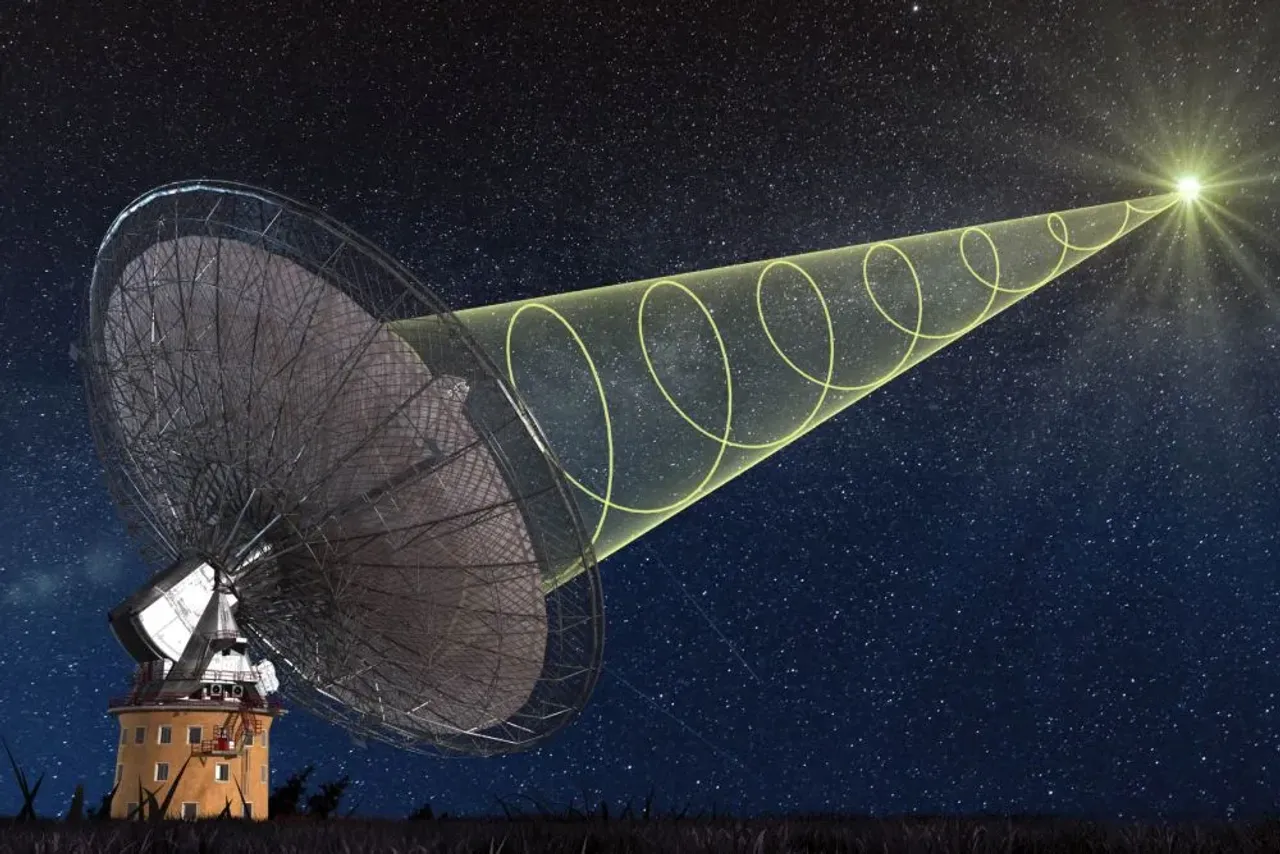
Scientists re-analyzing data obtained from 33 planetary systems using China's FAST radio telescope have detected an unusual radio signal originating from the direction of the star K2-155. However, researchers emphasize that there is currently insufficient evidence to link this signal to an extraterrestrial civilization. This was reported by TRT Haber and ScienceAlert.
According to reports, scientists are studying radio signals in order to find traces of other technologically advanced life forms in the universe. This direction falls within the scope of SETI — the search for extraterrestrial intelligence research.
In the study, data on 33 exoplanetary systems observed in 2021 by China's 500-meter FAST radio telescope were reviewed using new methods. Scientists searched for narrow-band radio signals that are rare in natural cosmic processes and whose frequency changes over time.
During the re-analysis process, initially more than 139,000 signals were recorded. After various filters and radio interference detection methods, special attention was paid to only two of them. While one was a signal previously detected and later found to be interference from an Earth source, the second was a new signal coming from the direction of the K2-155 system.
Signal in the direction of K2-155
The signal, designated NBS 260108, was recorded in the direction of the K2-155 red dwarf star, located about 238 light-years from Earth. This system contains three super-Earths, with the outer planet located close to the star's habitable zone.
The signal was recorded at a frequency of 1148.4167 megahertz and attracted researchers' attention because it was narrow-band and exhibited a frequency shift over time. In addition, it was recorded in the main beam of the FAST telescope directed toward K2-155 and was not observed in other surrounding beams.
However, subsequent checks did not confirm that the signal belonged to an extraterrestrial civilization. The signal appeared strongly in only one polarization channel. Furthermore, similar signals at nearby frequencies were also recorded during the observation of three other stars. This increased the probability that it was radio interference originating from Earth or the telescope's equipment.
Researchers have not yet been able to determine the exact source of the signal. Therefore, NBS 260108 currently remains an unknown signal, and the probability of it originating from Earth or instruments is assessed as higher than the probability of it coming from an extraterrestrial source.
Radio interference is one of the main problems
Radio waves from Earth itself pose a major problem in detecting faint signals coming from space. Devices such as satellites, airplanes, communication, and navigation systems can interfere with astronomical observations.
The FAST telescope's ability to simultaneously observe different directions using 19 separate beams helps to isolate such signals.
Scientists note that this study does not yet provide evidence for the existence of extraterrestrial life. However, new machine learning and signal filtering methods can be applied in the future to search for technological signals coming from space.


Comments 0
…