


Scientists identify 120-million-year-old “four-winged” dinosaur
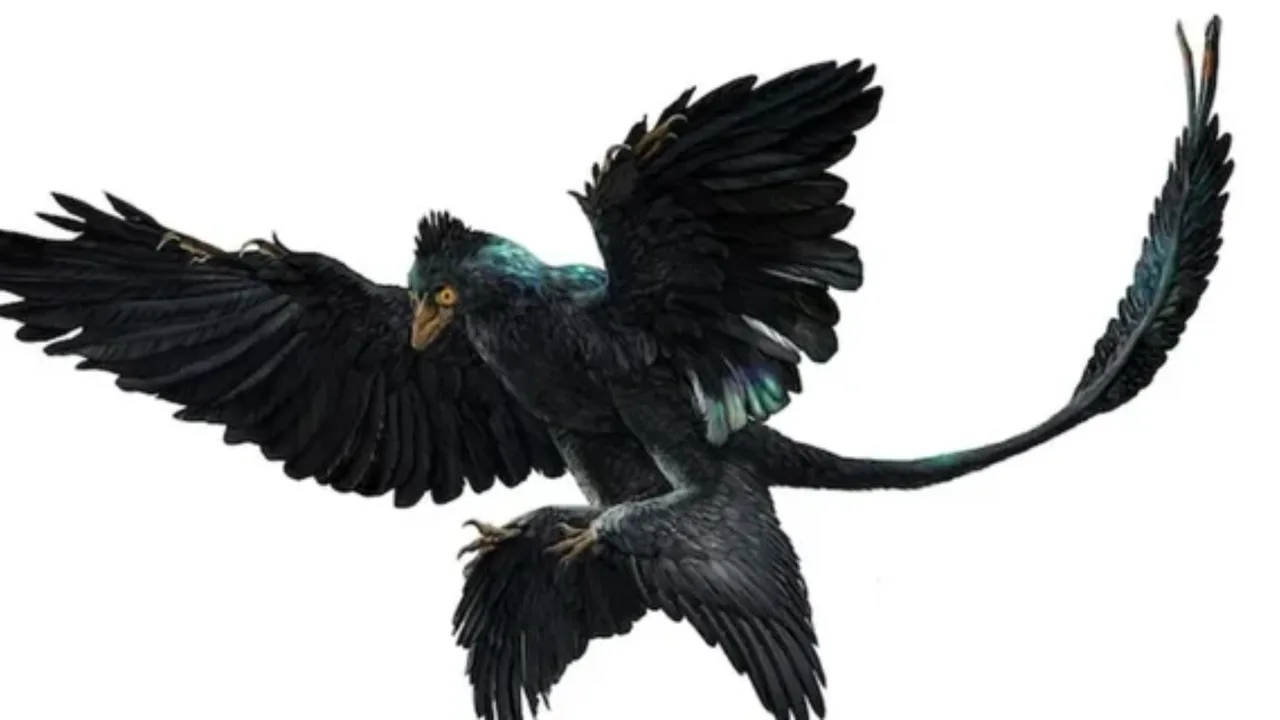
Paleontologists have identified a new species of small predatory dinosaur that lived approximately 120 million years ago, featuring long feathers not only on the front part of its body but also on its hind legs. Its nearly complete skeleton was found in China.
The results of the study were published in the scientific journal Nature Communications.
Scientists named the new species Norellraptor barsboldi. The dinosaur's name is dedicated to the memory of the prominent American paleontologist Mark Allen Norell, who passed away in 2025, and his Mongolian colleague Rinchen Barsbold. Both scientists made significant contributions to the study of bird-like dinosaurs and their evolution.
The nearly intact skeleton of the new dinosaur was discovered in 2023 in China's Liaoning Province. Its body was very small, measuring only 57 centimeters in length.
According to the researchers' estimates, Norellraptor barsboldi lived about 120 million years ago, at the beginning of the Cretaceous period.
Microscopic examination of the dinosaur remains also yielded interesting information. Bone tissue analysis showed that the animal was at least three years old at the time of its death. Although it was not yet fully mature, it had almost reached the size typical of larger dinosaurs.
Norellraptor barsboldi belongs to the microraptor group of the dromaeosaurid family, which is part of the theropod dinosaurs. One of the most distinctive features of the members of this group is the presence of long feathers not only on the forelimbs but also on the hind legs.
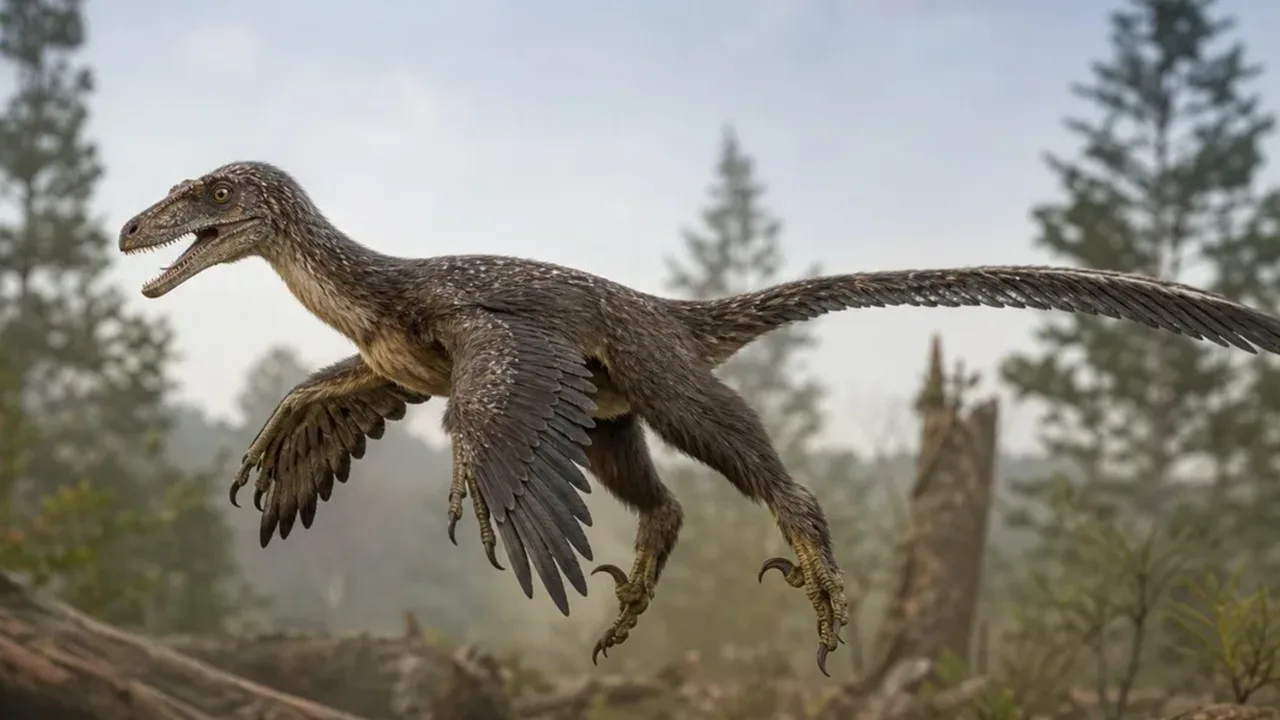
Scientists suggest that these feathers helped microraptors navigate among trees. They may have had the ability to glide through the air from one tree to another, much like modern flying squirrels.
However, it is likely that the locomotion capabilities of microraptors were even more complex. Some researchers do not rule out the possibility that these dinosaurs could not only glide through the air, but might have been capable of active flight.
In appearance, microraptors closely resemble the famous Archaeopteryx. Nevertheless, they do not belong to the same group. Microraptors and Archaeopteryx are considered close, yet separate evolutionary branches of feathered dinosaurs.
The main scientific significance of the new discovery is explained by the identification of over 50 anatomical features associated with flight adaptation in the dinosaur's body. Most of these features are found in both microraptors and the ancient ancestors of birds.
However, scientists found that these features did not form in the same order and sequence in both groups. Therefore, researchers put forward the conclusion that the ability to flight may have emerged at least twice independently during dinosaur evolution.
At the same time, the authors of the study emphasize that it is still too early to accept this assumption as a definitive scientific conclusion. Additional discoveries and further research will be needed in the future to reliably confirm this idea.
The discovery of the new dinosaur can provide important information in understanding how ancient creatures lived, moved, and acquired the ability to fly.


Comments 0
…