


CAS Space postpones the maiden flight of the Lihong-2 rocket to 2027
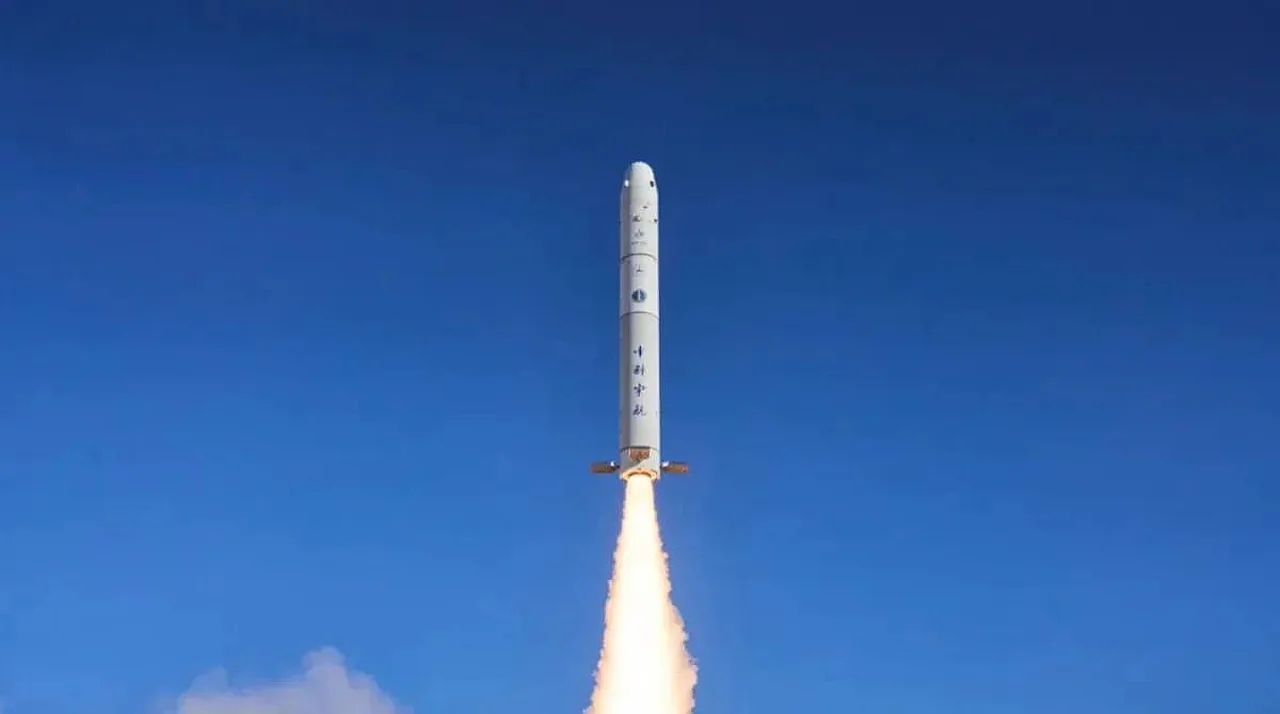
One of China's leading commercial space companies, CAS Space has rescheduled the maiden flight of its reusable Lihong-2 suborbital rocket. According to Ixbt.com, this critical test has been moved from late 2026 to the first quarter of 2027, with the mission intended for conducting pharmaceutical experiments in space. This was reported by Ixbt.com.
This initial mission will focus on protein crystallization and the research of low molecular weight drugs. CAS Space is working closely with the Guangzhou laboratory on this project. The laboratory is fully responsible for developing the scientific program, preparing the necessary samples, and analyzing the final results.
Technical capabilities of the Lihong-2 rocket
According to the project, Lihong-2 will ascend above the Karman line, the conventional boundary of space, at an altitude of 100 kilometers. This allows the vehicle to provide microgravity conditions lasting over 180 seconds.The rocket is capable of carrying up to 3 tons of payload with a total volume of 8 cubic meters into space. The 18-meter-long vehicle launches with an initial mass of approximately 60 tons. Its first stage is planned to be reused up to 30 times, which will significantly reduce the cost of commercial flights.
The rocket is equipped with Liqing-1 liquid engines that run on kerosene and liquid oxygen, each providing about 30 tons of thrust. Additionally, a special capsule is located at the top of the rocket, which is successfully returned to Earth after the experiment.
Future plans and space tourism
PH-2 also designated under the index Lihong-2 could become the primary platform for suborbital tourist flights carrying up to seven passengers in the future. However, the company has not yet announced specific dates for tourist missions.This initiative CAS Space is a logical continuation of previously tested technologies. In January of this year, the company conducted a suborbital flight of the Lihong-1 rocket and returned the capsule to Earth using a parachute. At an altitude of 120 kilometers, a metal manufacturing experiment by the Institute of Mechanics of the Chinese Academy of Sciences was successfully completed.
The pharmaceutical direction is fully aligned with the priorities of the China National Space Administration (CNSA). The agency has also included space biotechnology in its commercial astronautics development plan for 2025–2027. Furthermore, CAS Space is developing the Lihong-3 platform, intended for continuous experiments, which is expected to participate in orbital biomedical projects and conduct its first flight in 2028.


Comments 0
…