


Seven countries home to more than half of the world's population identified
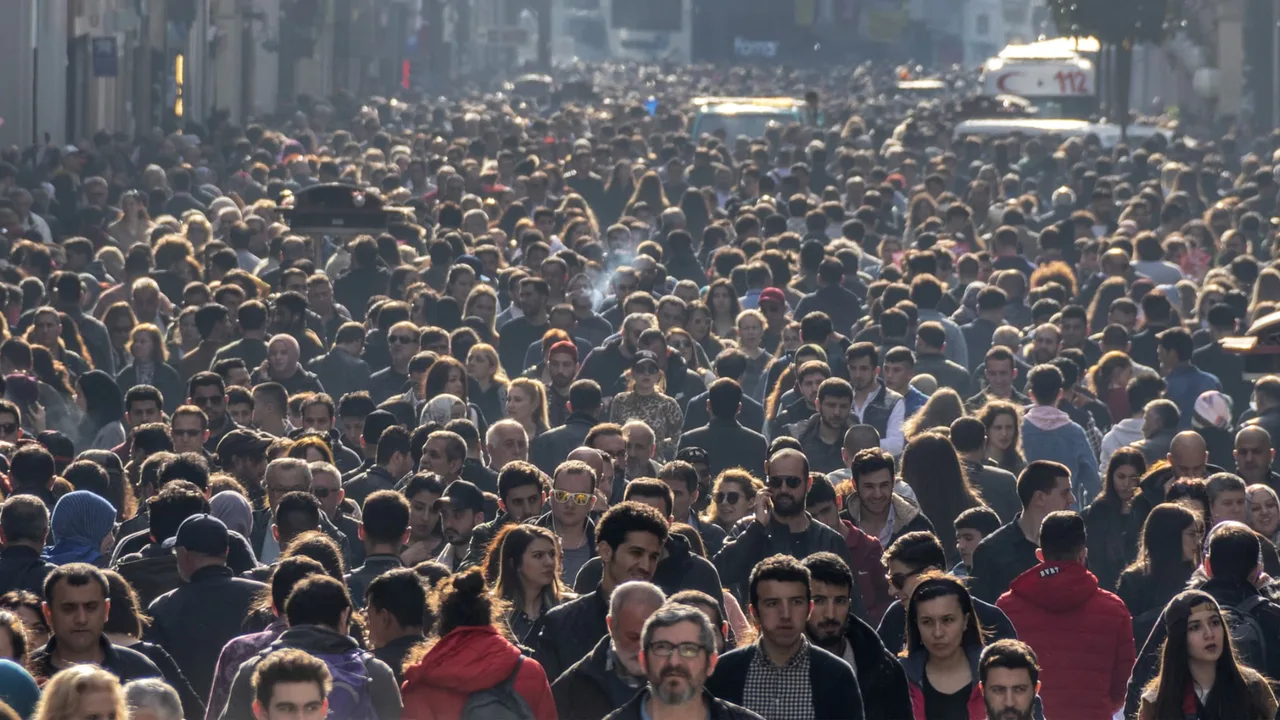
Today, the world's population is not distributed evenly across countries. While some nations are experiencing rapid population growth, others are seeing a downward trend. A new report based on United Nations (UN) data has identified seven countries that house the vast majority of the planet's population. Interestingly, nearly one in every two people on Earth lives in these specific countries.
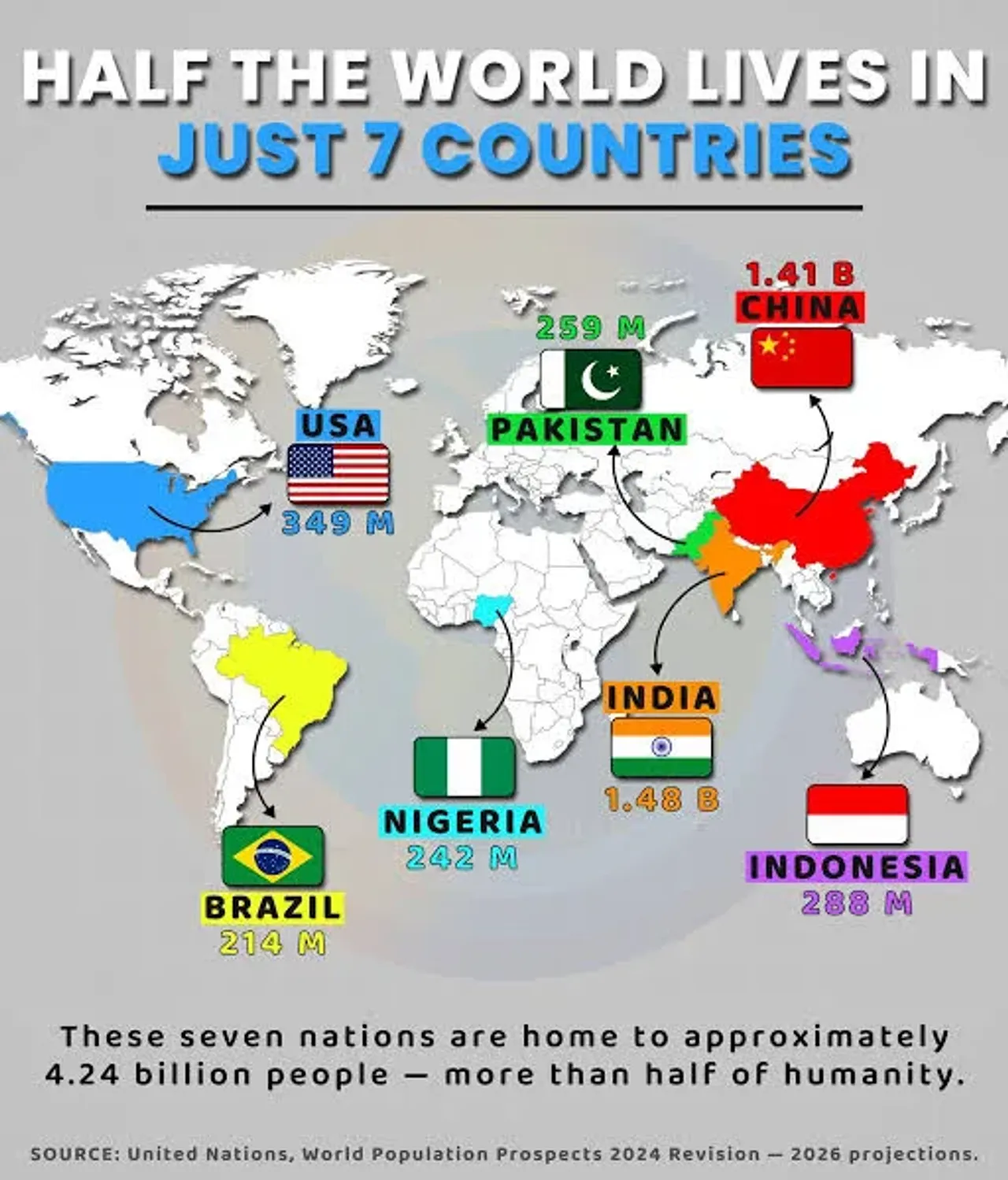
According to estimates published by DataReportal based on UN data, more than 4 billion people live in just seven countries. This figure clearly demonstrates the significant role these nations play in the global demographic landscape.
India holds the top spot in the population ranking, with approximately 1.48 billion people. China follows in second place with 1.41 billion residents. Thus, these two most populous Asian countries account for nearly 35 percent of the global population.
The United States is ranked third with 349 million people. Indonesia and Pakistan follow, with 288 million and 260 million people, respectively.
Nigeria, considered the most populous country on the African continent, ranks sixth with 243 million people. Brazil concludes the list of seven with 213 million people.
In total, India, China, the USA, Indonesia, Pakistan, Nigeria, and Brazil are home to approximately 51.2 percent of the Earth's population. In other words, more than half of the world's population is concentrated in just seven countries.
According to the DataReportal Digital 2026 Global Overview Report, based on UN estimates, the global population reached approximately 8.25 billion in October 2025. The report also highlights that India has surpassed China to become the world's most populous country.
However, demographic processes are not uniform across these seven countries. In particular, while the population continues to grow in India, Pakistan, and Nigeria, the opposite is occurring in China, where a decline in population is being observed.
According to DataReportal, China's population decreased by nearly 3.25 million people in the year leading up to October 2025. During the same period, India's population increased by nearly 12.9 million. This shows that the demographic gap between the two most populous countries is becoming increasingly pronounced.
Overall, these figures confirm that the world's population is unevenly distributed across countries and that demographic changes vary significantly across different regions. While some nations are seeing rapid population growth, others are experiencing a decline. This situation could lead to significant changes in the geographical distribution and demographic landscape of the world's population in the coming years.


Comments 0
…