Technology for building concrete-free bridges is being introduced in Germany: using wood and granite
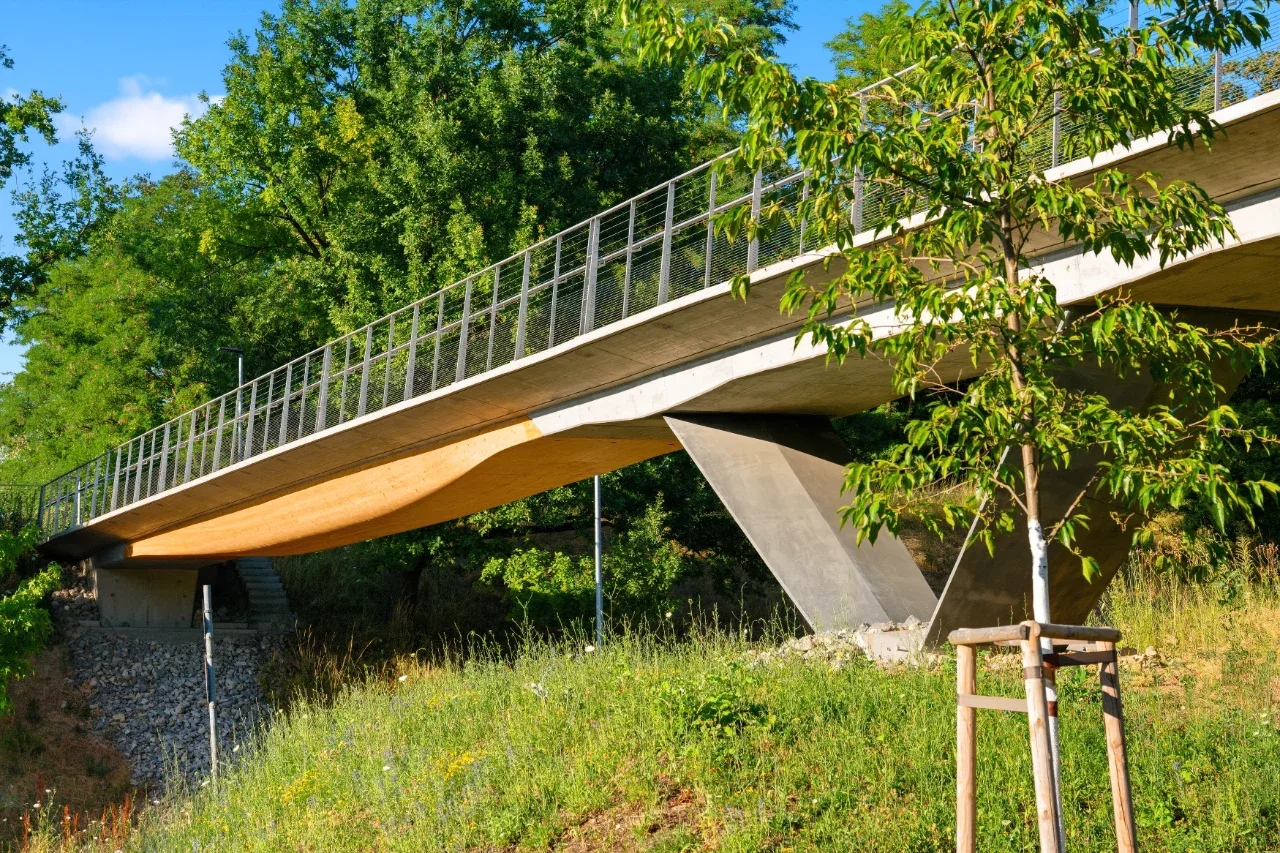
In Berlin, Germany, plans are underway to construct pedestrian and bicycle bridges without the use of concrete, utilizing wood and granite instead. The new technology developed by engineers is expected to extend the service life of the structures by 3–5 times compared to conventional wooden bridges, while also significantly reducing carbon emissions during the construction process.
Solutions aimed at reducing the use of concrete in construction, transitioning to environmentally sustainable materials, and extending the service life of structures are receiving increasing attention. The new bridge technology proposed in Germany could serve these very goals.
The project envisions building concrete-free bridges by harmonizing wooden structures with granite slabs. Engineers emphasize that this method is promising not only from an ecological standpoint but also in terms of the structure's durability and long-term operation.
How does the new construction made of wood and granite work?
This technology was developed in collaboration between researchers at the Technical University of Berlin and the engineering company Miebach. The project authors state that combining wood and granite in bridge construction using this method is a novel approach.
In traditional wooden bridges, certain parts of the structure can deteriorate faster due to precipitation, humidity, temperature changes, and other external factors. In the new project, it is proposed to use large granite slabs instead of concrete to protect the wooden parts from the negative effects of the external environment.
This approach is aimed at reducing the exposure of wood to external influences and extending the service life of the structure. According to the engineers' estimates, such bridges could last three to five times longer than conventional wooden structures.
To evaluate the safety and durability of the technology, researchers have conducted numerous tests. During this process, the stability and load-bearing characteristics of the structure were studied.
Two new bridges will be built in Berlin
To put the new technology into practice, the Miebach company plans to build two bridges for pedestrians and cyclists in the Spandau district of Berlin.
According to the project, each bridge will be approximately 15 meters long. They will be built to replace old wooden bridges that have currently fallen into disrepair.
The new structures are intended for pedestrian and bicycle traffic and will be built by combining the structural capabilities of wood and granite without the use of concrete.
Why is this technology ecologically important?
One of the main advantages of the new construction is the potential to reduce carbon dioxide (CO₂) emissions during the construction process. Reducing the use of concrete and relying on alternative materials like wood can help lower the environmental impact of construction.
Furthermore, the developers see the ability to disassemble the structure and subsequently reuse or recycle its materials as an important advantage.
By combining wood and granite, the goal is to extend the service life of the structure, increase the possibility of material reuse, and reduce environmental impact.
Researchers are considering that this technology could be used in the future to build pedestrian and bicycle bridges in other regions of Germany as well.
If the project yields the expected results in practice, the use of wood and granite could become one of the ecological, durable, and long-lasting alternative solutions for building urban infrastructure.

No ads with a subscription
Zamin Premium — 4 900 UZS a month


Related news


Comments0
…