


Attention drivers: when should engine oil, transmission oil, and antifreeze be replaced?
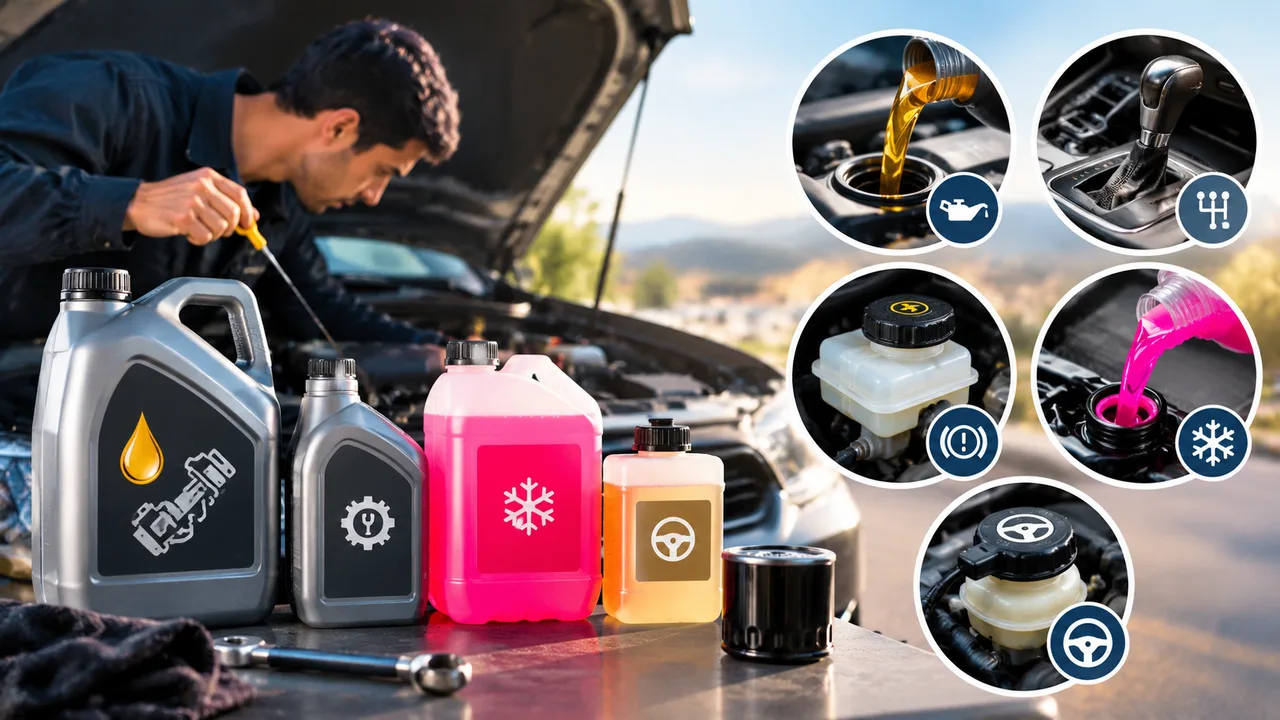
The longevity of a car depends not only on how it is driven, but also on the timely replacement of oil and technical fluids. Replacing certain fluids too late can lead to costly repairs, while replacing them earlier than necessary brings extra expenses. So when should you update your engine oil, transmission oil, brake fluid, antifreeze, and power steering fluid?
Among car owners, views like "engine oil must be replaced every 5 thousand kilometers" or "transmission oil lasts a lifetime" can be encountered. However, neither opinion is equally true for all cars.
The replacement period depends on the car's brand, year of manufacture, engine type, fluid specification used, and operating conditions. The periods below are provided as a general guideline. The exact interval should be checked in the car's user manual.
1. Engine oil: the fluid that requires the most attention
Engine oil lubricates the moving parts inside the engine, reduces friction, helps dissipate heat, and controls contamination. Over time and during engine operation, the properties of the oil can change.
When should it be replaced?
In many cars, engine oil is replaced approximately every 5,000–10,000 kilometers.
In some modern cars, the interval set by the manufacturer may be 10,000–15,000 kilometers or even more.
Even if the mileage is low, the time-based deadline must be followed. In many models, this ranges between 6–12 months, but the exact period varies.
These numbers are not a universal rule. For example, frequent driving over short distances, long waits in traffic jams, driving on dusty roads, and operating under severe conditions may require earlier oil replacement.
When replacing the oil, it is important to also renew the oil filter in accordance with the manufacturer's recommendation. Additionally, oil with the appropriate viscosity and specification for the engine must be chosen.
2. Transmission oil: delaying it can be costly
Oil in the gearbox or special transmission fluid protects the rubbing parts of the mechanisms, dissipates heat, and ensures hydraulic processes in automatic transmissions.
However, manual, automatic, CVT, and dual-clutch transmissions do not use the same fluid. Their replacement intervals also differ.
As a general guideline:
In some automatic transmissions, oil can be replaced within the range of approximately 60,000–100,000 kilometers.
In manual transmissions, the replacement interval is also determined depending on the car model.
In CVTs and dual-clutch transmissions, only the special fluid indicated by the manufacturer must be used.
In some modern transmissions, scheduled replacement requirements may be different. Therefore, the saying "transmission oil never needs to be replaced" cannot be applied to all cars.
If gear shifting becomes jerky, delayed, produces strange noises, or a burnt oil smell appears, it is necessary to consult a specialist without waiting for the next scheduled service interval. Such signs may indicate not only worn-out oil, but also other malfunctions.
3. Brake fluid: directly affects safety
Brake fluid transmits the pressure generated when the pedal is pressed to the brake mechanisms. If its properties deteriorate, it can negatively affect the operation of the braking system.
In many cars, it is recommended to replace the brake fluid approximately every two years. However, a different period may be set for some models. Therefore, the requirements in the car manual must be followed.
Pay attention to the following signs:
the brake pedal becoming softer than usual;
decreased braking efficiency;
fluid level dropping;
a warning light turning on in the braking system.
If the brake fluid level has dropped, do not limit yourself to simply topping it up. This may be related to worn brake pads or a fluid leak in the system. If you notice a problem with braking, do not continue driving and seek technical assistance safely.
4. Antifreeze: important not only in winter, but also in summer
Antifreeze or coolant helps maintain normal engine temperature, protects the cooling system from corrosion, and reduces the risk of the fluid freezing at low temperatures.
The replacement period depends on the type of fluid used and the car's design. Some types can be replaced approximately every 2–3 years, while other long-lasting types can be replaced after 5 years or at a specific mileage. In some cars, the first replacement period is even longer.
Therefore, making a decision based solely on the color of the fluid is not correct. Color does not guarantee its chemical composition or compatibility with other types of antifreeze.
Important rules:
Check the antifreeze level when the engine is completely cooled down.
Do not open the cap of a hot engine radiator or expansion tank: hot fluid and steam can cause severe burns.
Do not mix different antifreezes based solely on their color.
If the fluid decreases frequently, have it checked for leaks or other malfunctions.
If engine temperature rises, coolant decreases rapidly, or steam comes out of the system, do not accept this as normal.
5. Power steering fluid: not present in every car
There is an important distinction here: cars with a hydraulic power steering system use special steering fluid. Electric power steering systems generally do not have such fluid.
The replacement period for oil in a hydraulic system depends on the car model and the manufacturer's recommendation. Some models have a scheduled replacement, while others require checking the fluid and servicing as needed.
Pay attention to the following situations:
steering becomes heavy;
a humming or other unusual noise appears when turning;
the fluid level in the reservoir drops;
oil leaks in the system.
If such signs appear, simply replacing the oil may not be enough. The pump, hoses, or other parts must also be checked. Only the type of fluid required by the manufacturer should be poured into the system.
A brief reminder for drivers
The table below summarizes common general guidelines. They do not replace the exact requirements in the car manual.
Fluid | General replacement guideline | What to look out for? |
|---|---|---|
Engine oil | 5,000–10,000 km in most models; longer in some | Oil specification, driving conditions, and time |
Transmission oil | Around 60,000–100,000 km in some models | Transmission type and manufacturer requirement |
Brake fluid | Approximately every 2 years in most models | Level, system tightness, and brake performance |
Antifreeze | About 2–5 years or other period depending on type | Fluid specification and cooling system |
Hydraulic steering fluid | Depends on model and system | Electric steering may not have such fluid |
4 rules to avoid unnecessary expenses on your car
First — keep a service booklet. Write down when the oil and filters were replaced and the car's mileage at that time.
Second — do not rely solely on mileage. Some fluids lose their properties over time in addition to mileage.
Third — do not use low-quality or inappropriate fluid. The specification required by the car is what matters, not the color on the packaging or the general name.
Fourth — do not ignore signs of malfunction. A drop in fluid level, leaks, noise, or temperature rise is not a reason to wait for the next replacement period.
Conclusion
Timely maintenance of a car helps ensure the reliable operation of the engine, transmission, brakes, and cooling systems. However, there is no single replacement schedule for all cars.
The rightest way is to follow the periods indicated in the car's user manual, regularly check fluid levels, and fix malfunction signs without delay. This serves not only to prevent excessive repair costs, but also to ensure safety on the road.



Comments 0
…