5 Benefits of Bone Broth: Who Should Drink It with Caution?
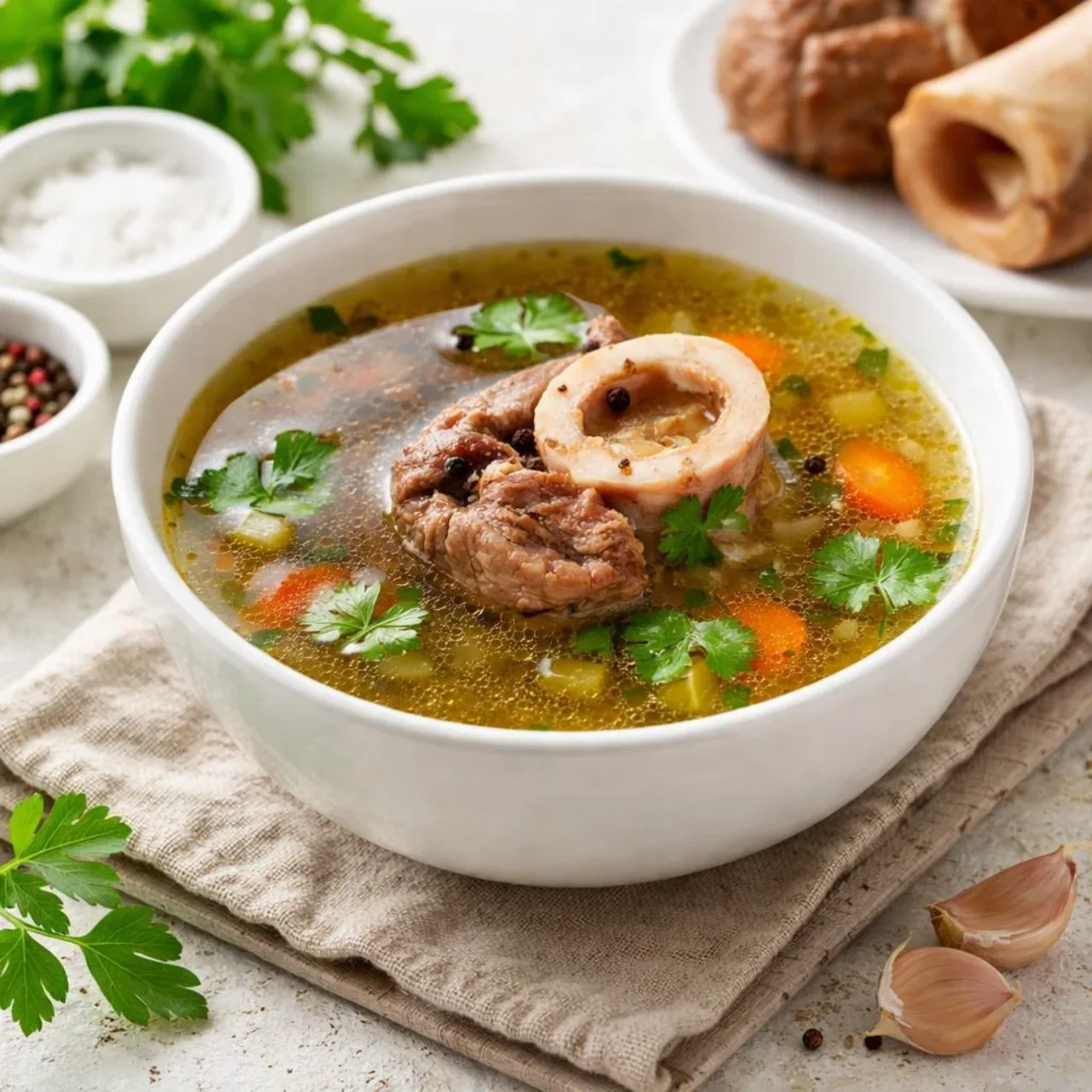
Bone broth is valued not only as a nutritious dish but also as a source of collagen, gelatin, and various amino acids. It can have a positive effect on the health of joints, skin, bones, and the digestive system. However, claims about all its beneficial properties are not equally scientifically proven, and some people should be cautious when consuming such broth.
Bone broth is prepared by simmering beef, lamb, or chicken bones over low heat for a long time. During this process, gelatin, collagen fragments, and certain minerals from the bones, cartilage, and connective tissues are released into the broth. For this reason, it has long been consumed in the cuisines of various nations as a nutritious dish and a food that aids in recovery.
However, the benefits of bone broth also depend on how it is prepared, its composition, how much is consumed, and the individual's state of health.
5 Important Benefits of Bone Broth for the Body
1. Supports Joints and Connective Tissues
Collagen and gelatin are the most discussed components of bone broth.
Collagen is an essential protein found in the body's tendons, ligaments, cartilage, skin, and other connective tissues. As a result of simmering bones and cartilage for a long time, some of the collagen turns into gelatin and enters the broth.
Gelatin and collagen fragments are broken down into amino acids in the body. These amino acids participate in the processes of repairing various body tissues and protein synthesis.
Therefore, bone broth can be one of the protein sources in a diet. However, there is not enough scientific evidence to conclude that consuming it directly repairs joint cartilage or cures arthritis.
2. May Aid the Digestive System
The gelatin and certain amino acids in bone broth are also being studied in terms of their effect on the digestive system.
Gelatin has the property of binding water and plays a certain role in food composition and digestive processes. Broth is considered one of the convenient ways to deliver fluids and nutrients to the body.
The broth may also contain amino acids such as glutamine. Glutamine is involved in the function of intestinal cells, but claims that drinking bone broth will necessarily repair the intestinal lining or cure gastritis and other digestive system diseases are not sufficiently scientifically grounded.
3. May Affect the Health of Skin, Hair, and Nails
Collagen plays an important role in skin structure, its elasticity, and firmness. The presence of broken-down forms of collagen and amino acids in bone broth makes it a significant dish for those interested in skin health.
For collagen synthesis, the body also needs protein, vitamins, and other nutrients. Therefore, it is not correct to believe that one can eliminate wrinkles, stop hair loss, or strengthen nails solely by consuming bone broth.
Its benefit should primarily be evaluated as an additional source of nutrients within a balanced diet.
4. Provides the Body with Fluids and Certain Minerals
Bone broth may contain calcium, phosphorus, magnesium, potassium, and other minerals. However, their amounts vary depending on the type of bone, cooking duration, amount of water, and preparation method.
Therefore, it is not correct to consider bone broth a guaranteed source of high amounts of calcium or magnesium. Its mineral composition is not always sufficient to meet the body's daily needs.
Broth also helps increase fluid intake. Especially in cases where appetite is low or it is difficult to eat solid foods, broth can be useful as part of a diet.
5. Effects on Sleep and the Nervous System Are Being Studied
Bone broth may contain the amino acid glycine. Glycine acts as a neurotransmitter in the nervous system and affects various physiological processes in the body.
Some studies have examined the effect of glycine on sleep quality. However, more research is needed to draw definitive conclusions regarding the amount of glycine in bone broth, its effect on the body, and its efficacy in improving sleep.
Therefore, bone broth should be evaluated as a nutritious food rather than a remedy for insomnia.
Who Should Consume Bone Broth with Caution?
Bone broth can be a part of a normal diet for most people. However, due to certain diseases and individual characteristics, it is important to pay attention to its composition.
- People with Gout. Broth made from bones and meat may contain purines. Purines are converted into uric acid in the body. In people prone to gout, consuming large amounts of purine-rich foods can affect disease flare-ups. Therefore, they should pay attention to the composition and amount of broth consumed.
- People with Kidney Diseases. People with impaired kidney function may have restrictions on sodium, potassium, phosphorus, and fluid intake. Since the composition of bone broth changes depending on the preparation method, it is recommended that such patients discuss the amount with their doctor.
- People Prone to Cardiovascular Diseases and High Cholesterol. If the broth is made from fatty bones, it can be cooled, and the layer of solid fat that rises to the surface can be removed. This helps reduce the fat content of the dish. It is also important to use salt in moderation.
- Those with a Sensitive Gastrointestinal System. Very fatty or strong broth can increase heartburn, reflux, and discomfort in some people. In such cases, it is advisable to prepare the broth lighter and reduce the amount consumed.
How Is It More Beneficial to Prepare Bone Broth?
To ensure the broth is nutritious and tasty, several rules can be followed during the preparation process.
- Simmer over low heat. Instead of boiling bone broth vigorously, it is recommended to simmer it over low heat. Beef and lamb bones can be simmered for several hours, while chicken bones can be simmered for a relatively shorter time. It is not always proven that boiling for 8–12 hours drastically increases the nutritional value of the broth.
- Use vegetables. Adding carrots, onions, garlic, herbs, and other vegetables enriches the taste and nutritional composition of the dish.
- Add vinegar or lemon juice in moderation. Slightly increasing the acidity of the water during the boiling process may affect the release of some minerals. However, 1–2 tablespoons of vinegar or lemon juice does not guarantee that all minerals will be released in large quantities.
- Reduce salt. Excess salt is especially undesirable for people with high blood pressure. It is advisable to add salt to the broth at the final stage of preparation and in moderation.
- Pay attention to safe storage. It is necessary not to leave the finished broth at room temperature for long, to cool it quickly, and to store it in the refrigerator. It must be thoroughly reheated before being consumed again.
Is Bone Broth Really a Beneficial Dish?
Bone broth is a nutritious dish containing protein fragments, gelatin, amino acids, fluids, and some minerals. It can be part of a balanced diet, enrich the diet, and serve as an easily consumable food for some people.
However, one should not rush to conclusions that bone broth cures joint diseases, automatically strengthens bones, eliminates wrinkles, or drastically boosts immunity. Its benefit is related to the preparation method, composition, amount consumed, and general dietary habits.
The most reasonable approach is to value bone broth not as a miraculous cure, but as a properly prepared and moderately consumed nutritious dish.

No ads with a subscription
Zamin Premium — 4 900 UZS a month


Related news


Comments0
…