


Sindarov gives an unexpected assessment of Gukesh's emotions...
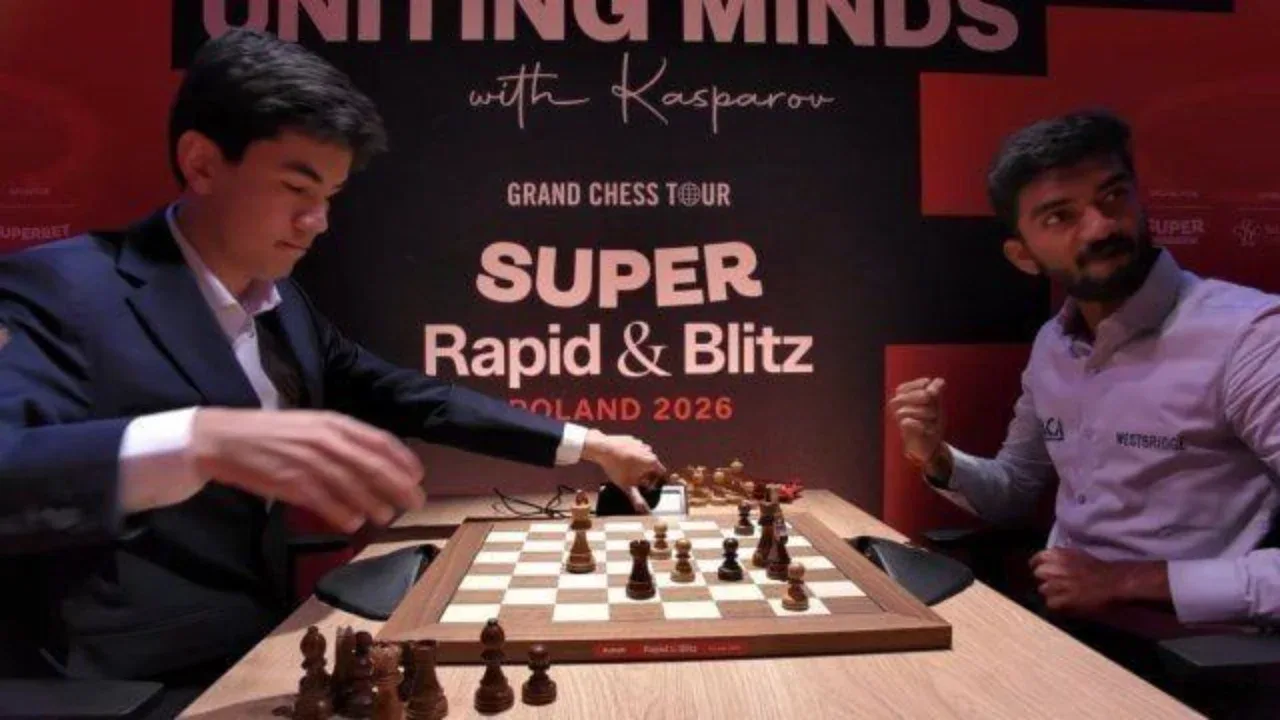
At the tournament in Warsaw Javokhir Sindarov The passionate reaction of Gukesh Dommaraju after his victory over Javokhir Sindarov drew attention in the chess world. The Indian grandmaster did not hide his feelings after the win, openly displaying his emotions.
Some time later, Javokhir was asked for his opinion on his opponent's reaction. The Uzbek chess player, instead of criticizing Gukesh's actions, tried to understand his potential psychological state.
How did Sindarov explain Gukesh's state?
In Javokhir's opinion, external pressure and criticism can increase significantly for a strong chess player after unsuccessful tournaments.
«If Gukesh has a bad tournament, everyone starts saying all sorts of things about his chess. Perhaps he really needed this to feel confident before the championship match».
Sindarov thus assessed his opponent's strong post-victory emotions as a specific psychological reaction.
«I am also very well prepared mentally»
Javokhir emphasized that he is also psychologically prepared for such major competitions.
This is an especially important factor in high-level chess. Because a battle between grandmasters requires not only combinations on the board, but also pressure, confidence, and emotional stability.
Sindarov noted that he has been accustomed to opponents' reactions after wins or losses since childhood.
Childhood rivalry with Nodirbek
Javokhir also recalled his childhood years spent with Nodirbek in this regard.
«I grew up in tournaments where opponents always did that. We played a lot with Nodirbek when we were kids».
According to Sindarov, in their rivalry at the Uzbekistan championships, the reaction to victory and defeat was always intense.
«If he lost, I would celebrate, and if I lost, he would rejoice. So for me, this is a completely natural situation».
Why does Sindarov consider this situation normal?
It is clear from Javokhir's answer that he did not take Gukesh's post-victory emotions as a personal insult or disrespect.
On the contrary, the Uzbek chess player sees such a reaction as a natural part of competition. For him, in the sporting environment formed since childhood, an opponent's joy after a win or reaction after a loss has always been normal.
The most important thing is the answer on the chessboard
Sindarov's attitude also shows an important aspect of professional sports: intense rivalry between strong opponents can be separate from personal relationships.
In the game in Warsaw, Gukesh won and celebrated it with great emotion. Javokhir accepted his opponent's state with understanding.
Thus, another side of the rivalry between chess players — a tough fight on the board, and understanding the opponent's feelings outside of it — was clearly shown by Sindarov's answer.



Comments 0
…